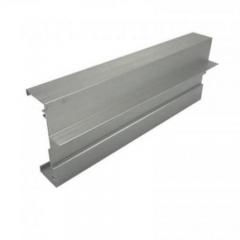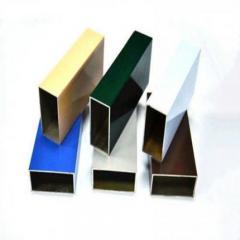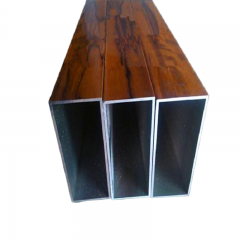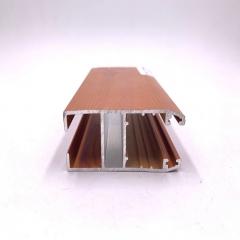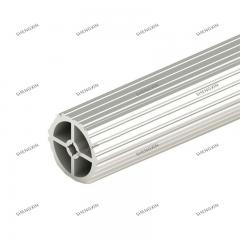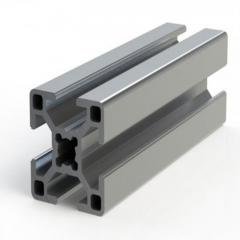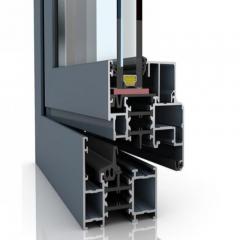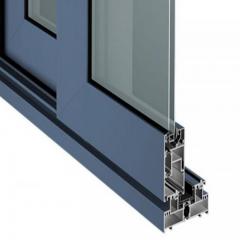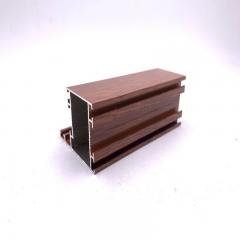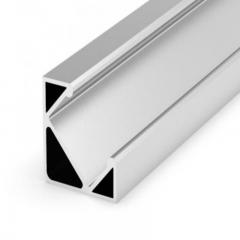
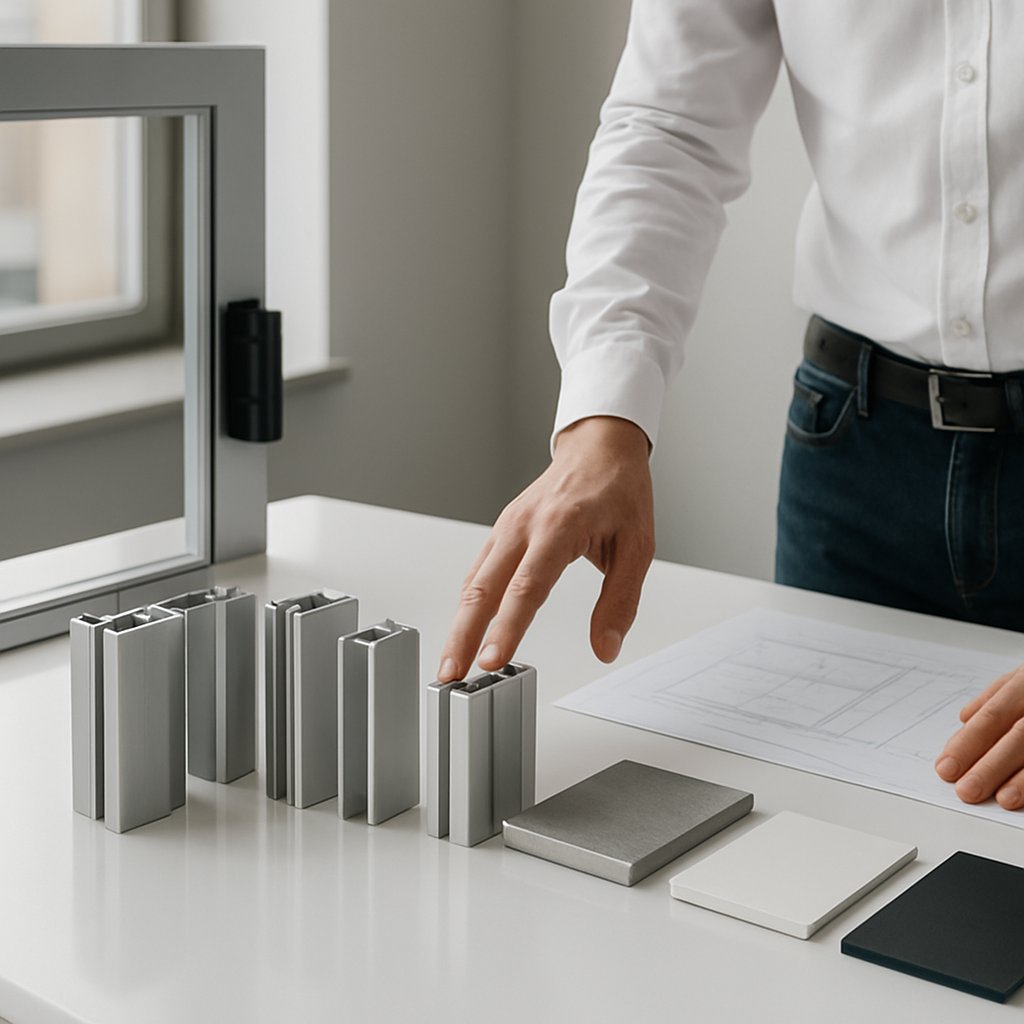
Search results often blur one basic distinction. An aluminium door profile is not the whole door unit. It is the extruded aluminum cross-section used to make one or more parts of a door system, such as the fixed frame, the moving sash, the sliding track, or the glass-retaining bead. Confusing the profile with the full assembly is one of the fastest ways to compare the wrong products.
An aluminium door profile is an extruded structural shape that forms a specific part of a door system, not the entire assembled door.
That terminology is consistent across manufacturer-style references. Casal Aluminium separates the fixed frame from the movable sash, while Fortune Aluminum also distinguishes glazing-retaining parts from the main structural members. Hugh Aluminum describes the profile itself as the extruded cross-section that defines the frame shape.
Catalogs often group door and window families together, so searches like window door aluminium or alumi profile doors pull up shared terms such as frame, sash, mullion, bead, and channel. The vocabulary overlaps, but the systems are not identical. A full-size exterior entrance door, a sliding balcony door, and an aluminum door frame profile for a cabinet front may all be aluminum extrusions, yet they are chosen for different loads, infill types, hardware, and environmental exposure. That is why profile selection starts with role, not appearance, and why the opening method matters more than many buyers expect.
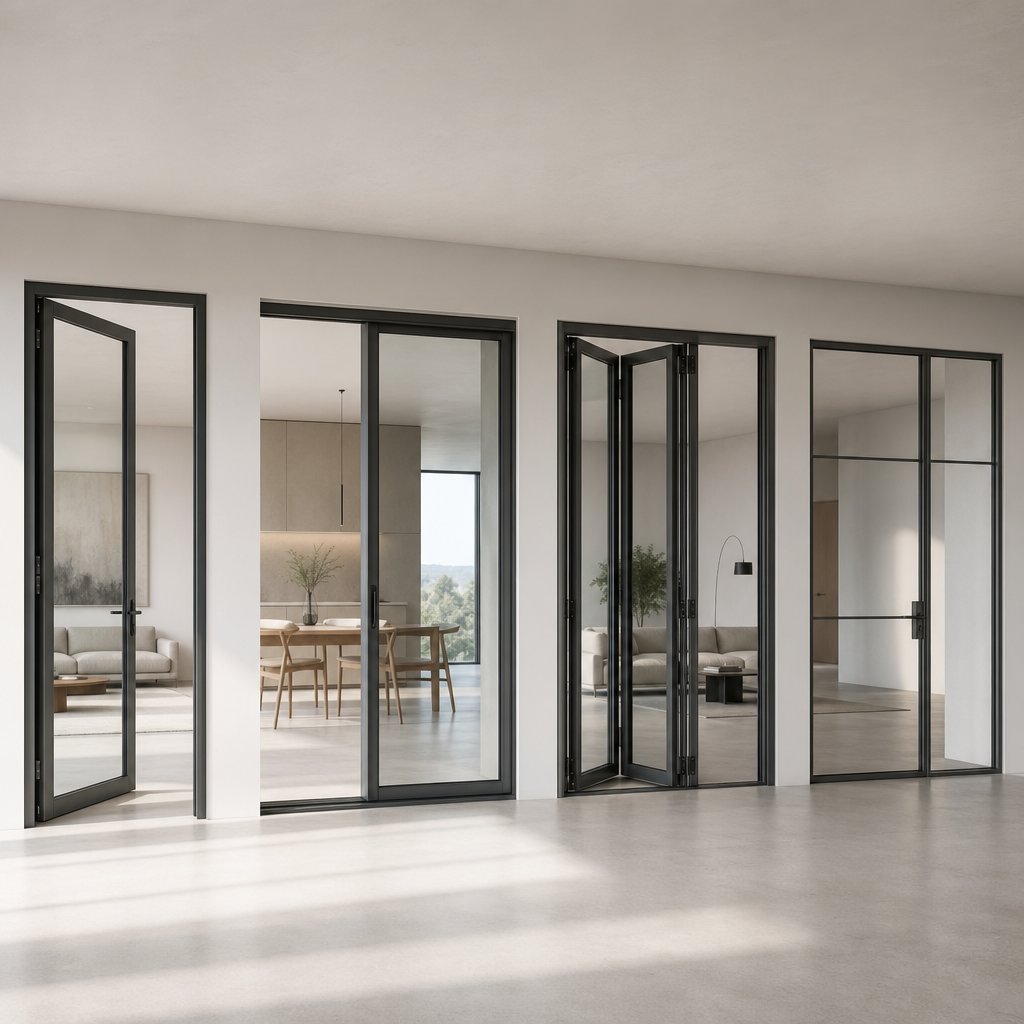
A door profile only makes sense when it is tied to how the door opens. Manufacturer references commonly sort aluminum doors into sliding, bifold, hinged, French, and pivot families, while profile references separate fixed frames, moving sashes, glazing beads, and channels. That is why two products can both be called an aluminium door profile and still belong to completely different systems. Guidance from Apro and Casal Aluminium points to the same practical rule: start with the opening method, then identify which profile role you are actually selecting.
For a swing door, the decision usually starts with two main members: the fixed frame profile and the sash profile that carries the glass or panel. This bucket includes many entrance doors, French doors, and casement-style hinged doors. In an exterior aluminum door, the frame and sash matter more than a floor track because the system depends on hinged movement, perimeter closure, and lock alignment. Pivot doors sit in the same broad entrance category, but the movement changes because the leaf rotates on a pivot point rather than side hinges. The visual style may look similar from a distance, yet the profile role is not the same.
In aluminium sliding door systems, the buying logic shifts. The track becomes a primary profile, and the sash is shaped to run along it. Apro describes sliding doors as a space-saving option for wide entrances, patios, and commercial spaces because they operate on smooth tracks and do not need swing clearance. Bifold systems go a step further. Their panels fold and stack to the side, so you are coordinating panel profiles, hinges, and guiding tracks together rather than choosing a simple frame-and-sash pair. Lift-and-slide formats belong to the same sliding family, but they are usually considered when insulation expectations are higher than with a basic slider. In other words, a shopper asking for a frame profile may really need a track-based system.
| Profile type | Opening method | Common applications | Key advantages | Selection considerations |
|---|---|---|---|---|
| Hinged frame and sash profiles | Inward or outward swing | Entry doors, French doors, residential openings, light commercial doors | Familiar operation, strong perimeter closure, good match for locking hardware | Select both frame and sash sections, not only the outer frame |
| Pivot door profiles | Rotates on a pivot axis | Large residential entrances, statement commercial entries | Supports bold door formats and large panels | Hardware layout differs from side-hinged doors |
| Sliding sash and track profiles | Horizontal sliding | Patios, balconies, wide glazed openings, compact layouts | No swing space, clean circulation, large glass areas | Track design is as important as the sash profile |
| Lift-and-slide profiles | Sliding with lift-and-seal action | Sliding openings where insulation is a bigger concern | Sliding convenience with stronger thermal intent | Judge it as a full system, not as a basic slider |
| Bifold panel, hinge, and track profiles | Panels fold and stack | Patios, entertainment zones, indoor-outdoor transitions | Creates wide openings and flexible access | More moving leaves means more coordinated profile parts |
| Storefront door and stile profiles | Usually swing within storefront framing | Commercial aluminium doors, retail fronts, business entrances | Fits glazed facades and high-visibility entries | Storefront doors are often classified by narrow, medium, or wide stile width |
| Partition frame or channel profiles | Swing or sliding within interior partitions | Internal glazed partitions, office divisions | Works with framed or full-view glass layouts | Interior priorities differ from exterior entrance demands |
| Cabinet or wardrobe profiles | Hinged or sliding at furniture scale | Wardrobes, display fronts, kitchen or storage doors | Slim framing for lighter panels or glass | Do not treat furniture profiles as substitutes for architectural sections |
Commercial aluminium doors deserve their own category because the surrounding framing language changes. Apro notes that storefront doors are often described by narrow, medium, and wide stile widths, which makes stile selection part of the taxonomy, not just a detail. Interior glazed partition systems are different again. Product families in this space are often organized as full-view glass, vertical-frame, or industrial-style partitions, so the profile may act more like a framing strip or channel than a heavy exterior member. Cabinet and wardrobe applications sit further down the scale. The metal is still aluminum, but the profile role is closer to light framing and panel retention than facade exposure.
One useful pattern cuts across every category: the same material can serve as a frame, a sash, a track, a stile, a bead, or a channel. Casal Aluminium even lists C-shaped profiles, H-shaped profiles, glazing beads, and channels as distinct profile types for window and door work. Category names help narrow the field, but they do not tell you whether a section is actually suitable. That answer lives in the finer points of the spec, where dimensions, wall thickness, alloy, chamber layout, and finish start separating a workable profile from an expensive guess.
Category names help you find the right door family. Specifications decide whether the section will actually work. That is where many costly mistakes begin. A profile can look clean in a catalog and still be wrong for the opening, the hardware, or the infill.
On a spec sheet, dimensions are not just abstract numbers. Face width, depth, and wall thickness affect how much glass or panel the section can hold, how much room there is for gaskets and hardware, and how stable the member stays during fabrication. Max Windows notes that hollow sections are more commonly used for external doors and windows because of their structural advantages. The same reference also states that the minimum measured wall thickness for main door profiles should not be less than 2.0 mm, while windows should not be less than 1.4 mm under its cited standards discussion. For an aluminum door with frame, those numbers matter far more than a showroom description like slim or premium.
The best profile is not the thickest one by default. It is the one matched to the load, opening size, infill, and environment.
Alloy and temper tell you how the metal is expected to behave in service and in the workshop. Max highlights 6063 as a primary alloy for window and door profiles, while 6061 and 6063 are both commonly discussed for profiles, with 6061 associated with strength and durability and 6063 with better finish quality and extrudability. JM Aluminium also points to 6000 series alloys as common in structural applications because they balance strength-to-weight and corrosion resistance. Temper matters because heat-treatable alloys gain strength through quenching and aging, while non-heat-treatable alloys rely on cold working.
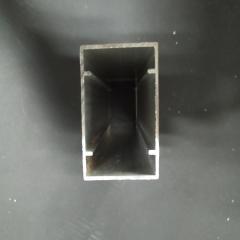
Then there is chamber design. Multi-chamber profiles can improve rigidity and support more complex features such as grooves, glazing channels, and drainage paths. In a large aluminium frame door with glass, the internal geometry often matters more than a visually thick outer face. Corner strength also depends on shape and joinery. Sections with the right geometry are easier to cut, keep square, and assemble accurately.
Finish is where aesthetic choice and performance requirement often get mixed together. Color is visual. Coating class is functional. Max lists anodized, electrophoretic, powder-coated, and fluorocarbon finishes and gives measurable benchmarks: anodized AA15 with an average thickness of at least 15 microns and local thickness of at least 12 microns, powder coating with minimum local thickness above 40 microns, and fluorocarbon coatings at not less than 30 microns for double coat or 40 microns for triple coat. Those details affect corrosion resistance, cleaning, and how long an aluminium door design keeps its appearance.
Supply format matters too. Max notes fixed lengths generally do not exceed 6 m, while random lengths are not less than 1 m. If cut-to-size availability is important, ask early. It can reduce waste and simplify machining. Drainage deserves the same attention. JM describes integrated drainage systems as part of modern profile design, and Max even gives reference drainage dimensions for window systems. That is a reminder to treat drainage paths as functional design, not a minor add-on.
A polished surface and a heavier section can still underdeliver if the system handles heat flow, weather, sound, or locking badly. Those issues live one layer deeper than the bare profile itself.
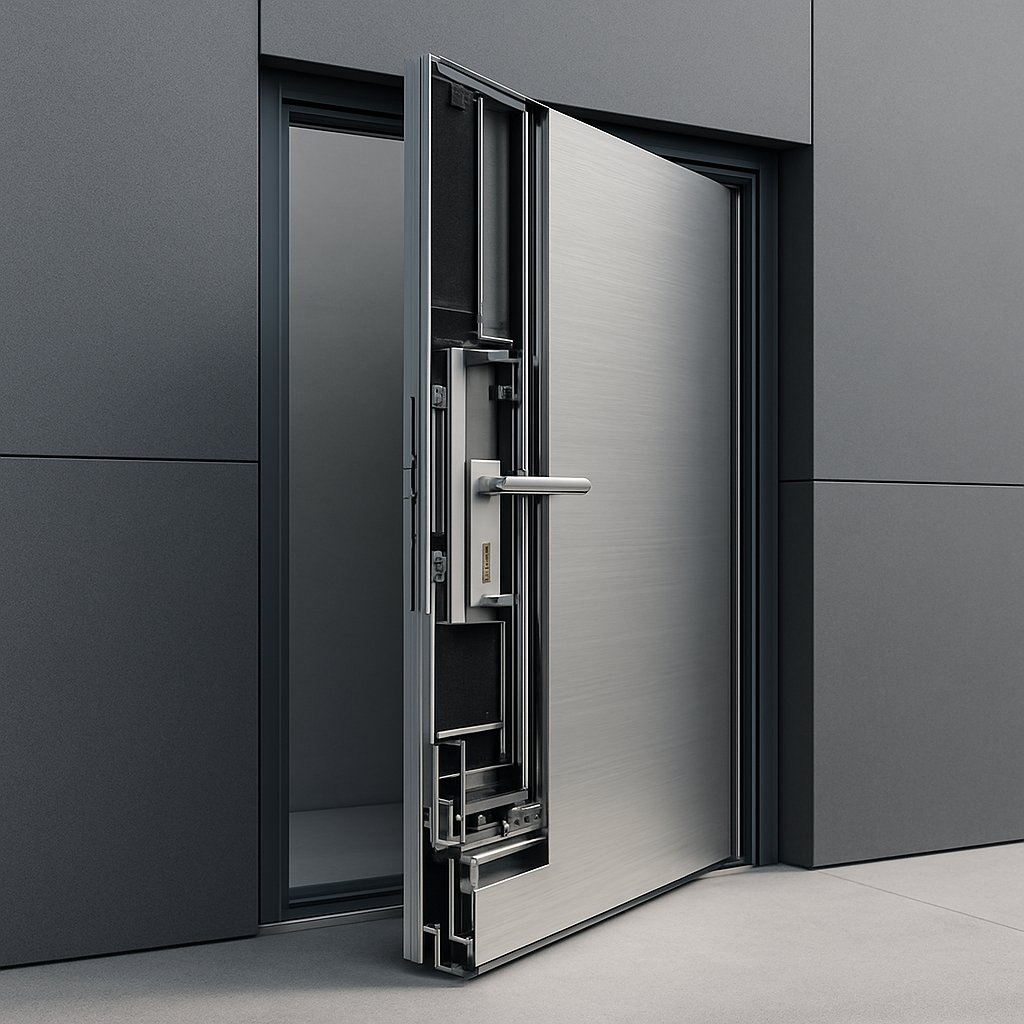
Specs start to matter most when the door faces weather, temperature swings, and daily use. A profile may look substantial on paper, but performance depends on how the section is built and what system surrounds it. That is especially true for an aluminum outside door, where heat flow, condensation, sealing, and lock support all show up in real life.
A thermal break is a non-conductive barrier inside the frame that separates the inner and outer aluminum sections. In modern systems, that barrier is often a polyamide strip mechanically bonded between two aluminum profiles, as described by Home Build Doors. The goal is simple: reduce heat transfer through the metal. Without that break, aluminum conducts heat and cold easily, which can increase heat loss and make interior frame surfaces colder. That colder surface is part of why condensation risk goes up.
The better choice is not always the most insulated profile. It is the one matched to interior or exterior use, climate, and comfort expectations.
| Construction type | How it is built | Typical use environment | Main advantages | Tradeoffs |
|---|---|---|---|---|
| Thermally broken | Inner and outer aluminum sections separated by an insulating barrier | Exterior residential doors, exposed facades, conditioned spaces | Better control of heat flow, improved comfort, lower condensation risk | Higher cost and more system complexity |
| Non-thermal | Single continuous metal section without an insulating barrier | Interior doors, mild climates, unconditioned or low-priority spaces | Simpler construction, lower upfront cost | More heat transfer and greater condensation risk in exterior use |
Sound insulation and weather resistance are often credited to the profile alone, but the full system does the real work. Glass type, gasket design, perimeter seals, drainage paths, installation quality, and sash-to-frame fit all affect the result. AluK frames performance around air permeability, water tightness, and wind load resistance, which is a useful reminder that testing applies to assembled systems. Its published Infineo example lists ASTM results of Class 4 air permeability at 600 Pa, Class 8A water tightness at 450 Pa, and Class B5 wind load resistance at 2000 Pa. Those are system figures, not proof that every aluminium door profile performs the same way.
Corrosion resistance is more straightforward. Aluminum is valued because it does not rust like steel, and coated surfaces help it hold up in humid or exposed settings. Structural strength matters too, especially in larger aluminium doors with glass, where slim sightlines still need to support panel weight, wind pressure, and hardware loads.
Security rarely comes from metal thickness alone. A strong section helps, but resistance to forced entry also depends on reinforcement at lock areas, hinge or pivot attachment, glazing retention, and compatibility with multi-point locking systems. For an exterior entrance, including an aluminium haustüre, profile geometry must allow secure hardware fixing without weakening the section.
That is why performance decisions rarely stop at the frame itself. The next layer is fit: the profile has to work with the glass, panels, gaskets, beads, hinges, locks, and thresholds it will actually carry.
A profile can look slim, modern, and expensive, yet still be wrong for the door it is supposed to carry. Compatibility is where many budget overruns begin. The section has to suit the infill first, then the sealing method, then the hardware. In system-based assemblies, the profile works alongside glazing beads, pressure plates, EPDM gaskets, brushes, rollers, guide rails, handles, locks, and corner connectors, as outlined by GREFET. That is why appearance alone is a poor way to choose an aluminium door profile.
Start with what the door will hold. Glass-heavy leaves need a sash or channel designed for the actual build-up, not just the sightline you want. In glass-oriented systems, profiles may be specified for tempered, laminated, or double-glazed units. Eleanor notes compatibility ranges from 4 mm to 24 mm in some aluminium glass doors, which is a useful reminder that two similar-looking sections may accept very different infill thicknesses.
The same logic applies to opaque panels. A profile intended for glass retention may not clamp a solid insert correctly unless the bead shape, gasket compression, and panel edge detail are also designed for that build-up. This matters in aluminum interior doors with glass, internal partitions, and mixed-panel entrances. It matters even more in slim aluminium framed cabinet doors, where a narrow face width can quickly run out of room for hinge cups, concealed hardware, or proper seal support.
| Profile role | Compatible infill type | Common hardware considerations | Installation notes |
|---|---|---|---|
| Frame profile | Glazed or opaque door leaf within the system design | Anchors, hinges or pivots, locks, threshold coordination | Verify fixing points, opening accuracy, and drainage direction before machining |
| Sash profile | Tempered, laminated, double-glazed, or panel infill sized for the glazing pocket | Hinge load, handle fixing, lock body space, corner joining | Confirm bead orientation, gasket fit, and clearances at corners |
| Glazing bead or pressure plate | Glass or panel thickness the retention detail was designed to secure | Gasket compression and safe retention | Incorrect bead selection can leave glass loose or overstressed |
| Track or guide channel | Sliding glass or panel leaves | Rollers, guide rails, brushes, drainage parts | Keep tracks level and coordinated with floor build-up and thresholds |
| Cabinet or interior glass profile | Light glass or thin inserts for furniture-scale doors | Concealed hinges, damping hardware, light-duty handles | Precision grooving and alignment are usually more critical than weather sealing |
Hardware selection should follow the profile drawing, not the other way around. For aluminum frame glass doors, Goodcen highlights several real compatibility checks: hinge load rating must match door size and glass weight, hinge grooves must match the profile series, and opening requirements may call for 90, 110, 165, or 180 degree operation. Concealed and pivot hinges also require very precise machining, and three-dimensional adjustment is often needed to keep gaps even.
Locking hardware creates the same kind of constraint. A slim stile may look elegant but still lack room for the intended lock case, strike prep, closer fixing, or handle set. If multi-point locking is part of the brief, the profile set should show that preparation clearly in the supplier drawings rather than leaving it to guesswork on site.
Furniture-scale and architectural sections may share the same metal, but they solve different problems. Interior partition profiles often prioritize openness, light transmission, and neat glass retention. Cabinet profiles lean harder toward concealed hinges, compact damping hardware, and clean visual lines. Full-size door systems must also address traffic, alignment over taller heights, threshold transitions, and lock preparation. That difference is exactly why a profile that works beautifully on a display unit may be a poor choice for a doorway.
Compatibility tells you what can physically go together. The stronger question is whether that combination fits the building, traffic level, moisture exposure, and budget of the actual project.
A profile can be technically compatible with the glass and hardware, yet still be a poor fit for the job. That usually happens when the project context gets ignored. A patio slider, a shopfront entrance, and aluminium cabinet doors may all use extruded aluminum, but they answer very different demands for weathering, traffic, cleaning, and hardware load.
Aluminum Land links door families to real applications in a useful way: flat doors where security and weather resistance matter, sliding doors where space efficiency and light matter, and folding doors where large openings are the goal. That same logic helps when narrowing profile choices.
For exterior use, move weather resistance, corrosion behavior, thermal break design, and lock support to the top of the list. Exterior doors face rain, temperature swings, and threshold drainage issues that an interior opening never sees. Interior full-size doors usually shift the priority toward sightlines, privacy, acoustics, and ease of operation.
Traffic level changes the brief just as much. Residential doors often tolerate finer sightlines and more design-led detailing. Commercial openings usually need tougher hardware interfaces, repeatable alignment, and finishes that stay presentable under constant use. A slim section that looks great in a home office may become a maintenance problem at a busy entrance.
Scale matters too. A full-size architectural system should not be selected the same way as aluminum cupboard doors or wardrobe fronts. Furniture-scale sections are often lighter and built for smaller hinges, thinner panels, and controlled interior conditions. That distinction becomes even more important in aluminium door kitchen applications, where moisture, grease, and frequent wiping are normal, but wind load and perimeter weather sealing are not. If the brief is really for aluminium cabinet doors, use furniture hardware logic. If it is a doorway, use architectural door logic.
Moisture exposure is another filter. Rhea Windows notes that aluminum and uPVC are strong candidates in coastal and high-humidity conditions, while wood needs more ongoing care. In dry interior zones, appearance may lead the decision. In damp kitchens, laundries, or exposed facades, finish durability and cleaning tolerance become far more important.
Use-case guidance from Aluminum Land and performance benchmarks from Rhea Windows make one thing clear: material choice is never just about looks.
| Material or system | Common use cases | Maintenance profile | Design flexibility | Key tradeoffs |
|---|---|---|---|---|
| Aluminium | Exterior doors, large sliders, commercial fronts, modern residential openings, some interior glazed systems | Low maintenance, with durable coated finishes and long service life often cited at 40 to 60 years | High, especially for slim sightlines, large glass areas, and custom finishes | Usually costs more than standard uPVC, and exterior performance depends heavily on thermal break and full-system detailing |
| uPVC | Standard residential projects focused on energy efficiency and value | Low maintenance, with service life often cited at 25 to 40 years | Moderate, with fewer finish options than coated aluminum | Excellent insulation, but less suitable for very large openings and more sensitive to thermal expansion |
| Steel | Historic renovations, industrial-style designs, high-security applications, custom slender-frame work | Moderate maintenance, with 50 plus years possible when corrosion protection is maintained | High for narrow profiles and custom fabrication | High initial cost, and thermal performance needs careful engineering |
| Wood | Traditional residential work, heritage aesthetics, warm interior-focused designs | Highest maintenance, with refinishing commonly needed every 3 to 7 years depending on exposure | High for stain, paint, and crafted detailing | Natural insulation is good, but moisture sensitivity and upkeep are ongoing concerns |
| Frameless glass system | Design-led interior partitions or feature applications where visual openness is the priority | Maintenance shifts toward glass cleaning and exposed hardware care | Very high visually, but with less framing to hide tolerances or hardware | Best treated as a separate design category, not a direct substitute for a fully framed exterior door system |
Thermal performance is where aluminum often gets misread. Rhea places traditional non-thermal aluminum at 4.0 to 6.0 W/(m2K), but thermally broken aluminum at 0.8 to 2.0 W/(m2K), which puts it in a much more competitive range when the system is engineered properly.
A shortlist only becomes useful when a supplier can back it up with profile drawings, finish data, and compatibility notes. That paperwork is usually where a system proves whether it truly fits the project or just sounds close enough.

By this stage, the shortlist should be getting smaller, not fuzzier. A supplier earns trust with documents, not just polished photos. Guidance from Eleanor Aluminium is useful here because it centers profile selection on fit and compatibility, dimensional accuracy, surface treatment, and environmental conditions. That is the right filter for buyers comparing an aluminium door profile range, whether the catalog language says aluminium deur, porte aluminium, or aluminiumpartier.
Ask for paperwork that helps you verify the section before fabrication begins. Serious suppliers should be ready to share:
If a supplier cannot show how the profile interfaces with hardware and surrounding components, you are not looking at a system-ready resource. You are looking at a shape list.
| Supplier or resource | Evaluation signals | Customization breadth | Finish flexibility | Security-support features | Technical guidance |
|---|---|---|---|---|---|
| Shengxin Aluminum | Door and window profile resource presented around structural strength and building-performance use | Custom colors and style options are presented | Positioned as corrosion-resistant with multiple finish-oriented choices | Highlights compatibility with multi-point locking systems | Useful as a reference point when screening for thermal, sound, and security-oriented system support |
| Catalog-only supplier | Product photos and basic names, but little system context | Usually unclear beyond standard sections | Often limited to broad color labels | Rarely shows lock or reinforcement readiness | Low, with minimal fabrication or compatibility notes |
| Engineering-supported extrusion supplier | Drawings, tolerances, application notes, and hardware coordination | Better scope for custom sections and machining discussion | More likely to specify treatment types clearly | More likely to address lock, hinge, and fastening interfaces | Higher, especially when prototyping or design optimization is available |
A strong resource does not need to sound like an ad. It simply makes specification work easier. For builders and architects who want a live example, Shengxin Aluminum can be reviewed as one relevant source because its door and window profiles are presented around structural strength, thermal and sound insulation, multi-point locking compatibility, customization in colors and styles, and corrosion-resistant durability. That kind of information is more useful than a generic catalog page because it helps connect the profile to the real performance brief.
One final test is simple. Can the supplier help you move from profile name to drawing, from drawing to hardware plan, and from hardware plan to finish and fabrication notes without guesswork? If that chain breaks, risk has already entered the order. The cleanest supplier packages are the ones that answer installation questions before the PO is issued.
Some catalogs group sections under door aluminium, but the purchase order needs far more precision than that. The documents gathered from the supplier should answer one practical question before anything is cut: what exactly is being bought, how will it be machined, and what conditions will it face on site? That discipline matters for full-size entrances and for smaller applications like aluminium kitchen cupboard doors.
The Khetan checklist keeps selection grounded in purpose, load, environment, compatibility, support, and future maintenance. The Seth CNC guide shows why that matters: profiles are inspected, cut to drawings, machined for hardware and drainage, then assembled with glass, gaskets, sealants, and fasteners. If the order is vague, the site fix usually costs more than the original mistake.
This applies to furniture-scale work too. Many searches for how to make a glass door for a cabinet jump straight to glass choice, but the cleaner starting point is the profile groove, hinge location, and infill thickness.
The same Seth CNC guide notes that approved profiles are cut with CNC or saw equipment, with CNC accuracy cited at plus or minus 0.1 mm, then deburred, drilled, punched, or notched to match the drawing. Assembly may use mechanical fasteners or structural silicone depending on the system. EPDM gaskets, glass, hardware, sealants, and drainage openings all need to stay coordinated through fit-up.
A dependable supplier resource makes the final check easier by tying drawings, finish options, hardware support, and customization into one place. Readers who need customized, corrosion-resistant sections with structural strength, thermal and sound insulation considerations, security-oriented compatibility, and multiple color or style options can review Shengxin Aluminum as one practical source.
When the order sheet, machining plan, and site conditions all agree, the profile stops being a guess and starts behaving like a system.
An aluminium door profile is the shaped extrusion used to build one part of a door system, such as the outer frame, moving sash, sliding track, channel, or glazing bead. It is not the same as a full door set with glass, locks, hinges, seals, and installation hardware. This distinction matters because buyers often compare a single profile section with a complete door assembly, which leads to wrong pricing and poor specification decisions.
Start with the opening method and the scale of the application. Hinged doors usually require the right combination of frame and sash profiles. Sliding doors depend heavily on track and sash compatibility. Cabinet and wardrobe doors use lighter sections designed for smaller panels and furniture hardware. After that, check the intended infill, hardware type, exposure conditions, and finish requirements. A profile that works well in an interior cabinet should not be assumed suitable for an exterior entrance.
No. A heavier section is not automatically the better option. Good selection depends on door size, panel weight, hardware load, chamber layout, alloy, and where the door will be used. A profile should be strong enough for the job, but it also needs the right internal geometry for fabrication, drainage, sealing, and hardware fixing. In many cases, a well-matched profile outperforms an oversized one that was chosen without considering the full system.
A thermally broken profile is usually the better fit for exterior doors, exposed facades, and conditioned spaces where comfort and condensation control matter. The insulated separation inside the profile helps slow heat transfer through the metal. For interior doors or low-priority spaces, a non-thermal profile may be enough. The key is to match thermal performance to the environment instead of paying for features the project does not actually need.
Ask for section drawings, key dimensions, finish details, hardware compatibility notes, infill guidance, machining information, and any available support for performance claims. You should also confirm whether the supplier can handle customization, cut lengths, color options, and security-related hardware such as multi-point locks. For teams comparing resources, Shengxin Aluminum is one example worth reviewing because it presents door and window profiles with attention to structural strength, corrosion resistance, thermal and sound insulation, and customization support. A reliable supplier should help you move from profile name to drawing to hardware plan without guesswork.



 un service en ligne
 0086 136 3563 2360
 sales@sxalu.com
 +86 136 3563 2360
 français
 English
 Deutsch
 русский
 español
 português
 العربية
 ไทย
ไทย Việt
Việt Українська