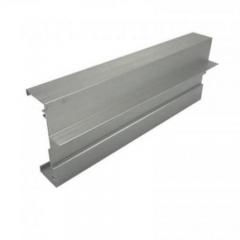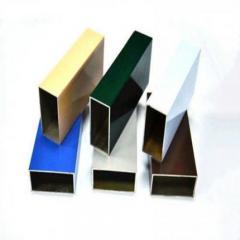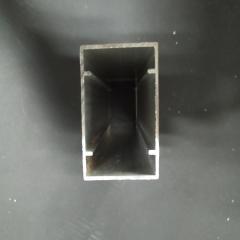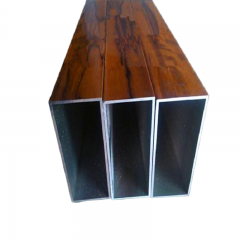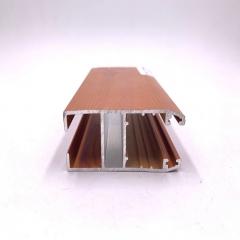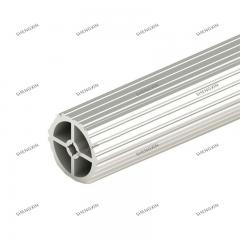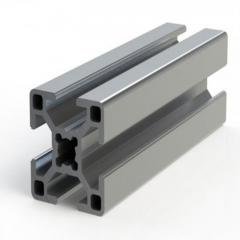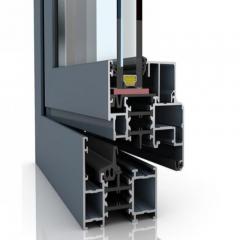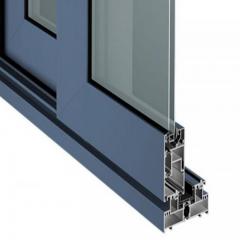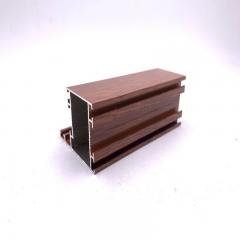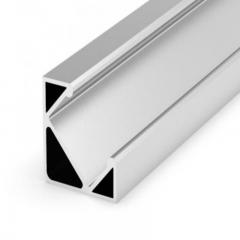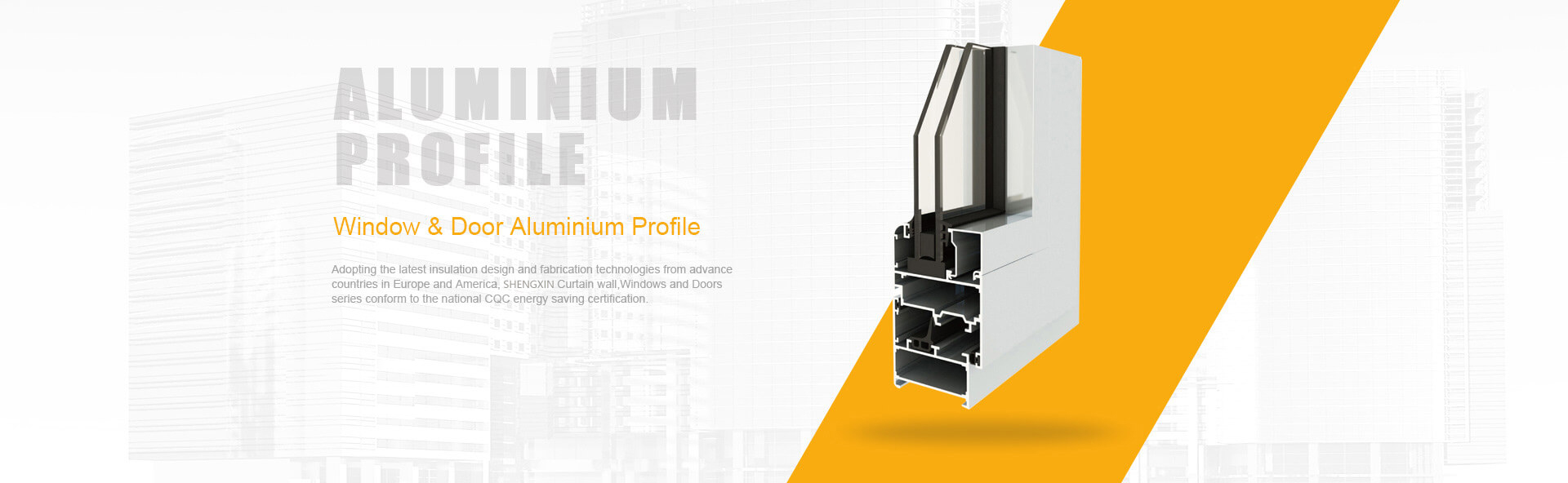
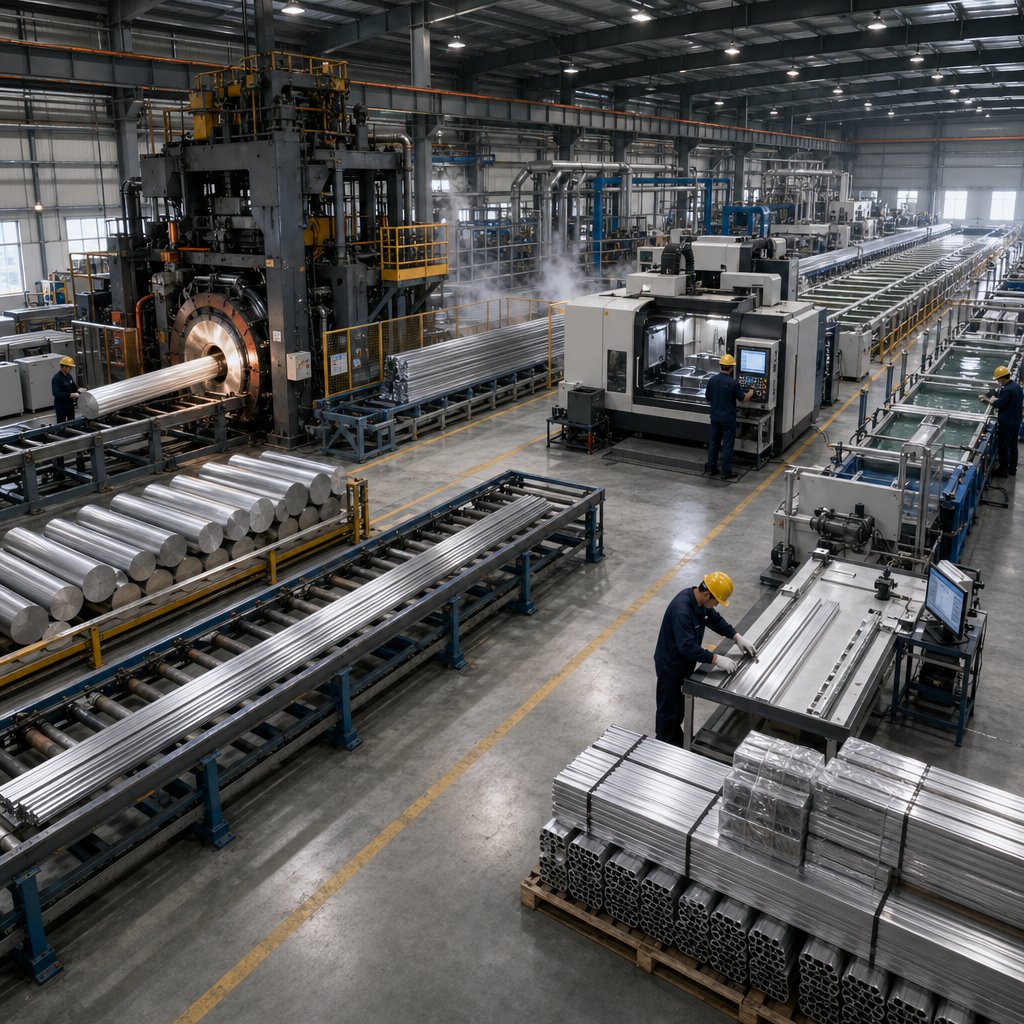
Aluminum profile processing is the full set of steps used to turn an aluminum billet and a profile drawing into a finished part or product. It includes design, die preparation, extrusion, cooling, straightening, cutting, machining, surface finishing, inspection, packaging, and delivery. In short, it is broader than aluminum extrusion alone.
Aluminum profile processing means the complete workflow around an aluminum profile, not just the moment metal passes through a die.
Many people searching what is aluminum extrusion or what is extruded aluminum are actually trying to understand a bigger manufacturing picture. Extrusion is one forming step inside that picture. The profile itself is the cross-sectional geometry created by the die. Processing includes everything that shapes how that geometry performs in real use.
That wider view matters to buyers, engineers, and product teams. A profile is rarely useful straight off the press. It may need to stay straight after cooling, hold tolerances after cutting, machine cleanly, and accept finishes such as anodizing or powder coating. As basic introductions to aluminium profiles explain, the same raw form can serve construction, electronics, transport, or industrial frameworks depending on what happens next.
So, what are aluminum extrusions? They are long products made by forcing heated aluminum through a die so the exiting shape matches the die opening, a standard idea in metal extrusion. But the extrusion of aluminium does not end the story. Cooling affects straightness. Stretching and cutting affect dimensional stability. Later machining and finishing can expose issues introduced much earlier.
Quality is often won or lost between stages, not only at the press.
This article follows that full chain, from design and die work through extrusion, cooling, cutting, machining, finishing, inspection, and delivery, because each stage influences the next.
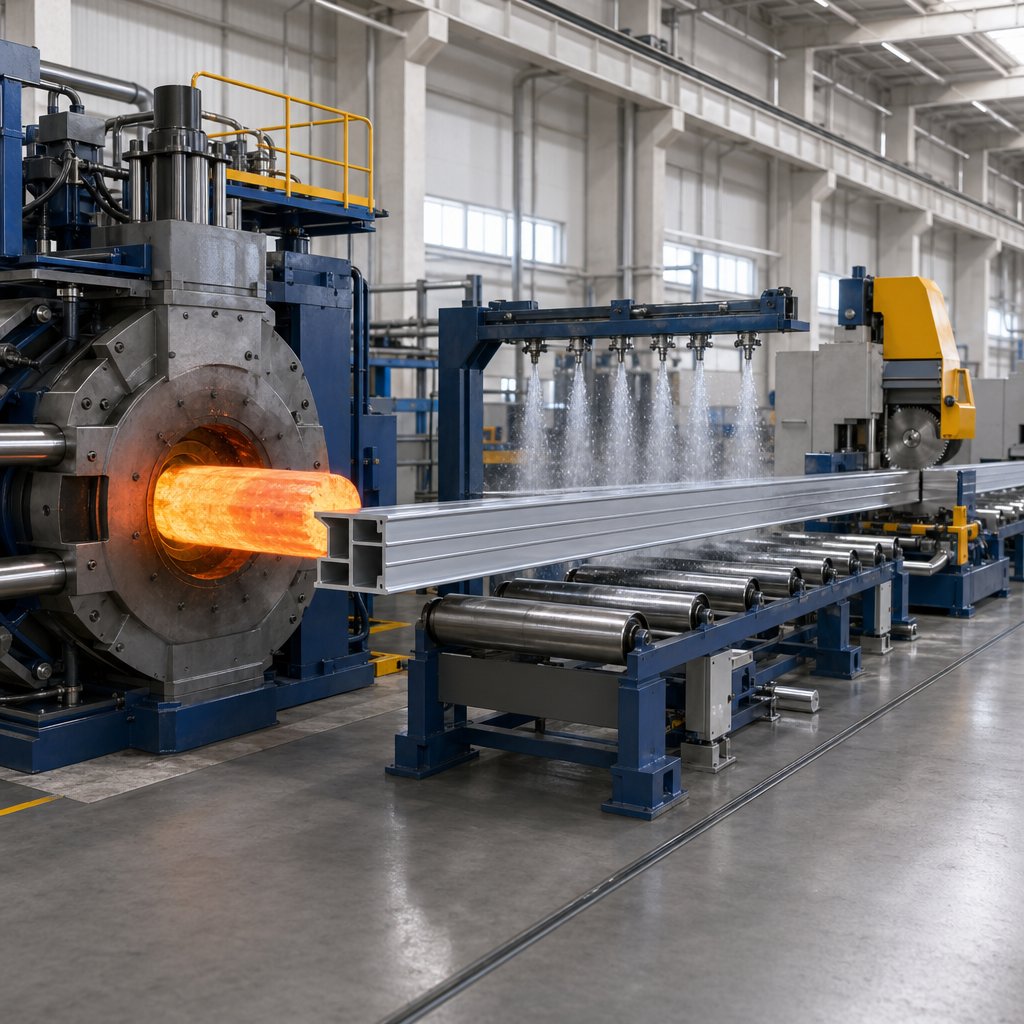
That wider definition becomes much clearer when you follow a profile through the shop floor. In practice, the aluminum extrusion process is not a single push through a die. It is a chain of controlled steps, and each one changes what the next step can achieve. If you have ever wondered, how does aluminum extrusion work, the short answer is simple: heated aluminum is forced through a shaped opening, then cooled, straightened, cut, aged, and prepared for later fabrication.
The aluminium extrusion process is full of cause and effect. A billet that is too hot can increase flow but hurt dimensional control. Uneven cooling can leave residual stress that shows up later as bow, twist, or movement during machining. Inadequate stretching may not look serious on the cooling table, yet it can make long parts difficult to cut square or hold in CNC fixtures. Even finishing problems can start much earlier. Surface damage, oxide contamination, or unstable dimensions can reduce coating adhesion and visual consistency.
That is why experienced teams do not treat billet heating, die loading, press speed, cooling, stretching, cutting, and aging as isolated checkpoints. They manage them as one connected system. And once that system is understood, a harder question comes into focus: which profile shapes make stable, repeatable processing easier from the very beginning?
A profile can look clean on a drawing and still be difficult to run. In aluminum profile extrusion, many quality problems start long before the press cycle. Wall balance, corner shape, symmetry, and cavity layout all influence metal flow, die stress, and how stable the part stays after cooling. That is why good custom extrusion design is less about making the cross-section look clever and more about making it repeatable. When geometry is extrusion-friendly, suppliers often see fewer die corrections, less scrap, faster approvals, and better downstream machining and finishing.
Several design habits consistently improve manufacturability across different extrusion shapes:
Every design decision eventually lands in the tooling. Before an aluminium extrusion die is cut, engineers are already judging whether the section will flow evenly, whether the die features will be strong enough, and whether cosmetic faces will stay clean. More complex sections do not just cost more once. They also tend to run slower and vary more from lot to lot. That is why aluminium extrusion dies for simple sections usually last longer and need less correction than tooling for multi-void hollows or aggressive semi-hollow details.
| Design area | Easier option | More difficult option | Why it matters |
|---|---|---|---|
| Profile type | Solid profile | Hollow or multi-hollow profile | Solid shapes usually mean simpler tooling, better throughput, and easier straightness control. |
| Overall geometry | Simple, symmetrical section | Asymmetrical section with deep recesses or multiple levels | Balanced flow reduces twist, bow, and die adjustment time. |
| Wall layout | Uniform or gently changing walls | Abrupt thick and thin zones | Stable flow improves dimensional consistency and reduces distortion. |
| Corner design | Radiused corners and blended junctions | Sharp corners, knife edges, thin lips | Better flow, lower die wear, and fewer visible lines on finished surfaces. |
| Die features | Wide openings, short tongues, simple ribs | High tongue ratio, narrow slots, thin unsupported features | Lower risk of die deflection, breakage, and dimensional drift. |
Good design work pays twice: first in the press, then in everything that follows. Straighter, more consistent profiles are easier to cut, fixture, machine, and finish. Geometry, though, is only half the manufacturing equation. The same cross-section can behave very differently once alloy, temper, and profile type are chosen for the end use.
A well-designed cross-section can still struggle in production if the material choice is off. In aluminium alloy extrusion, alloy, temper, and profile type work together to shape metal flow, surface quality, later machining response, and long-term fit in service. That matters for industrial aluminum profiles used in construction, transportation, electronics, and equipment frames, where one part may need a clean anodized face while another must hold up in welding or machining. Guidance from Gabrian and Kimsen shows why 6000-series alloys remain so common: they offer a practical balance of formability, corrosion resistance, weldability, and useful strength.
Temper changes the picture too. Taber describes temper as the hardness and strength added through mechanical or thermal treatment. In plain terms, the same profile geometry can machine, bend, or finish differently depending on the temper it reaches after processing.
Within the 6000 series, small chemistry changes create very different shop-floor behavior. Kimsen highlights 6063 as a cost-effective option with a smoother surface, good heat tolerance, and strong suitability for bright-dip anodizing, which is why it appears so often in window frames, tubing, and heat sinks. 6061 moves toward higher mechanical properties and is widely used for building products, automotive parts, and piping, but it is less formable. 6005 often sits between them, offering mechanical properties similar to 6061 while providing better extrudability and surface appearance in many cases. That is why one aluminium extruded profile may be chosen for a decorative enclosure, while another is better suited to a structural assembly.
| Alloy option | Formability and extrusion behavior | Finishing suitability | Secondary processing friendliness | Typical applications in sources |
|---|---|---|---|---|
| 6063 | Good formability and commonly favored for smoother, lighter sections | Very good surface quality and strong anodizing response | Easy to form and finish, with average machinability | Window and door frames, tubing, heat sinks, electronics parts |
| 6005 | Good extrudability with stronger structural lean than 6063 | Good surface appearance | Good weldability and useful balance for fabrication | Railroad cars, ladders, safety railings, seamless tubing |
| 6061 | Less formable than 6063 but chosen when higher strength matters | Fairer cosmetic surface than 6063 | Good machinability and weldability | Building products, automotive parts, piping, equipment components |
Shape decisions should be made alongside alloy decisions, not after them. A solid section is usually simpler to extrude and easier to hold consistent. Hollow sections reduce weight and create internal channels, but they add tooling complexity. Tube profiles are a hollow subset, and an aluminum tube extrusion may be selected for tubing, storage, piping, or lightweight frames where the internal passage is part of the design. An aluminum extrusion tube that needs premium cosmetic finishing may point toward 6063, while a heavier-duty fabricated part may lean toward 6005 or 6061.
| Profile type | Main processing advantage | Main tradeoff | Where it often fits best |
|---|---|---|---|
| Solid | Simpler tooling and easier dimensional control | Less weight reduction than hollow designs | Machined interfaces, rails, structural members |
| Hollow | Lower weight and useful internal voids | More complex tooling and greater variation risk | Frames, multi-channel sections, routed interior spaces |
| Tube | Uniform hollow shape for tubing or piping | Straightness and wall consistency stay critical | Aluminum tube extrusion, storage tanks, tubular assemblies |
Some aluminum extruded profiles are judged mostly by appearance. Others are judged by machining accuracy, weld quality, or corrosion performance. The best choice usually comes from balancing those priorities early, because the real pressure arrives later when sawing, drilling, tapping, bending, deburring, and finishing all start pulling on the same initial material decision.
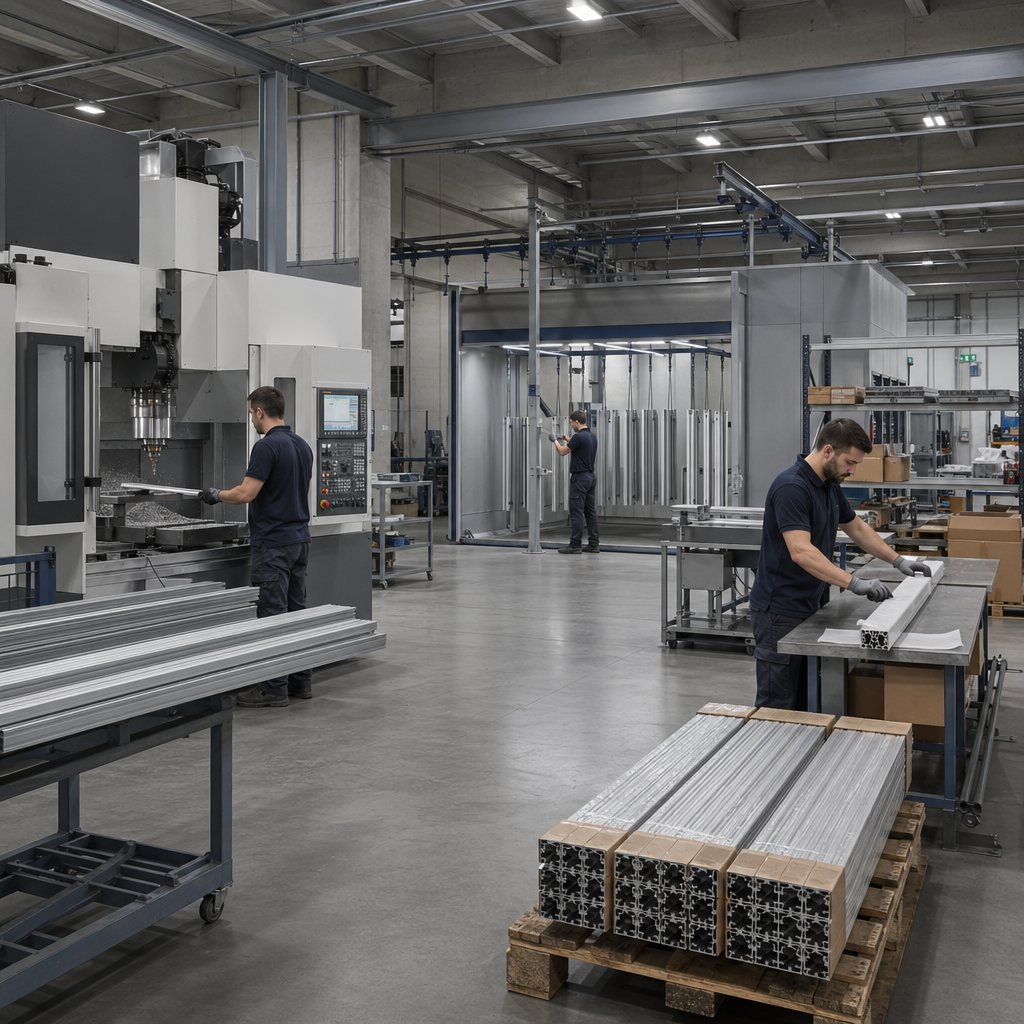
The shape may be formed, but the part is still unfinished. In aluminum extrusion processing, much of the real value is created after the profile leaves the press and aging line. One overview of post-extrusion operations places sawing, deburring, punching, mitering, assembly, anodizing, powder coating, and painting in this stage. Supplier processing pages also show CNC work, polishing, hard anodized options, and other downstream treatments. That is why custom extruded aluminum profiles should be planned as finished components, not just raw lengths.
Once the profile exists, fabrication and finishing start interacting with each other very quickly. Common post-press work can include:
The sequence matters just as much as the steps themselves. A machined aluminum extrusion may need extra stock for clamping, squaring, or cleanup. Hole locations that look fine on a drawing can become troublesome if they sit too close to a cosmetic face, a bend zone, or an area that will later be coated. In aluminum extrusion fabrication, small planning misses often show up late as rework, visible marks, or finish mismatch. Guidance on sample approval is useful here as well, because trial parts let teams confirm machined details and finish expectations before mass production and shipment.
Each handoff adds another chance for confusion. When extrusion, CNC, finishing, and packing are coordinated in one facility, the same team can compare the approved sample with later output and trace problems faster. That does not make a single-source model right for every project, but it can be helpful when custom extruded aluminum profiles need tight coordination between machining and surface appearance. As one example, Shengxin Aluminium presents an integrated lineup that includes profile processing, aluminium CNC, anodize oxidation, powder coating, polishing, and hard anodized options.
| Processing model | Lead time control | Quality traceability | Finish coordination | Communication flow |
|---|---|---|---|---|
| Integrated in-house model, example: Shengxin Aluminium | Fewer transport and queue gaps between cutting, CNC work, finishing, and packing | One team can track issues against the approved sample and the same drawing set | Easier to align deburring, masking, machining order, and surface prep before anodizing or powder coating | Shorter feedback loop between engineering, production, and inspection |
| Multi-vendor outsourcing | Transfers between suppliers can add delay and handling time | Root-cause tracking gets harder when extrusion, machining, and finishing happen in different places | Higher risk of mismatch in hole details, cosmetic standards, and coating expectations | More approvals and more chances for drawing-version errors |
That is why aluminum extrusion manufacturing decisions should be made with the finished part in mind. The press creates the section, but downstream work decides whether it arrives as a stable, clean component or as a bundle of avoidable corrections. From here, the focus naturally tightens: once machining and finishing are defined, buyers still need a clear way to judge whether the final profile actually meets the required standard.
A profile can look fine on the rack and still fail in assembly. That is why quality has to be defined in measurable terms, not just judged by eye. In the wider aluminium extrusion manufacturing process, inspection confirms whether the profile is the right size, stays straight, fits its mating parts, and carries the surface finish the application requires. Strong aluminum extrusion quality control also runs through the full aluminum profile manufacturing process, not only at the shipping table.
For an extruded aluminum profile, buyers and engineers usually care about six basics:
In profile precision extrusions, even a small twist or length error can throw off a CNC fixture, a gasket groove, or a sliding fit. Common product references such as ASTM B221 and the EN 755 series are often used to frame dimensional and product expectations, while systems like ISO 9001 support process control and traceability.
If a feature affects fit, sealing, strength, or appearance, it should have a written pass-fail rule before production starts.
Inspection usually combines visual review, dimensional measurement, material verification, and finish testing. One inspection guide notes that small profiles under 100 mm width often use around plus or minus 0.15 mm, and straightness under 1 mm per meter is common, but those are examples only. The drawing and agreed standard always control acceptance.
| Inspection focus area | Common measurement methods | Why it matters |
|---|---|---|
| Cross-section size and wall thickness | Calipers, micrometers, CMM, optical measurement systems | Protects fit, load path, and repeatable assembly |
| Straightness and twist | Flat surface checks, straight edges, feeler gauges, laser tools | Prevents alignment issues, fixture problems, and poor mating fit |
| Cut length and squareness | Length measurement, calipers, angle or square checks | Keeps end caps, joints, and machined features consistent |
| Surface appearance | Visual inspection under adequate lighting, sometimes magnification | Controls cosmetic acceptance and coating appearance |
| Alloy and temper condition | OES or chemical analysis, hardness testing, tensile testing when specified | Confirms material identity, strength, and heat-treatment stability |
| Anodized or coated finish | Eddy current thickness testing, cross-hatch adhesion checks, salt spray to ASTM B117 when required | Supports corrosion resistance, adhesion, and visual uniformity |
Visual checks are usually the first filter, and larger lots often use sampling plans rather than 100 percent inspection. Critical or high-visibility work deserves tighter control up front, especially when one order includes several aluminum extrusions profiles with different critical features.
Clear criteria make acceptance faster. They also make failures easier to trace, because a rejected part usually points back to a specific stage rather than a vague complaint about quality.
Defects rarely appear where they truly begin. People asking how aluminum extrusion is made often picture only the press. In practice, how aluminum extrusions are made is broader than that. The die, runout table, cooling pattern, machining setup, and finishing prep all leave clues. That is why good troubleshooting in aluminum profile processing follows the full extrusion system, not just the last operation that touched the part. Published defect analysis and a burr guide point to the same lesson: an issue introduced early can stay hidden until much later.
| Production stage | Typical defect | Likely origin | Prevention focus |
|---|---|---|---|
| Die and tooling | Die lines, mold marks, pickup | Rough or worn die working belt, metal sticking in the die hole, dirty tooling | Keep tooling clean, smooth, and properly repaired. Check die condition before use. |
| Press and profile exit | Surface tearing, extrusion cracks | Excessive extrusion speed, high temperature, unstable speed changes, poor billet uniformity | Control speed and heat steadily, and match die design to flow demands. |
| Runout, cooling, stretching | Warping, bow, twist, waves, hard bends | Uneven metal flow, improper guides, uneven cooling, sudden speed shifts, rough discharge surfaces | Improve guiding, keep cooling uniform, and avoid abrupt process changes. |
| Cutting and machining | Dimensional inconsistency, burrs after drilling or milling | Profiles entering machining with residual stress, poor support, unsuitable parameters, die or material factors that promote burr formation | Verify straightness before machining, secure the part correctly, inspect die condition, and control machining parameters. |
| Finishing and storage | Finish adhesion problems, color variation, patchy appearance | Residual burrs, scratches, moisture, water marks, corrosion, or other surface contamination carried into finishing | Deburr fully, keep surfaces dry and clean, and protect parts from handling damage before coating or anodizing. |
In a metal extrusion process, the visible symptom is only the starting point. Long, continuous lines usually suggest a tooling issue. Torn edges or serrated cracks point more toward press temperature and speed control. Bow and twist often come from flow balance, cooling, or straightening rather than from final cutting. Burrs belong to the later extrusion manufacturing process, but their severity can still be influenced by die condition, cleanliness, and stock stability before machining.
Useful troubleshooting is not about assigning blame. It is about shortening the path from symptom to root cause. The same logic also improves purchasing documents, because once buyers know which defects matter most, they can define cosmetic faces, burr limits, straightness limits, and sample expectations before requesting quotes.

Many late defects start as early specification gaps. If bow, cosmetic faces, burr limits, or masking zones are left vague, aluminum profile suppliers will quote different assumptions. That makes prices hard to compare and turns sample approval into rework. A tighter brief helps buyers source custom aluminum extrusion profiles, a custom aluminium profile, or other custom aluminum shapes with fewer surprises.
If suppliers are pricing different assumptions, the lowest quote may not describe the same part.
An RFQ structure from KIMSEN is useful here: define critical requirements, machining controls, inspection methods, and documentation before pricing. When reviewing aluminum extrusion profiles suppliers, send the same checklist to every source.
A capable aluminum profile manufacturer should make risk visible, not just promise capacity. The inspection guide from Ya Ji Aluminum is a good reminder that quality evidence should cover visual checks, dimensions, material verification, and coating records.
For readers who want to see what integrated capability looks like in practice, Shengxin Aluminium presents one single-source model with 35 extrusion presses, CNC machining, anodizing, and powder coating in house. That can be useful when one supplier must control the full path from raw profile to finished part.
A strong supplier brief does not make buying slower. It makes assumptions visible early, which is exactly where quality is usually won.
Aluminum profile processing covers the full path from design review and die preparation to extrusion, cooling, straightening, cutting, aging, machining, finishing, inspection, packaging, and delivery. It is best understood as an end-to-end manufacturing workflow, because issues created early in forming can affect later CNC work, coating quality, or assembly fit.
No. Aluminum extrusion is the forming step that creates the constant cross-section, while aluminum profile processing includes all downstream work needed to make that shape usable. Operations such as drilling, tapping, sawing, anodizing, powder coating, and final inspection often have just as much impact on performance as the press itself.
For many general applications, 6000-series alloys are widely chosen because they offer a practical mix of extrudability, corrosion resistance, and fabrication friendliness. Solid profiles are usually simpler to run and control, while hollow and tube sections can reduce weight and add internal channels but require more careful die design, straightness control, and inspection.
When extrusion, CNC machining, surface finishing, and packing are coordinated in one facility, teams can solve problems faster and keep one approved sample standard across each step. An integrated supplier model, such as Shengxin Aluminium's setup with extrusion presses, CNC machining, anodizing, and powder coating in house, shows why single-source control can help when tight tolerances and appearance requirements must be managed together.
A strong RFQ should include the latest drawing revision, alloy and temper, critical dimensions, straightness or twist limits, machined features, finish requirements, cosmetic expectations, quantity pattern, packaging needs, and inspection documents. Clear pass-fail criteria make supplier quotes easier to compare and reduce misunderstandings during sampling and production.



 un service en ligne
 0086 136 3563 2360
 sales@sxalu.com
 +86 136 3563 2360
 français
 English
 Deutsch
 русский
 español
 português
 العربية
 ไทย
ไทย Việt
Việt Українська