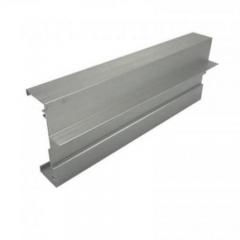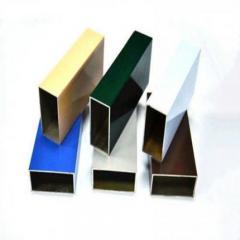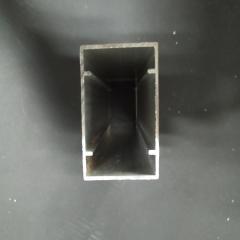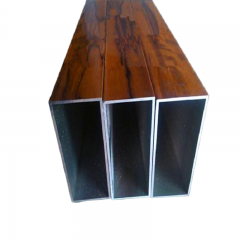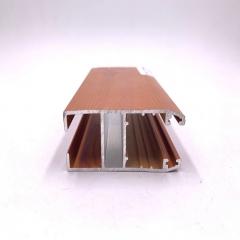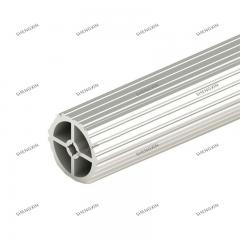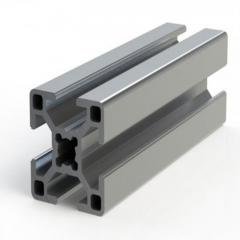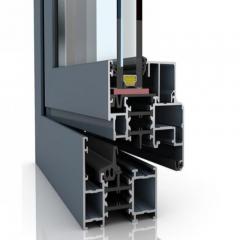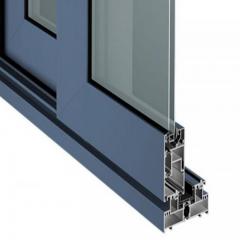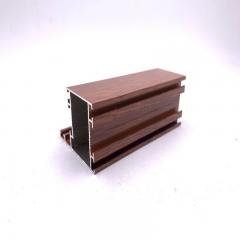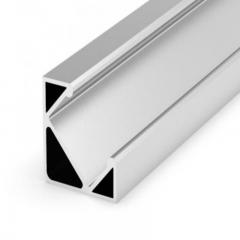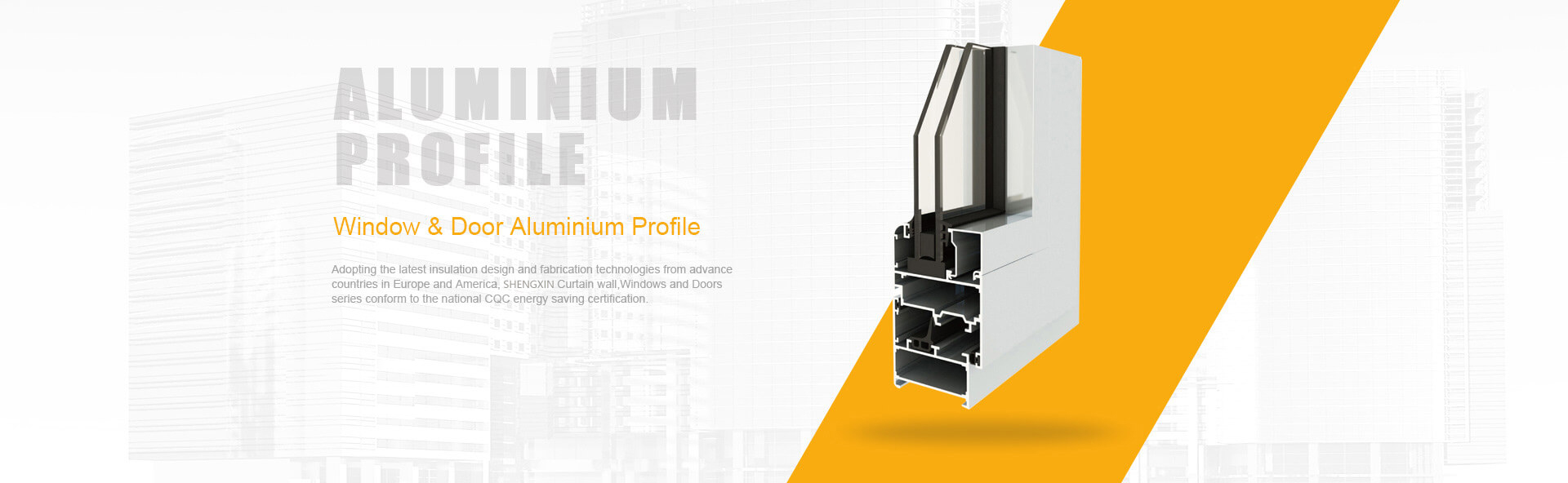

Custom aluminium extrusion is the process of creating a purpose-built aluminum profile by pushing heated billet through a die shaped for a specific cross-section. It is usually chosen when standard aluminum extrusions cannot fully meet fit, strength, assembly, or appearance requirements. This guide is written as decision support for architects, engineers, product teams, and buyers who need clarity before they commit to tooling, not as a supplier pitch.
Custom aluminium extrusion means designing a profile around the application, instead of forcing the application to adapt to a stock shape.
Industry overviews from American Douglas Metals describe the basics clearly: aluminum billet is heated until workable, then pushed through a die to create a specific shape. When that shape is engineered for one project or product, it becomes one of many possible custom extrusions. In practice, this can include channels, trims, frames, rails, enclosures, and other custom aluminum extrusions designed around real constraints.
Stock sections are pre-designed and readily available. They work well for common angles, channels, tubes, and similar forms. Custom aluminum profiles, by contrast, are developed when standard geometry creates too much compromise. That might mean extra machining, awkward joining, visible seams, or unnecessary part count. Many buyers first review stock and extruded aluminium profiles already on the market before deciding whether a new die is justified.
Custom profiles often make the most sense in facade systems, trims, equipment enclosures, frames, machine components, and modular assemblies where one cross-section can solve several problems at once. That is why both custom aluminum profiles and standard sections remain relevant choices rather than direct replacements.
Key takeaway: custom is most valuable when it reduces compromise across fit, fabrication, and finish at the same time.
Those tradeoffs sound simple on paper, but the real answer sits inside the manufacturing route itself, especially the role of the die, billet, and inspection steps that determine what an extruded aluminium profiles concept can actually become.
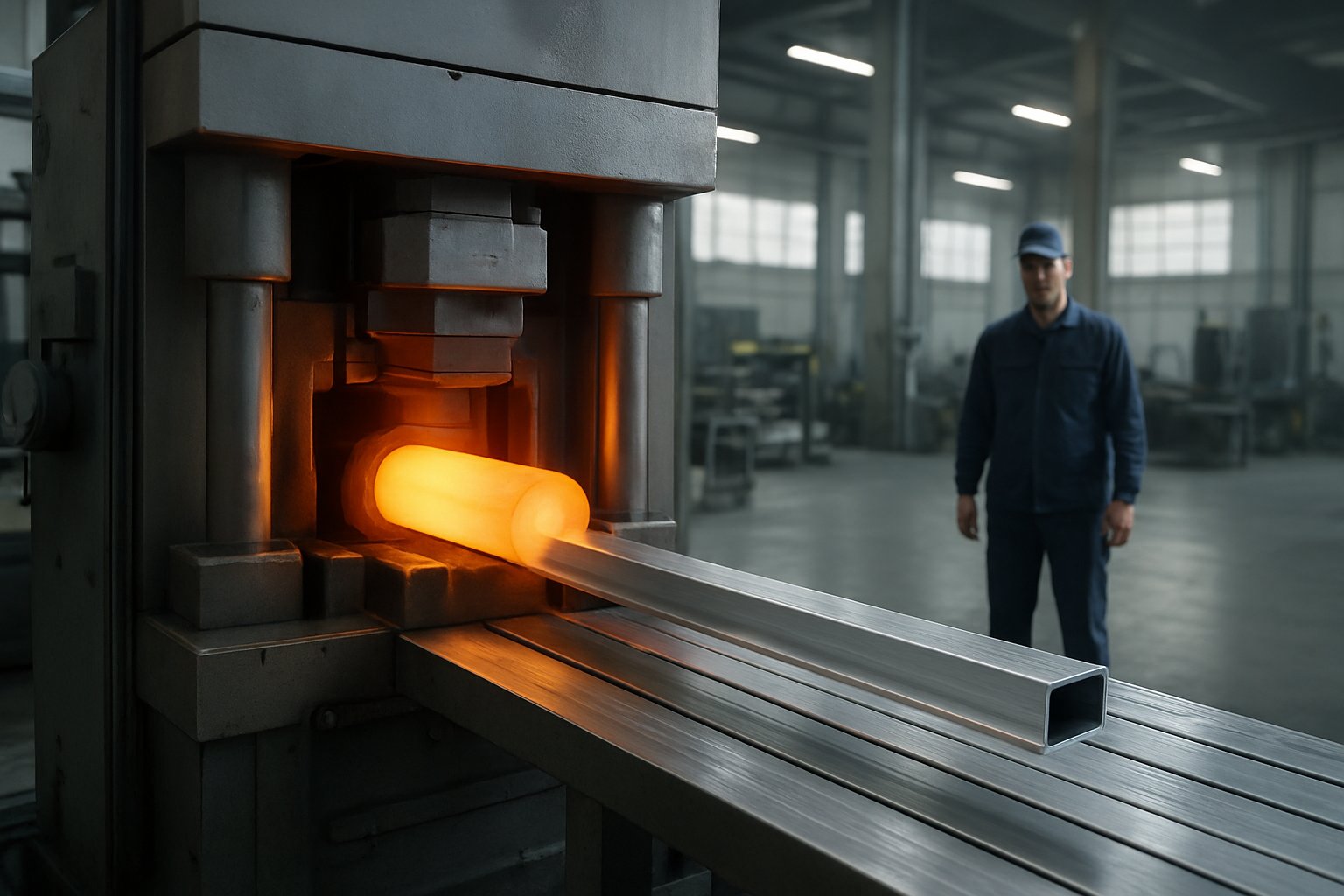
The manufacturing side of custom aluminium extrusion becomes much easier to evaluate when you picture it as a controlled flow of metal, heat, tooling, and inspection. Process summaries from ADM and Brightstar describe the same basic sequence: an alloyed billet is heated until workable, forced through a shaped opening, then cooled, straightened, cut, aged, and checked. For buyers, that matters because a drawing is only the starting point. The real issue is whether the intended cross-section can become a reliable aluminum extrusion profile in repeat production.
In plain language, the extrusion of aluminium starts with the billet, which is the solid aluminum stock loaded into the press. The source material above places billet heating in roughly the 750 to 925 F range, hot enough to make the metal pliable while still solid. The press ram then forces that billet through the die opening, and the emerging length takes on the same cross-section as the die.
From there, the new shape moves along a runout table, where it is cooled by air and, for some alloys, additional quenching methods may be used. It is then stretched to improve alignment and relieve internal stress, cut to required lengths, and artificially aged to reach the target temper. Final inspection checks whether the finished extrusion profiles meet the agreed dimensions, straightness, and surface expectations. That is why two parts with the same sketch can behave very differently in production.
The aluminum extrusion die is the main control point for profile feasibility. It determines the cross-section, influences metal flow, and helps decide whether a part can be run as a solid or hollow section. In practical buying terms, aluminium extrusion dies shape more than geometry. They affect tooling effort, redesign risk, and how repeatable the extruded profiles will be. Alloy choice and temper still matter, but the die usually answers the first question: can this profile be extruded reliably at all?
| Term | Plain-English meaning |
|---|---|
| Billet | The starting piece of aluminum loaded into the press. Its alloy affects strength, corrosion behavior, and finishing options. |
| Die | The tool with the shaped opening that forms the profile. Die design largely controls what is practical to produce. |
| Temper | The hardness and strength condition created by thermal or mechanical treatment. It influences workability and final performance. |
| Solid profile | A section with no enclosed voids. Often simpler to produce and easier to keep stable. |
| Hollow profile | A section with one or more enclosed voids. Useful for stiffness or internal channels, but typically more demanding to tool. |
| Circumscribing circle | The smallest circle that fully encloses the cross-section. It relates directly to press capacity and maximum part size. |
Those checkpoints often reveal something important early: not every good idea needs a new die, and that is where the stock-versus-custom decision starts to become far more practical.
A new die is not always the smartest first move. In many projects, the most cost-effective path is to check inventory before designing a custom extruded aluminum profile. Common guidance from Paramount Extrusions notes that stock aluminum extrusions avoid tooling cost, are available faster, and often suit prototypes, replacement parts, and simple structural needs. That makes inventory-first thinking a practical filter, not a compromise.
Begin with function, not with a drawing you hope to justify. If a standard angle, channel, tube, or bar can deliver the needed fit with light cutting, drilling, or machining, buying from an extruded aluminum shapes catalog may save both time and budget. This is especially true for brackets, guards, trim details, and other low-complexity parts where the cross-section does not carry many integrated features.
Stocked aluminum extrusion shapes also make sense when volumes are uncertain. The same applies to small aluminum extrusions used in early builds, test fixtures, or short-run assemblies. A buyer can learn a lot from running a stock profile through fabrication before paying for a custom die.
Custom becomes easier to defend when a standard section creates repeated downstream work. That might mean too many welded pieces, too much machining from bar, extra fasteners, or visible seams that weaken the finished look. A purpose-built section can combine grooves, screw ports, wire paths, stiffening ribs, and mounting faces into one cross-section. In those cases, the die cost may be offset by lower assembly burden and a cleaner result than patched-together extruded shapes or fabricated parts.
This is where a custom aluminium extrusion decision becomes less about uniqueness and more about system efficiency.
| Option | Fit to application | Tooling need | Downstream fabrication burden | Visual quality | Sourcing complexity |
|---|---|---|---|---|---|
| Stock profiles | Good for common needs, limited for exact fit | None for the profile itself | Often moderate if holes, tabs, or joining features must be added later | Usually consistent, but geometry may look generic or require visible add-ons | Low if common sizes are in inventory |
| Custom profiles | Best for purpose-built fit and feature integration | New die required | Often lower when multiple functions are designed into one section | Strong option for cleaner architectural or product-facing surfaces | Moderate, because tooling review and approval are involved |
| Machining from plate or bar | High precision for localized features, less efficient for long constant sections | Usually no extrusion die | High material removal and machining time can add cost | Can be excellent on machined faces, but less efficient for long profiles | Moderate, depends on machine capacity and material availability |
| Sheet fabrication | Good for folded enclosures and covers, weaker match for complex constant cross-sections | May need bending and punching tools | Can rise quickly with fasteners, bends, and secondary joining | Good when flat-panel aesthetics are acceptable | Moderate |
| Welded assemblies | Flexible for built-up structures | No extrusion die, but fixturing may be needed | High due to cutting, fitting, welding, and cleanup | Variable, especially where weld marks affect appearance | Higher because more process steps must be coordinated |
A second look at the extruded aluminum shapes catalog is often worthwhile before committing to tooling, but once custom geometry clearly reduces parts, labor, or visual compromise, the better question becomes which alloy and temper will support that design in real use.
When a profile has earned the move to custom aluminium extrusion, shape is only half the decision. The alloy and temper decide how easily that section runs through the press, how it responds to finishing, and how it performs in service. That makes material choice more than an engineering checkbox. It also affects sourcing, lead time, machining, welding, and the final look of an anodized aluminum extrusion.
For many projects, buyers land in the 6000 series because it offers a useful balance of extrudability, corrosion resistance, weldability, and heat-treatability. Guidance from Yaji, Can Art, and Gabrian points to a practical split. 6063 is widely chosen for smooth, precise architectural aluminum extrusions. 6463 is optimized for bright decorative surfaces. 6005 is a medium-strength option for structural extrusions. 6061 is commonly selected where higher strength and better machinability matter. Yaji also notes that 6061 contains copper, which helps strength but can slightly reduce corrosion resistance compared with 6063.
| Alloy | Usually chosen when the priority is | Finish and anodizing tendency | Fabrication and processing notes |
|---|---|---|---|
| 6063 | Extrudability, surface quality, and visible architectural use | Good surface finish and strong fit for anodizing | Good for complex profiles; moderate machinability |
| 6005 | Structural balance without moving to the hardest-to-extrude choices | More function-led than appearance-led | Good weldability; often used for medium-strength structural sections |
| 6463 | Decorative brightness and cosmetic appeal | Especially strong for bright anodized or polished finishes | Lower strength; less suited to machining-intensive parts |
| 6061 | Strength, machinability, and broader industrial use | Fair surface compared with 6063 and 6463 | Good weldability and strong fit for machined components |
Temper tells you the alloy's post-extrusion condition. Can Art summarizes the common designations clearly:
This matters because the same alloy can behave very differently depending on temper. If bending or forming still has to happen later, extra formability may be valuable. If the section must hold shape and carry load, T5 or T6 usually becomes the more relevant discussion. Typical T6 comparisons in the Yaji comparison place 6061 and 6005 above 6063 and 6463 on strength, while 6063 and especially 6463 remain attractive when finish quality leads the choice.
In practice, custom 6063 aluminum extrusions often make sense for trims, rails, facade details, and other appearance-led work. Many custom 6061 aluminum extrusions, by contrast, suit frames, brackets, and machined sections where functional demands are higher. That is the usual split between finish-first and performance-first thinking.
For visible applications, a cleaner surface can outweigh chasing maximum strength. For industrial aluminium extrusion projects, the tradeoff often flips. Buyers may accept a less refined surface if machining, welding, or structural behavior matters more for the finished aluminium extrusion parts. The challenge is that material choice never stands alone. Wall thickness, hollows, tolerances, and cosmetic faces all push back on the alloy and temper selection, which is exactly where rework often begins.
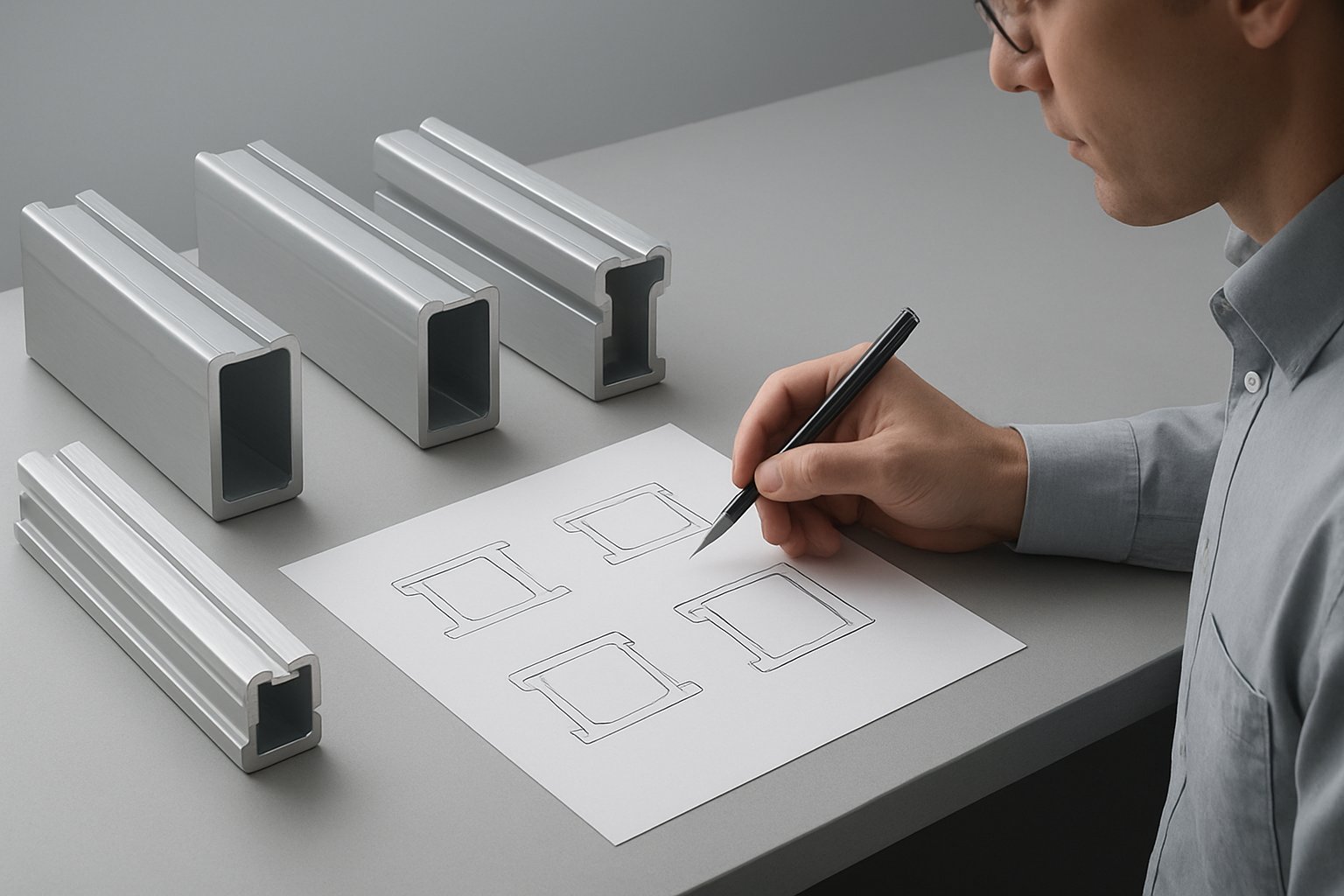
Alloy and temper shape material behavior, but geometry usually decides whether a section can be produced cleanly. That is why many problems in custom aluminium extrusion start in CAD, not on the press. In practice, strong custom extrusion design is less about making a profile look clever and more about making it stable through extrusion, cooling, straightening, finishing, and fabrication.
Practical guidance in the DFM guide and at Bonnell repeats the same message: keep the cross-section as simple, balanced, and consistent as function allows. Symmetry helps reduce twist, bow, and die stress. Uniform walls matter for the same reason. The DFM guide treats adjacent wall ratios above 2:1 as a warning sign and recommends smooth, radiused transitions rather than sharp steps. It also suggests internal fillets of roughly 0.5 mm to 1.0 mm where space allows, because sharp corners can create streaks and local die loading.
Section type changes difficulty too. Solid sections are usually the easiest. Semi-hollow and hollow sections can add real value, but they bring more die complexity and more straightness risk. If a void only exists for wire routing, fastening clearance, or weight reduction, ask whether ribs, a simpler cavity, or light secondary machining could do the same job. That is often where custom aluminum extrusion profiles stop behaving like ambitious alum extrusion shapes and start behaving like manufacturable parts.
| Design decision | Likely manufacturing consequence |
|---|---|
| Large wall-thickness swings | Unbalanced metal flow, slower running, and more distortion risk |
| Sharp corners and abrupt transitions | Higher die stress, more visible flow lines, and harder finishing |
| Multiple hollows or very tight slits | Higher tooling complexity and more rework during die tuning |
| Long unsupported fins or cantilevers | Greater bow, twist, and handling sensitivity |
| Datum flats, tabs, and alignment features | Easier machining, inspection, and repeatable assembly |
Tolerances deserve the same discipline as geometry. Hydro states the cost point plainly: tighter tolerances increase expense. That does not mean loose control is acceptable. It means tight limits should be reserved for fit, sealing, datum surfaces, and other truly functional features. Recognized standards such as Aluminum Association, ASTM B221, or EN 755 are often the right baseline for non-critical dimensions.
Straightness is another common blind spot. Long, slender aluminum extrusion profiles can bow or twist during cooling, stretching, and handling, especially when the section is thin-walled or asymmetric. It helps to mark where straightness actually matters on the finished part instead of applying the same requirement to every edge. The overall envelope matters too. When reviewing aluminum extrusion sizes, remember that the circumscribing circle affects press choice, die size, and sourcing flexibility. The same DFM guide notes that many general-purpose presses prefer sections at or below a 203 mm circumscribing circle. If a single aluminum extruded shape pushes beyond that range, two smaller interlocking sections may be easier to source and control than one oversized profile.
This review gives suppliers a realistic starting point and helps internal teams challenge weak assumptions before tooling money is spent. It also exposes a detail that drawings often hide: the best cross-section is not just the one that extrudes well, but the one that still works after machining, finishing, assembly, and packaging choices are locked in.
A profile can satisfy extrusion design rules and still create avoidable cost later. In custom aluminium extrusion, that usually happens when finishing, machining, or packaging is treated as something to decide after the die is cut. The relationship works the other way around. A part meant for visible use, tight assembly, or repeatable aluminum extrusion fabrication needs those downstream steps built into the cross-section from the start.
Surface expectations change design priorities early. The DFM guide notes that anodizing highlights substrate uniformity and can reveal scratches, while powder coating can hide fine die lines. That is why an anodized extruded aluminum part often needs cleaner cosmetic faces, better corner transitions, and clearer agreement on what counts as a visible surface. Bonnell makes a similar point: exposed surfaces can be marred during processing, so critical faces should be identified early and protected through die design and packaging choices.
This matters even more for aluminum extrusion trim, facade details, and extruded aluminum trim profiles, where a small streak or handling mark may be far more noticeable than it would be on hidden industrial members. Many teams find it useful to label surfaces by visibility, such as Class A, B, and C, before tooling review begins.
A profile that will become a fabricated aluminum assembly should give the shop clear places to hold, reference, cut, and join. The same DFM guidance recommends datum flats, alignment tabs, drill starters, pilot grooves, and punch-friendly access where secondary work is expected. Those details reduce fixture complexity and make repeatability easier. If drilling, tapping, or light milling is part of the plan, leave enough material where threads, holes, or machined faces actually need to land.
| Downstream operation | Early design questions |
|---|---|
| Anodizing | Which faces are cosmetic, and will scratches or flow lines be visible after finish? |
| Painting or powder coating | Is the finish expected to hide minor die lines, or is a premium surface still required? |
| Cutting | Where are the critical length datums, and which edges need protection after sawing? |
| Drilling and tapping | Is there enough local wall thickness or a boss where threads and holes must go? |
| Machining | Are there stable datum surfaces and practical clamping areas for repeatable setups? |
| Welding and assembly | Can joining features, tabs, slots, or screw bosses reduce later labor and fixturing? |
| Packaging | Which edges or faces will be damaged first if bars rub during transport? |
The best section for the press is not always the best section for the full process. A slender shape may extrude well but twist during cutting. A clean visible face may need junction lines moved elsewhere. An elegant hollow may become awkward if machining tools cannot reach the functional area. Even simple extruded aluminum trim can benefit from small locating ribs or protected edges that make assembly faster and damage less likely.
Those decisions do not belong in scattered follow-up emails. They belong in the quote package, where tooling, samples, fabrication steps, and approval expectations can be discussed with fewer surprises.
A useful quote does more than put a price on a drawing. In custom aluminium extrusion, it sets expectations for tooling, samples, finishing, delivery, and change control before money is tied up in a die. Notes from the PPE production guide and the Aluphant tooling breakdown point to the same lesson: better inputs from the buyer usually mean fewer surprises later.
For a custom profile extrusion project, suppliers usually need enough detail to judge die feasibility, process flow, and downstream work, not just the cross-section alone. That also affects custom aluminum extrusion cost, because tooling and production effort vary with profile complexity, alloy choice, finish expectations, and press size.
Tooling is the up-front investment required to create the extrusion die. The Aluphant source describes it as covering die design and engineering, die manufacturing, surface hardening, trial extrusion and adjustment, plus early maintenance needs. Its indicative tooling ranges run from USD 300 to 600 for small solid profiles up to USD 5,000 or more for special shapes. Those numbers are not universal, so ask for a cost breakdown rather than comparing one line item in isolation.
Ownership needs the same clarity. That source outlines customer-owned, supplier-owned, and amortized tooling models. Buyers should ask who owns the die, where it is stored, how reconditioning is handled, and whether design changes can be managed by die modification or require a new tool. The PPE guide notes that both scenarios can happen.
Approval samples are the real gateway to production. The PPE guide notes that production begins after die trial samples are approved, and that quoted lead times are often ship dates, not delivery dates. It also suggests checking on-time performance, with anything above 90% presented there as a positive sign. For custom extruded profiles, that matters because finishing, fabrication, and freight can all sit between the mill and your receiving dock. For prototype aluminium extrusions, confirm whether the sample is only for fit and form, or whether it must represent the full finished part.
That is why the buying decision should not end with a quote. A quick stock check and a sharper supplier shortlist can still save time, tooling expense, and avoidable rework before the order is placed.
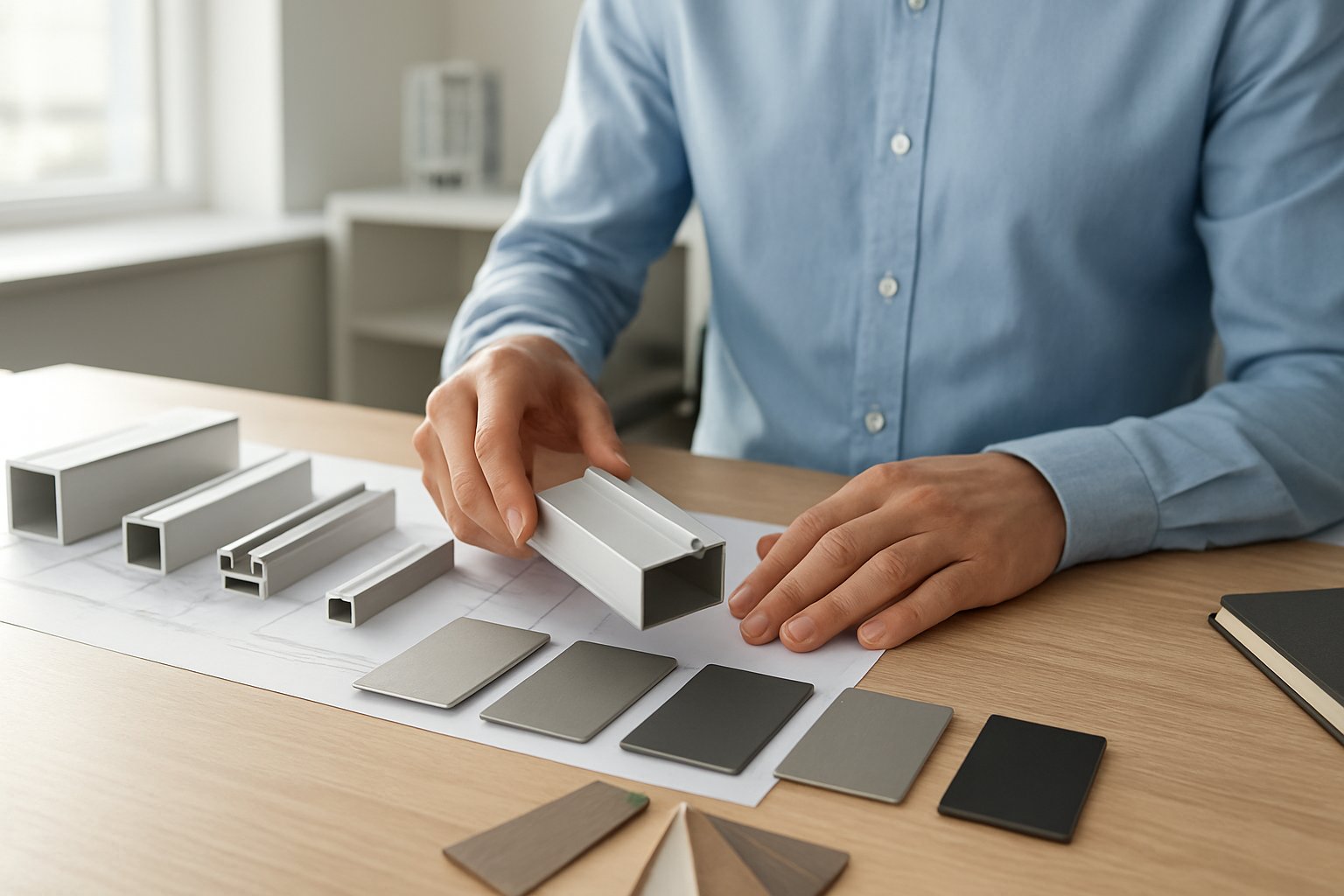
A shortlist gets much sharper when you start by asking a simple question: can stock solve this well enough? Guidance from Paramount reinforces that stock profiles remove tooling cost and are often the fastest path for simple shapes, replacement parts, and early builds. So if you are deciding where to buy aluminum extrusion, begin with inventory, then move to custom only when geometry, finish, or assembly savings clearly justify it.
That inventory-first path is usually the best answer to where to buy extruded aluminum for prototypes or low-complexity parts. For purpose-built sections, the supplier review needs to go deeper.
A capable aluminum profile supplier should be able to discuss alloys, finishing, fabrication, die review, sample approval, and packaging in one conversation. Among custom aluminum extrusion companies, the strongest signal is not the lowest quoted price. It is whether the team can spot risk before production.
Typing aluminum extrusion suppliers near me into search is useful for local freight and easier site visits, but proximity alone will not protect you from rework.
The best supplier choice usually becomes obvious when the catalog, quote process, and technical conversation all point in the same direction.
Custom aluminium extrusion is a made-to-order process that creates a profile for a specific application instead of relying on a standard section. Heated billet is pushed through a dedicated die, which forms one consistent cross-section along the full length. It is usually the better route when a stock shape cannot deliver the needed fit, assembly features, strength balance, or finished appearance without extra welding, machining, or added parts.
A custom die is usually justified when a standard angle, channel, tube, or bar keeps creating avoidable downstream work. If a stocked section can do the job with light cutting or drilling, inventory is often the smarter first step, especially for prototypes and uncertain volumes. Custom becomes more attractive when one profile can combine mounting points, grooves, cosmetic faces, and joining features that would otherwise require multiple components or repeated fabrication.
Start with the end use, the finish, and the fabrication plan. 6063 is often chosen when surface quality and anodizing matter, 6463 is commonly linked to decorative brightness, 6005 is a practical option for structural balance, and 6061 is often preferred for higher strength and machining needs. Temper matters too because it affects how the part behaves after extrusion. A softer condition may help later forming, while a stronger temper is often better when the part must hold shape or support load.
Yes. Those choices should shape the profile before tooling is approved, not after. A section that extrudes smoothly may still be a poor choice if it lacks clean cosmetic faces for anodizing, enough material for threads, or stable datum surfaces for machining. Early planning also helps with cutting, drilling, welding, packaging, and damage control. In short, the best profile is the one that works across the full manufacturing route, not only at the press.
Ask how the supplier reviews die feasibility, which alloys and finishes they support, what sample approval looks like, and how they handle fabrication, inspection, packaging, and delivery. You should also clarify tooling cost, die ownership, storage, maintenance, and what happens if the drawing changes after trials. When comparing options, it helps to review a real catalog as a benchmark. For example, Shengxin Aluminium offers custom profile options for architectural and industrial use, including anodized finishes, which can help buyers compare supplier breadth, finish range, and application fit before making a final shortlist.



 un service en ligne
 0086 136 3563 2360
 sales@sxalu.com
 +86 136 3563 2360
 français
 English
 Deutsch
 русский
 español
 português
 العربية
 ไทย
ไทย Việt
Việt Українська