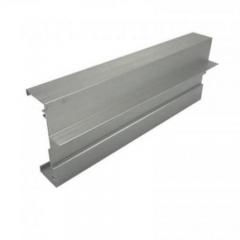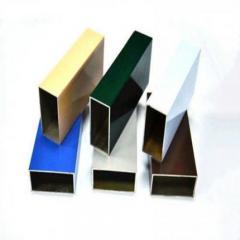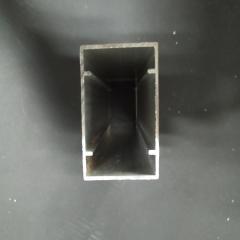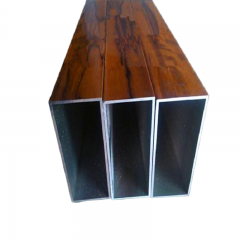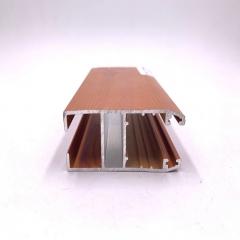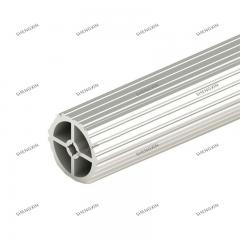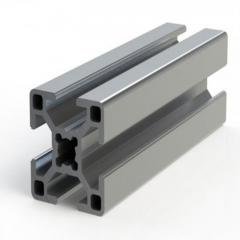
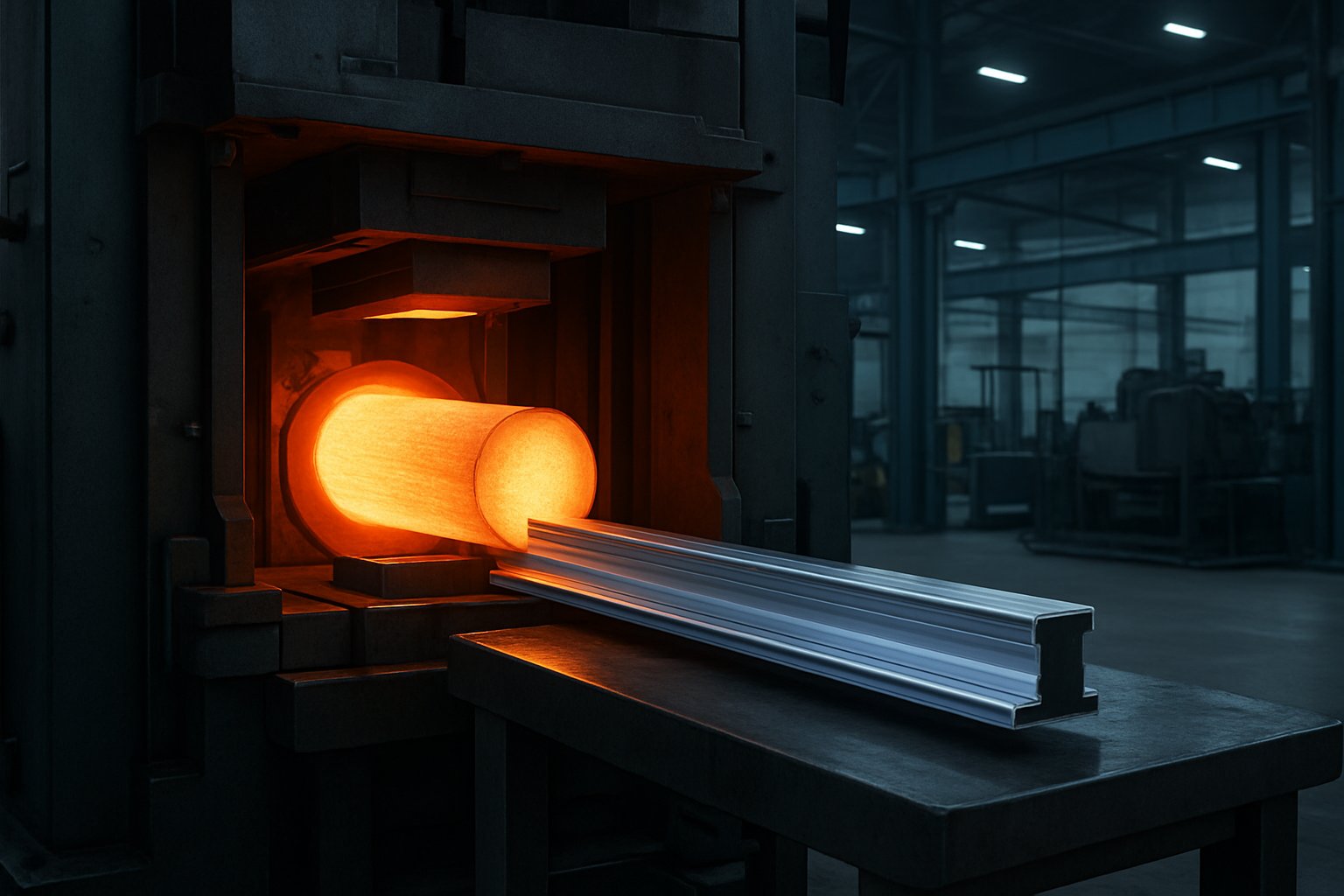
If you are asking how is aluminum extrusion made, the short answer is simple: a heated aluminum billet is pushed through a shaped die, creating a long profile with the same cross section from end to end. That profile is then cooled, straightened, cut, and finished for use in real products.
Aluminum extrusion is a manufacturing process that forces heated aluminum alloy through a die to produce long, continuous profiles with a specific cross-sectional shape.
Many first-time buyers ask, what is aluminum extrusion? In plain language, it is a way of shaping aluminum by pressure rather than by pouring it into a mold. It is one form of metal extrusion, and it works especially well for parts that need a consistent shape along their full length. A cylindrical billet is heated until workable, pressed through the die, and the emerging section becomes the final profile base. So, what is extruded aluminum? It is the material that exits the die as a rail, channel, frame member, or tube.
The idea has deep roots. Joseph Bramah introduced an early extrusion concept, Thomas Burr advanced the hydraulic press, and Alexander Dick helped establish hot extrusion for modern use, a history summarized by RapidDirect. In a current plant, though, the focus is less on history and more on controlled flow, consistent shape, and repeatable output.
Casting pours molten metal into a mold. Rolling squeezes metal into sheet or plate. Machining cuts material away from a larger block. Extrusion is different because the die opening creates the profile, and that shape stays constant along the length. If you have ever wondered what is extrusion at its core, it is shaping material by forcing it through an opening under pressure.
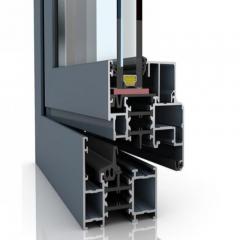
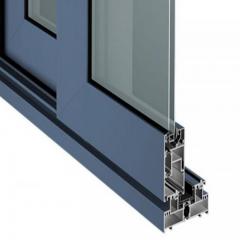
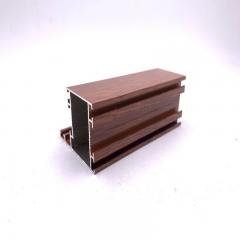
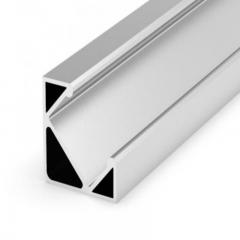
That is why extruded aluminum shows up in frames, trims, structural members, and other long profiles. The concept is easy to picture. The real precision starts inside the press, where billet condition, die setup, and force control determine what comes out.
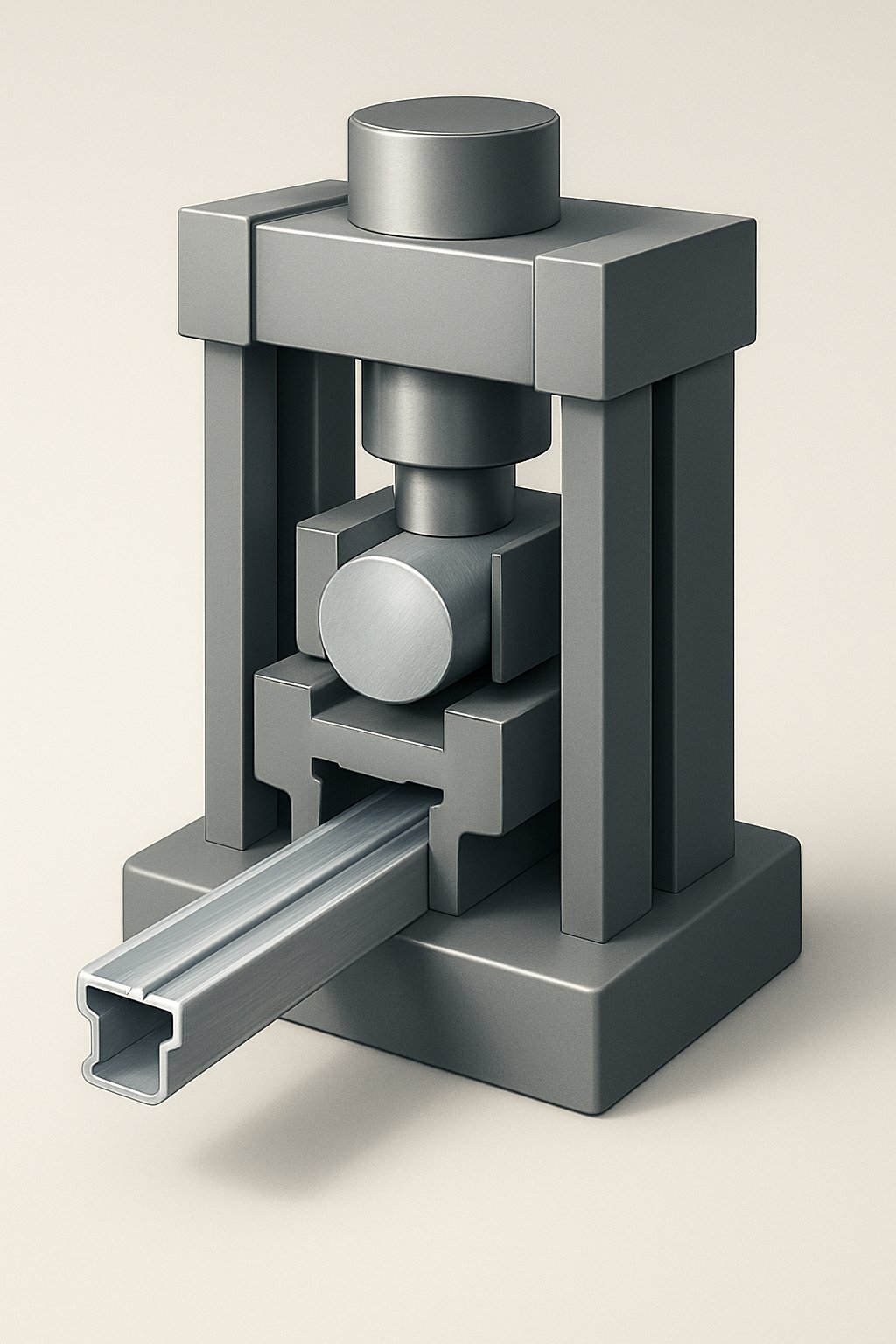
Inside the press, aluminum stops behaving like a simple metal bar and starts flowing in a controlled way. That is the heart of the aluminum extrusion process. The main aluminum extrusion machine is a hydraulic press, which uses fluid power to drive a ram forward with very high force.
Five plain-language terms make the process easier to follow. A billet is the solid cylindrical log of aluminum feedstock. A die is the hardened steel tool with the opening that creates the profile shape. A mandrel is the internal support used to form hollow spaces, such as in a tube. A ram is the part that pushes the billet. A hydraulic press is the full press system that generates and controls that pushing force.
Production starts with alloy choice, because different alloys flow differently and respond differently to heat treatment later. Billets are cast, cut to pressable length, inspected for defects, and preheated so the metal becomes workable but does not melt. Typical billet preheat guidance sits around 700 to 930°F, or 370 to 500°C, in material from Gemini Group. The die is mounted and aligned in the press, and a mandrel is added when the profile needs internal cavities. Some plants also use lubricant and a dummy block between the ram and billet to reduce friction and help distribute force more evenly, as described by Paramount Extrusions.
In a direct extrusion press, the heated billet sits inside a container while the ram pushes it toward a stationary die. The aluminum does not liquefy. Instead, it plastically deforms and flows through the die opening. Large presses may apply about 1,000 to 15,000 tons of force, again noted by Gemini Group. To extrude aluminum consistently, operators have to balance billet temperature, die temperature, ram speed, and tooling alignment. Those variables influence how smoothly the metal flows, how clean the surface looks, and how closely the final dimensions match the target.
| Stage | Purpose | What happens to the aluminum | Why it matters |
|---|---|---|---|
| Alloy and billet prep | Match material to the application | Billet is cast, inspected, cut, and heated | Improves flow and reduces defect risk |
| Die and mandrel setup | Create the required cross section | Tooling defines outer and inner geometry | Sets the foundation for profile accuracy |
| Loading and pressing | Build pressure in the container | Billet softens and begins plastic deformation | Affects consistency and dimensional control |
| Flow through die | Form the profile shape | Metal takes the exact shape of the opening | Influences wall balance and surface finish |
| First die exit | Transfer to downstream handling | Continuous profile emerges from the die | Sets up cooling and straightness control |
By the time material reaches the die face, quality is already being decided. If flow is uneven, one side of the profile can run faster than the other. If heat is poorly controlled, surface drag, tearing, or dimensional variation can appear. That is why the extrusion process is not just force. It is controlled flow. In any aluminum extrusion press, the first length coming out of the die tells operators whether conditions are stable. Freshly formed metal has its shape at that point, but not its final readiness. The moment it clears the die, cooling, puller handling, and straightness control take over.
The moment the profile clears the die, it has its cross section, but it is not finished or fully stable. This stretch of the line is a critical part of how aluminum extrusion is made, because heat removal, handling, and straightness control all influence whether the profile will hold tolerance later. A structural section or an extruded aluminum tube can leave the press in the right shape and still create trouble downstream if it cools unevenly or twists on the table.
This step-by-step flow appears in process summaries from RapidDirect, with heat treatment context also outlined by Gabrian.
These are not optional extras. They are core extrusion processing controls. Rapid cooling helps preserve the right thermal path for heat-treatable alloys, while stretching improves straightness and relieves internal stress, a role also noted by American Douglas Metals. That matters to buyers because bowed or twisted profiles are harder to machine, harder to assemble, and less predictable to finish.
Final cutting turns long press output into usable aluminum extrusion parts. Aging then develops the temper needed for later service, especially in common extrusion alloys. In practical terms, this is why asking how are aluminum extrusions made should never stop at the press itself. Good aluminum extrusion processing continues through cooling, straightening, sawing, and heat treatment. Those steps often decide whether a profile can become a consistent frame member, tube, or architectural shape. They also point to a bigger issue: not every route manages heat, friction, and metal flow the same way, which is where extrusion method choice starts to matter.
Those cooling and straightening results start much earlier than the runout table. To answer how does aluminum extrusion work in a real plant, it helps to know that one metal extrusion process can follow different routes. The biggest splits are direct versus indirect extrusion, and hot versus cold extrusion. The finished profile may look similar, but friction, force, heat control, and surface behavior can change quite a bit.
Bonnell Aluminum describes direct extrusion as a setup where the die stays stationary and the ram pushes the billet through it. In indirect extrusion, the billet remains stationary while the die assembly, mounted on the ram, moves against the billet. RapidDirect notes that direct extrusion is the most common aluminum route. It also points out that indirect extrusion creates less friction, which can support better heat control and more consistent product quality.
| Method | Process flow | Die movement | Friction characteristics | Typical profile use | Advantages | Tradeoffs |
|---|---|---|---|---|---|---|
| Direct extrusion | Ram pushes billet forward through a stationary die | Die stays fixed | Higher friction between billet and container wall | Most standard and custom long aluminum profiles | Common, versatile, widely used for many shapes | More friction means more heat generation and higher force demand |
| Indirect extrusion | Die assembly moves against a stationary billet | Die moves with the ram assembly | Lower friction than direct extrusion | Profiles where steadier flow and consistency are important | Better heat control, steadier force, often more uniform quality | Equipment setup is more specialized |
| Hot extrusion | Billet is heated to a workable state before pressing | Not defined by die motion alone | Lower forming resistance than cold extrusion | Common industrial route for aluminum profiles | Less pressure required, suitable for larger amounts of metal | Surface oxidation and finish control still need close management |
| Cold extrusion | Metal is pressed without the same hot-billet preheating used above | Not defined by die motion alone | Higher forming resistance than hot extrusion | Selected work where oxidation control and finish are priorities | Can reduce oxidation and may improve surface finish | Typically needs more force than hot extrusion |
In the common hot aluminium extrusion process, the billet is heated until it becomes workable but does not melt. Bonnell lists billet temperatures around 800 to 925 F in its process description, and Silver City Aluminum explains that hot extrusion takes less pressure than cold methods. By contrast, aluminium cold extrusion is valued for lower oxidation and, in some cases, a better surface finish.
Most industrial aluminum profiles are made by hot direct extrusion, with a heated billet pushed through a stationary die.
When people compare types of aluminum extrusion, they often think only about the shape. In practice, process route matters just as much. Direct hot extrusion fits many of the types of aluminum extrusions used for structural, architectural, and general-purpose profiles, so it dominates the modern extrusion manufacturing process. Indirect extrusion becomes attractive when lower friction and steadier metal flow are important. Cold routes enter the conversation when finish and oxidation behavior outweigh the broader flexibility of hot profile production. So when someone asks how is aluminum extrusion made, the best answer is not a single path, but a family of related methods. And once that method is chosen, the next limitation is rarely the press alone. It is the die geometry and profile design that decide what shapes are truly practical.
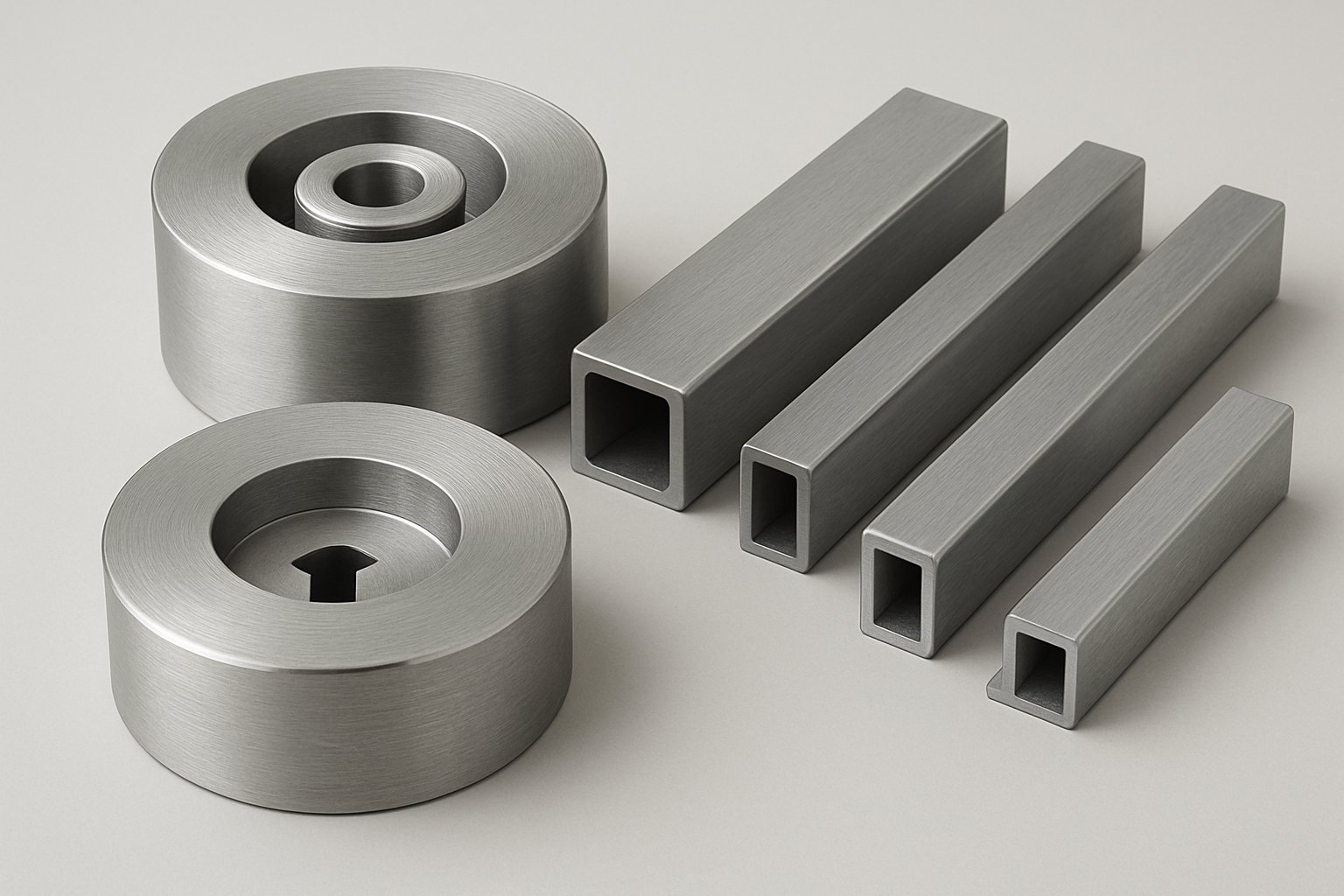
Method choice sets the broad route, but tooling decides what geometry can actually survive the press. An aluminum extrusion die is a thick steel disk with an opening that matches the target cross section, and each unique profile needs its own die and support tooling, as outlined by Gabrian. The press provides force. The die creates the aluminum extrusion profile. That is why aluminum extrusion dies are part of the main process, not a side note. They determine which extrusion shapes run smoothly, which ones need redesign, and which ones raise cost or defect risk.
For solid sections such as bars, angles, and channels, the die opening forms the outside contour directly. Gabrian notes that solid dies are commonly built as flat-face, pocket, or feeder styles. Hollow sections, such as tubes and multi-void framing members, need more tooling. A porthole die uses a mandrel to create the inner void and a cap to form the outer shape. MMG explains that the metal splits at the ports, rejoins in a weld chamber, and then moves through the bearing area before leaving the die. Support tools such as backers and bolsters sit behind the die to reduce deformation and carry load. In practice, aluminum extrusion die design is not just about drawing the final outline. It is about controlling flow, resisting heat, and keeping the tool stable under very high pressure.
The profile family changes tooling difficulty quickly.
| Profile type | What it means | Tooling impact | Typical examples |
|---|---|---|---|
| Solid | No fully enclosed voids | Simplest die style and generally lower tooling complexity | Angles, channels, bars, trim |
| Hollow | One or more enclosed voids | Needs mandrel and cap, plus more complex flow control | Tubing, multi-void frames |
| Semi-hollow | Partially enclosed void with a narrow gap | Higher tongue stress and more difficult die support | Narrow channels, some rails and heat sink forms |
Semi-hollow geometry is where many designs become tricky. Gabrian defines tongue ratio as Area divided by Gap squared, or Area/Gap². As that ratio rises, the tongue area becomes more vulnerable under load, so the shape gets harder to extrude. MMG also notes that a larger tongue ratio usually means more die complexity and more tooling cost.
These rules show up in everyday aluminum extrusion profiles, from simple tubing to decorative trim. Good tooling can expand what is possible, but it cannot erase geometry limits. Not all extruded aluminum shapes will flow the same way, and that is where alloy and temper start to change the picture again.
Die geometry controls the shape, but the metal itself controls how smoothly that shape can be made. In aluminum alloy extrusion, alloy choice affects flow through the die, surface quality, corrosion behavior, and the strength the profile can reach after heat treatment. For many profiles, the starting point is the 6xxx family, which a 6000 series comparison describes as a practical balance of strength, corrosion resistance, extrudability, and heat-treatability.
The right alloy is not just a material pick. It changes both how the profile is extruded and how it performs later in service.
In the extrusion of aluminium alloys, small chemistry changes create big shop-floor differences. Some grades flow more easily into thin walls and detailed shapes. Others are better suited to thicker, load-bearing sections, even if they are harder to press cleanly. That is why buyers should treat the aluminum extrusion material as a process decision, not just a line item on a quote.
A broad alloy guide and the 6000 series comparison point to a clear pattern: 6063 is known for excellent extrudability and finish quality, while 6061 and 6082 shift toward higher structural capability. Between them sits the 6005A and 6005 range, often chosen when a project needs more strength than 6063 without moving all the way to the more difficult-to-extrude end of the scale.
| Alloy | Relative extrudability | Typical use cases | Finishing friendliness | General strength position |
|---|---|---|---|---|
| 6063 | Excellent | Windows, doors, curtain walls, decorative and architectural profiles | Very good, especially where smooth surface and anodizing matter | Moderate |
| 6061 | Moderate | Structural components, machined parts, automotive frames, general fabrication | Good, but usually less finish-focused than 6063 | High |
| 6005A / 6005 family | Good to fair | Transport frames, ladders, scaffolding, conveyor and modular structures | Good for structural profiles | Medium-high |
| 6082 | More difficult | Heavy-duty transport frames, marine decks, machinery bases, structural members | Usually chosen for strength more than appearance | Very high among common 6xxx profile alloys |
For sourcing teams, that table answers a common question fast. If appearance and easy pressing lead the job, 6063 is often the safer bet. If the profile will be drilled, CNC machined, or used in a more structural role, 6061 may fit better. If the design leans toward industrial framing or transportation, a 6005A-family option can make sense. When strength is the priority, 6082 moves higher on the list. A well-matched extruded aluminum alloy reduces compromise later.
Alloy is only half of the story. Temper describes what happens after the profile leaves the die. A heat treatment guide explains that quenching is performed in-line after extrusion, rapidly cooling the profile so later aging can develop final properties. Artificial aging then holds the profile at controlled temperature for several hours to increase strength and hardness.
For common aluminum extrusion alloys, the buyer-facing differences are straightforward:
That matters in real purchasing decisions. A profile that stays straighter after quenching is easier to machine consistently. A higher-strength temper can better suit structural service. A finish-oriented alloy paired with the right temper can also support better-looking anodized or coated parts. In other words, aluminium alloy extrusion does not end at die exit. The alloy sets the potential, the temper develops it, and the finished part still depends on what happens in machining, fabrication, and surface treatment.
Temper gives the profile its baseline properties, but a raw extrusion is still only partway to becoming a usable component. In real production, secondary work turns a long section into something that can be assembled, installed, or shipped with confidence. That is why aluminum extrusion machining and finishing belong inside the full manufacturing story, not outside it.
Post-press work usually combines cutting, hole-making, edge cleanup, and fit-up. Material from Silver City Aluminum lists common post-extrusion operations such as sawing, deburring, punching, mitering, heli-coiling, and assembly. In practice, each step adds something specific:
This is the practical side of aluminum extrusion fabrication. A profile may come out of the press with the right cross section, yet still need precise secondary work before it functions as a frame member, housing, or support.
Finishing changes both performance and appearance. The same Silver City references describe anodizing, powder coating, and painting as standard downstream options. Anodizing helps protect the surface and supports decorative finishes. Powder coating adds color and a durable outer layer. Painting can also be used where color control and adhesion matter. These choices affect corrosion resistance, visual consistency, and readiness for customer-facing use.
Common aluminum extrusion applications span several sectors. The Alekvs guide highlights building systems such as doors, windows, and curtain walls, along with transportation parts, industrial frames, enclosures, and heat sinks. That also helps answer a frequent buyer question: what are aluminum extrusions used for? They are used wherever a long, consistent profile can be cut, machined, finished, and assembled into a larger product.
Seen that way, finished quality depends on much more than pressing alone. The real question for a buyer becomes whether the required cuts, machining, finish, inspection, and packaging are clearly defined before production starts.
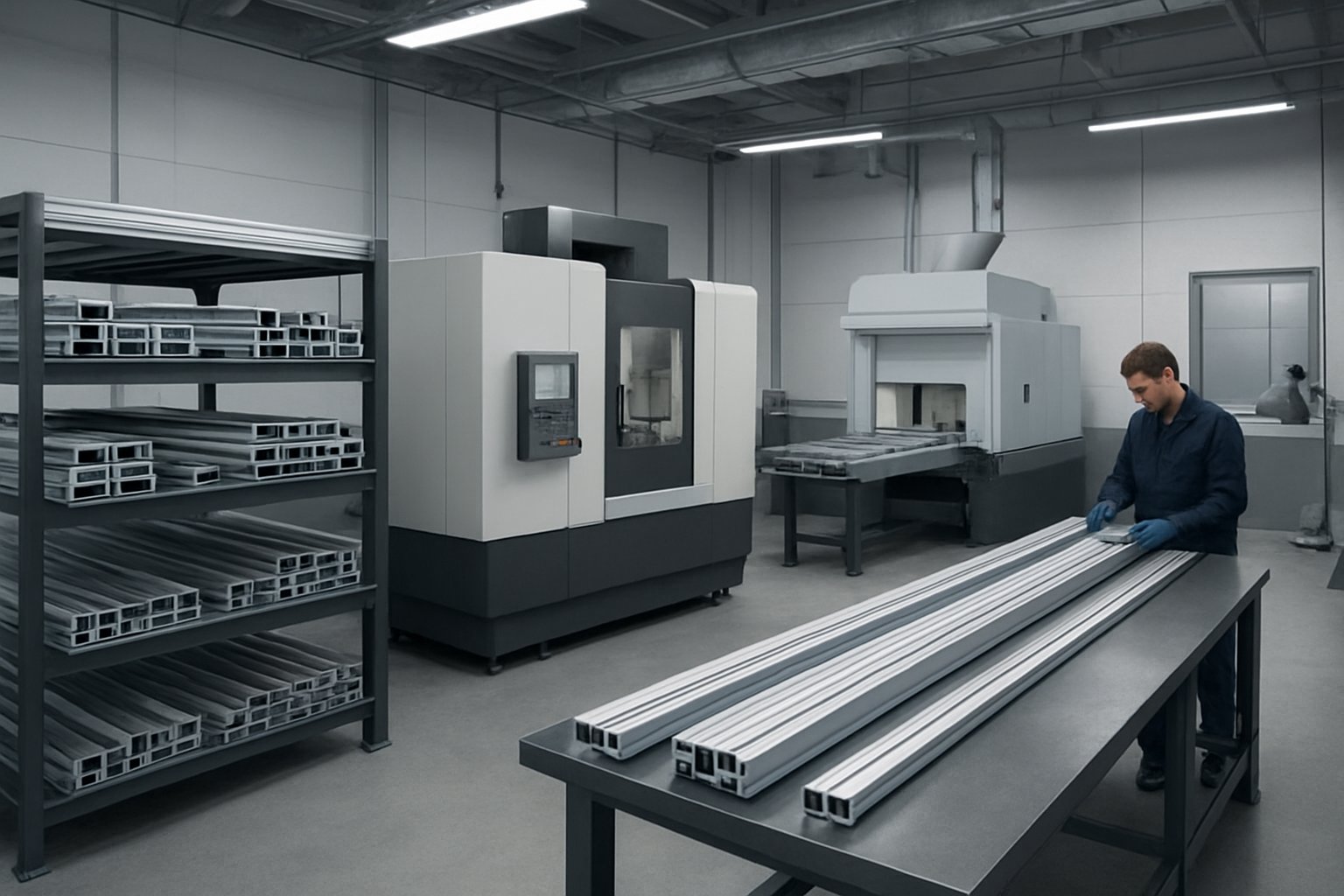
A clean profile drawing is a start, not a complete purchasing document. In aluminum extrusion manufacturing, delays often come from missing details around finish, machining, inspection, or packaging rather than the press run itself. If a new stakeholder asks, what is an aluminum extrusion, the sourcing answer is practical: it is a profile defined not only by shape, but also by alloy, temper, processing, and delivery requirements.
Align design, tooling, extrusion, machining, and finishing early so the final part matches the original intent.
Guidance from Profile Precision Extrusions and supplier-screening points summarized by Inquivix point to the same lesson: be specific before quoting begins.
That checklist also helps answer another common question: what are aluminum extrusions in a buyer's world? Usually, they are not just raw lengths. They are finished or semi-finished parts moving through an aluminum profile manufacturing process.
Supplier capability matters just as much as the print. Ask whether die development is in-house or outsourced, which alloys and tempers are regularly processed, what finishing is truly performed on site, and what inspection records can be supplied. It is also smart to ask what aluminum extrusion equipment is available across pressing, cutting, CNC machining, coating, and QA. In-house finishing and machining can reduce handling and turnaround when compared with fragmented supply chains, a point emphasized in the Inquivix guidance.
When one supplier can carry the job from profile to finished part, coordination gets easier. Profile Precision Extrusions describes this as a one-stop-shop approach for cutting, machining, and coating from a single vendor. A larger-scale example appears on the Shengxin Aluminium processing page, which lists more than 30 years of experience, 35 extrusion machines from 600T to 5500T, precision CNC machining, and anodizing and powder coating lines. That does not replace technical review, but it shows the kind of integrated capability buyers should look for when continuity matters.
For anyone still wondering, what are aluminum extrusions after all of this? They are shaped aluminum profiles made useful by the decisions wrapped around them. Good sourcing turns pressure and tooling into repeatable parts, not just metal coming off a press.
Aluminum extrusion is a shaping method that uses pressure instead of pouring or cutting. A solid aluminum billet is heated until it can flow, then a hydraulic ram pushes it through a hardened die. The metal comes out as a long profile with the same cross section along its length. That profile is then cooled, straightened, cut, and sometimes aged before it moves into machining or finishing.
Die exit is only the midpoint of the process. Once the profile emerges, it is guided along a runout table, cooled or quenched, pulled to stay aligned, stretched to improve straightness, and cut into usable lengths. If the alloy requires it, the profile is also aged to develop its final temper. These steps help control residual stress, shape stability, and how well the part performs in later fabrication.
In direct extrusion, the ram pushes the billet toward a fixed die, so the billet slides against the container wall and creates more friction. In indirect extrusion, the die assembly moves toward the billet, which reduces that wall friction and can support smoother metal flow. Many aluminum profiles are still made by hot direct extrusion because it is flexible and widely used, but the indirect route can be useful when flow consistency is especially important.
Many projects use 6xxx series alloys because they balance extrudability, corrosion resistance, and heat-treatability. 6063 is often chosen for architectural and appearance-focused profiles. 6061 is common for parts that will be machined or used in more structural applications. 6005A is often selected for industrial framing and transport-related shapes, while 6082 is considered when higher structural performance is needed. The right grade depends on profile geometry, finish requirements, and end use.
Buyers should review more than the profile drawing. It helps to confirm alloy and temper capability, die support, press range, machining options, surface finishing, inspection practices, and packaging control. A supplier with in-house processing can reduce handoffs and make quality more consistent from extrusion through final delivery. For example, integrated manufacturers such as Shengxin Aluminium present capabilities that include multiple extrusion presses, CNC machining, anodizing, and powder coating, which can simplify projects that need one coordinated production path.



 un service en ligne
 0086 136 3563 2360
 sales@sxalu.com
 +86 136 3563 2360
 français
 English
 Deutsch
 русский
 español
 português
 العربية
 ไทย
ไทย Việt
Việt Українська