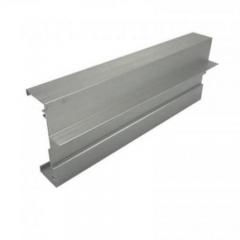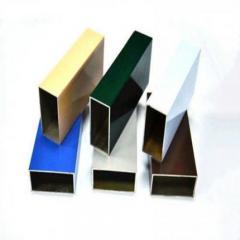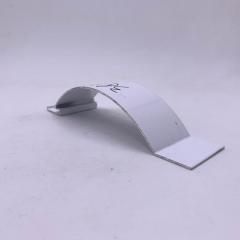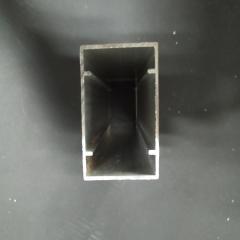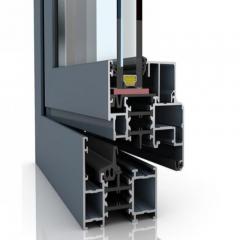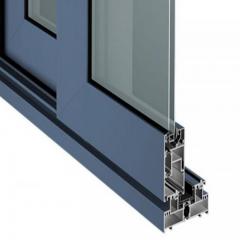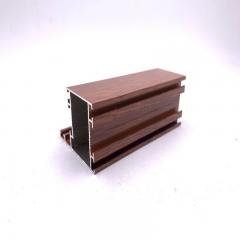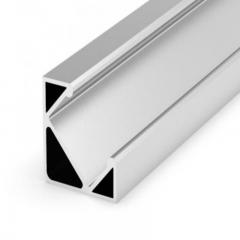
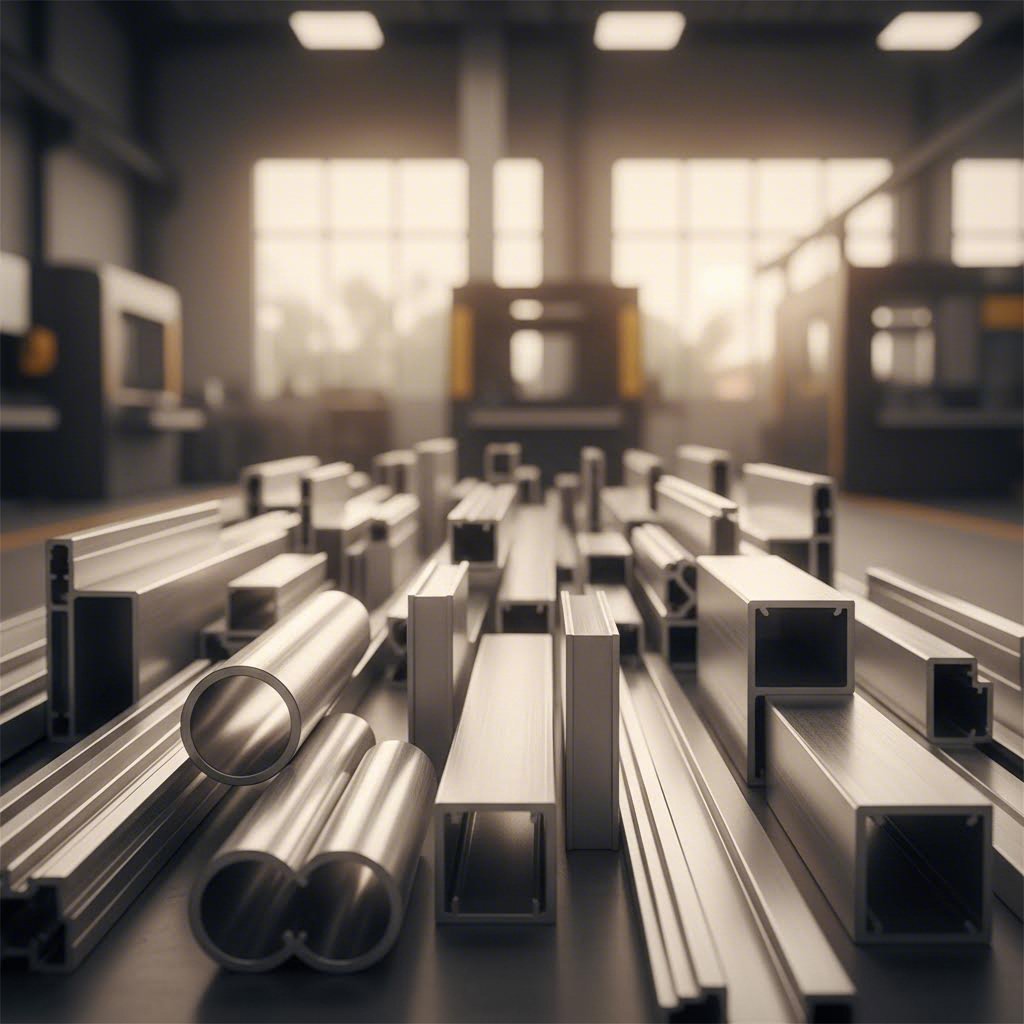
When you need strong, lightweight components with precise cross-sectional shapes, aluminum extrusion delivers exactly that. But what is aluminum extrusion, really? Imagine squeezing toothpaste from a tube - the paste takes the shape of the opening as it emerges. The aluminum extrusion process works on the same principle, just with heated metal and industrial-scale precision.
Aluminum extrusion is a manufacturing process that transforms aluminum alloy into objects with a specific cross-sectional profile by pushing heated material through a shaped die opening.
This aluminum extrusions definition captures the essence, but understanding the nuances helps you make smarter project decisions. The process creates everything from simple rods to complex hollow profiles with intricate internal channels - all from a single, continuous operation.
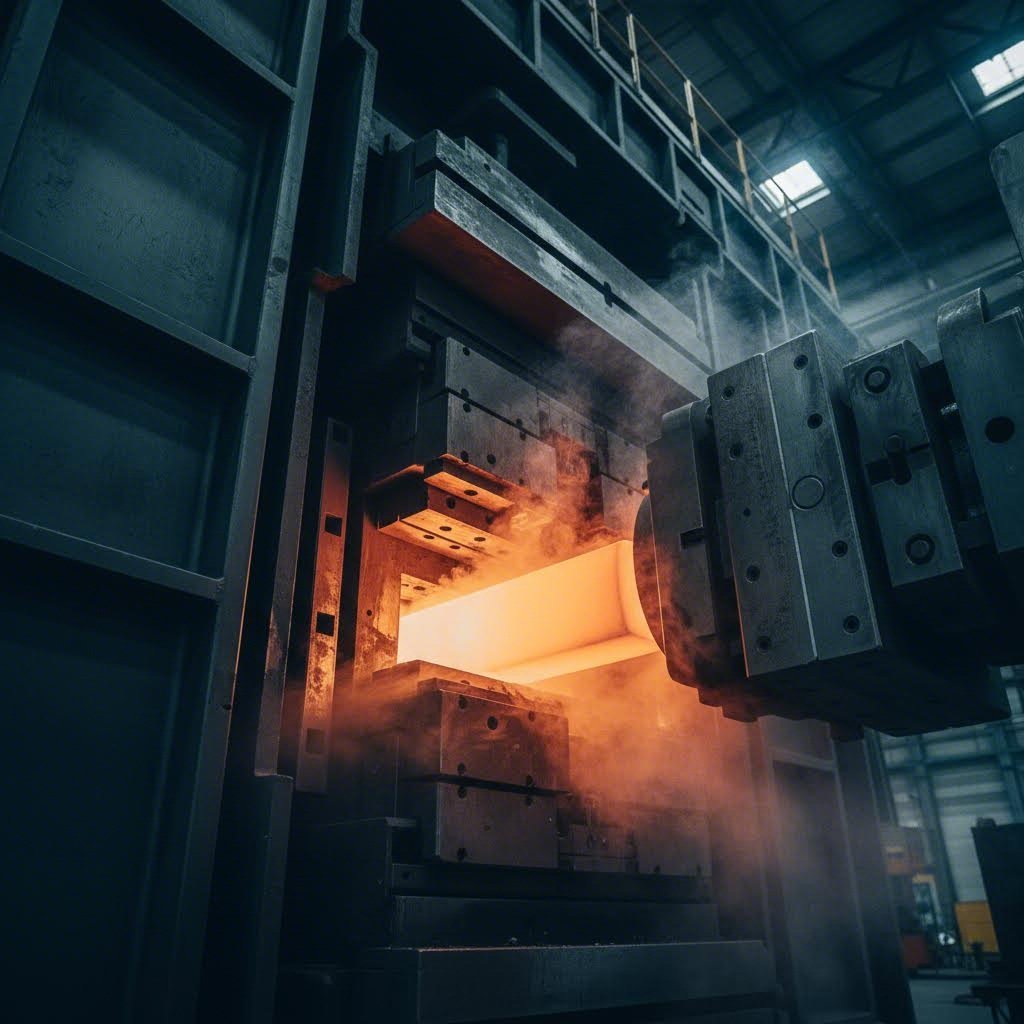
So how aluminum extrusion is made begins with a cylindrical aluminum billet - essentially a log of aluminum alloy. This billet enters a specialized furnace and heats to approximately 900°F (around 480°C). At this temperature, the metal becomes soft and malleable without actually melting.
Next, a powerful hydraulic ram pushes the heated billet through a steel die. This die contains a precisely cut opening that determines the final profile shape. As continuous pressure forces the aluminum through, it emerges on the other side in a long, consistent shape - whether that's a solid bar, hollow tube, or complex architectural profile.
The emerging extrusion then moves along a run-out table, where it cools, stretches for straightening, and gets cut to manageable lengths. Heat treatment in aging ovens can further enhance the material's strength properties.
Understanding different extrusion types isn't just academic - it directly affects your project outcomes. The aluminium extrusion meaning extends beyond the basic process to encompass three fundamental profile categories: solid, hollow, and semi-hollow shapes. Each serves distinct structural and functional purposes.
For engineers and designers, selecting the right profile type influences load-bearing capacity, weight optimization, and manufacturing costs. Procurement professionals benefit from knowing which configurations require simpler tooling versus more complex die designs - information that directly impacts budgets and lead times.
What is extruded aluminum in its final form? The answer depends entirely on your application requirements. Raw extrusions can undergo additional processing - CNC machining for precision features, anodizing for corrosion resistance, or powder coating for aesthetic appeal.
Throughout this guide, you'll discover how to match specific profile types to your project needs. Whether you're sourcing structural components, architectural elements, or precision parts, the right extrusion choice starts with understanding your options. Let's decode those options together.
Now that you understand the basic aluminium extrusion process, let's explore how temperature changes everything. The method used to create your profiles - hot, warm, or cold - directly shapes the final product's strength, surface quality, and dimensional precision. Choosing the right approach can mean the difference between a component that performs flawlessly and one that falls short of specifications.
Temperature isn't just a technical detail in non ferrous extrusion - it's the primary factor determining what's possible with your project. Each method offers distinct advantages depending on your priorities: complex shapes, tight tolerances, or superior surface finish.
Hot extrusion dominates industrial aluminum production for good reason. By heating billets to approximately 400-480°C (750-900°F), manufacturers achieve exceptional material flow through even the most intricate die designs. At these temperatures, aluminum becomes highly malleable while remaining solid - it doesn't glow like heated steel, making temperature monitoring essential throughout the process.
What makes hot extrusion so popular? Consider these advantages:
The trade-off? Hot extrusion typically produces slightly rougher surface finishes and less precise tolerances than cold methods. However, for most architectural and industrial applications, post-processing operations easily address these limitations. According to ALMAG Aluminum, temperatures must be carefully monitored from beginning to end to ensure aluminum alloy properties such as yield and tensile strengths are met.
Warm extrusion occupies the middle ground between hot and cold methods, operating at intermediate temperatures typically ranging from 200-350°C. This approach balances formability with improved surface quality - you get better dimensional control than hot extrusion while requiring less force than cold processing.
When should you consider warm extrusion? This method works well when you need:
Warm extrusion isn't as commonly discussed as its hot and cold counterparts, but it serves as a valuable compromise for projects requiring a balance of properties. The reduced temperature means less thermal stress on tooling, potentially extending die life while maintaining reasonable production speeds.
Cold extrusion - performed at or near room temperature - delivers the highest precision and best surface finish of any aluminium cold extrusion method. When tolerances matter most, this process excels. The aluminum undergoes work hardening during cold extrusion, actually increasing the finished product's strength and hardness.
According to manufacturing specialists at Silver City Aluminum, cold extruded pieces will not oxidize and will have excellent mechanical properties. Some manufacturers believe that the surface finish is better with cold extrusion than with hot extrusion methods.
However, cold extrusion comes with constraints:
| Factor | Hot Extrusion | Warm Extrusion | Cold Extrusion |
|---|---|---|---|
| Temperature Range | 400-480°C (750-900°F) | 200-350°C | Room temperature |
| Suitable Alloys | 6063, 6061, 6005, 6082, most alloys | Select 6xxx series alloys | Lead, copper, aluminum, tin |
| Surface Quality | Good (requires finishing) | Very Good | Excellent |
| Dimensional Accuracy | Standard tolerances | Improved tolerances | Highest precision |
| Production Speed | Fastest | Moderate | Slowest |
| Typical Applications | Architectural profiles, structural components, complex hollows | Automotive parts, moderate-precision components | Precision parts, fasteners, small components |
Understanding how aluminum extrusion is made through these different temperature methods helps you specify the right process for your application. Hot extrusion handles the vast majority of industrial production - from window frames to machine components - because aluminum's formability at elevated temperatures enables virtually unlimited profile possibilities. Cold extrusion, meanwhile, serves specialized precision needs where surface finish and tight tolerances justify the additional processing constraints.
With temperature methods clarified, the next critical decision involves profile configuration itself. Should you specify solid, hollow, or semi-hollow extrusions? Each structural type brings distinct advantages depending on your load requirements and weight constraints.
You've seen how temperature affects the extrusion process - now let's examine what comes out the other end. Every aluminum extrusion profile falls into one of three fundamental configurations: solid, hollow, or semi-hollow. Understanding these distinctions isn't just technical trivia. Your choice directly impacts tooling costs, production timelines, and whether your design is even manufacturable.
Think of it this way: the more complex your profile's internal geometry, the more sophisticated the die required to create it. And die complexity translates directly into upfront costs and lead times. Let's break down each configuration so you can make informed decisions about your aluminum extrusion shapes.
Solid extruded aluminum profiles are exactly what they sound like - shapes with no enclosed voids or openings anywhere in their cross-section. Picture a simple aluminum bar, an L-shaped angle, or a flat rectangular strip. These aluminum extruded shapes represent the most straightforward manufacturing scenario.
Why do solid profiles cost less to produce? The answer lies in die simplicity. According to the Aluminum Extruders Council, solid dies typically feature a flat face with openings that match the extrusion shape exactly. No internal mandrels or complex tooling assemblies are needed.
When should you specify solid profiles? They excel in applications requiring maximum rigidity and load-bearing capacity where internal channels aren't needed. Think structural angles for framing, T-bars for assembly systems, or flat stock for machining into custom components.
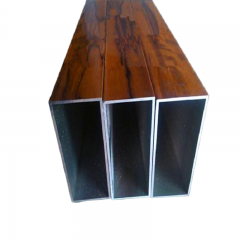
Hollow profiles introduce a different engineering proposition entirely. An aluminum extrusion tube, rectangular box section, or multi-void t-slot all qualify as hollow shapes because they completely enclose one or more voids within their cross-section.
Creating these profiles requires a fundamentally different die design. As detailed by Gabrian International, hollow shapes require porthole dies made of two interlocking pieces - a mandrel and a cap. The mandrel forms internal features while the cap creates external surfaces. During extrusion, heated aluminum enters through ports in the mandrel, flows around internal supports, then welds back together before exiting through the cap.
Hollow aluminum extrusion profiles dominate applications where weight matters - think automotive frames, bicycle components, or architectural curtain wall systems. The aluminum extrusion channel configurations with enclosed voids also prove essential when you need integrated passageways for cables or cooling systems.
Semi-hollow profiles occupy the gray area between solid and hollow categories. These shapes partially enclose a void - imagine a C-channel with a narrow gap, or a profile with deep slots that almost close into tubes. The void exists, but it isn't fully enclosed.
Here's where things get interesting from a manufacturing standpoint. The distinction between solid and semi-hollow isn't always obvious visually. A wide U-channel might be classified as solid, while a narrow one with the same general shape qualifies as semi-hollow. What determines the difference?
Manufacturers use a formula called the "tongue ratio" to make this distinction. According to industry specifications, the tongue ratio equals the void area divided by the gap squared (Area/Gap²). The larger the void area and the narrower the gap, the higher the tongue ratio - and the more likely a shape becomes semi-hollow.
Why does the tongue ratio matter so much? The die section that forms the partially enclosed void (the "tongue") experiences tremendous stress during extrusion - up to 125,000 psi according to MMG Extrusions. Higher tongue ratios mean thinner, more fragile die sections prone to breakage.
Choosing between these three configurations comes down to balancing competing requirements. Consider these decision factors:
| Selection Factor | Solid Profiles | Hollow Profiles | Semi-Hollow Profiles |
|---|---|---|---|
| Tooling Cost | Lowest | Highest | Moderate |
| Weight Efficiency | Lower | Highest | Moderate |
| Internal Channels | Not possible | Fully enclosed | Partially enclosed |
| Torsional Strength | Lower | Excellent | Good |
| Die Life Expectancy | Longest | Moderate | Variable (depends on tongue ratio) |
| Production Speed | Fastest | Slowest | Moderate |
Wall thickness ratios also affect manufacturability across all three types. The Aluminum Extruders Council recommends keeping wall thicknesses as uniform as possible - thick-thin junctions create distortion, die breakage, and surface defects. When designing extruded aluminum shapes, thicker walls may actually prove less expensive than very thin walls, which are costly to extrude consistently.
With profile configurations understood, the next step involves selecting specific shapes within these categories. Standard angles, channels, tubes, and specialty profiles each serve distinct structural purposes - and knowing which shapes excel in which applications helps you specify components that perform exactly as intended.
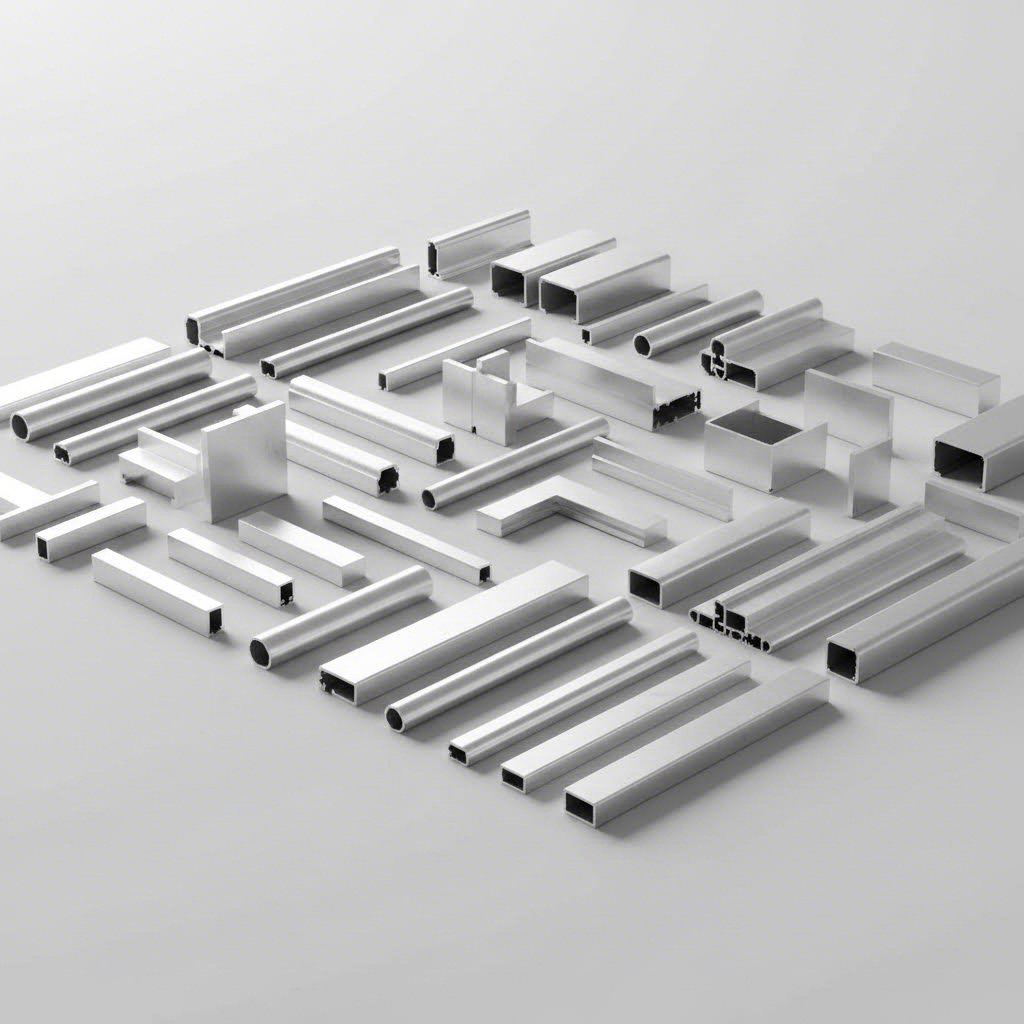
You've learned about solid, hollow, and semi-hollow configurations - but what specific shapes can you actually order? Walk into any industrial metal supplier or browse an aluminum extrusion profiles catalog, and you'll encounter dozens of standardized extrusion shapes ready for immediate use. Understanding which aluminum shapes solve which problems helps you specify components faster and avoid costly custom tooling when off-the-shelf solutions already exist.
Each aluminum profile serves a distinct structural purpose. Angles excel at corner reinforcement. Channels handle linear loads. T-slots enable infinite reconfiguration. Knowing why certain shapes outperform others in specific scenarios transforms you from a passive buyer into an informed specifier who selects the right tool for every job.
When your project demands serious load-bearing capability, four primary structural shapes dominate the conversation: angles, channels, I-beams, and T-profiles. Each distributes forces differently, making shape selection critical for structural integrity.
Angles - These L-shaped aluminum profiles represent the workhorses of structural framing. According to Industrial Metal Supply, aluminum angles provide high-strength support across countless industries, offering an excellent substitute for steel when maintaining strength without sacrificing weight and corrosion resistance. You'll find them reinforcing corners, creating frames, and connecting perpendicular components throughout construction, scaffolding, and machinery applications.
Channels - C-shaped profiles that excel at handling linear loads and creating tracks or guides. The open design allows for easy attachment of other components while the web and flanges distribute forces efficiently. Channels work particularly well in conveyor systems, door frames, and structural supports where accessibility from one side matters.
I-Beams - When maximum bending resistance matters, I-beams deliver. The flanges at top and bottom resist compression and tension, while the vertical web handles shear forces. Though less common in aluminum than steel, aluminum I-beams serve aerospace, marine, and weight-sensitive structural applications where corrosion resistance justifies the material choice.
T-Profiles - An aluminum t profile provides excellent rigidity for its weight. The perpendicular arrangement of web and flange creates natural resistance to bending while offering a flat mounting surface. T-bars frequently appear in furniture frames, transmission tower construction, and machine parts where clean attachment points matter.
Z-Profiles - These offset shapes connect materials at different planes, making them essential for cladding systems and panel connections. The Z-shape creates natural interlocking possibilities and handles both shear and bending loads effectively.
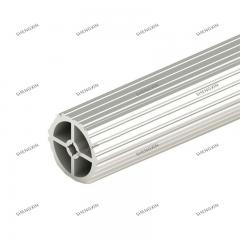
Hollow tubes represent some of the most versatile aluminum shapes available. The enclosed cross-section delivers exceptional torsional strength while minimizing weight - exactly what you need for frames, railings, and structural members.
Flat bars round out the basic shape categories - simple rectangular solids used for brackets, supports, and base materials for machining. Available in extruded aluminum sizes ranging from narrow strips to wide plates, flat stock serves as the starting point for countless fabricated components.
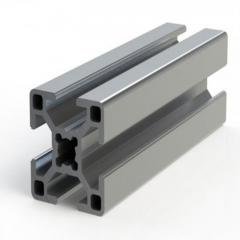
Beyond basic structural shapes, T-slot profiles have revolutionized how engineers approach modular construction. These specialty aluminum profiles feature precisely machined grooves that accept standardized hardware, enabling infinite reconfiguration without drilling, welding, or permanent modification.
According to 80/20 Inc., T-slotted profiles come in extensive size ranges - from compact 20mm x 20mm metric profiles to robust 3.00" x 3.00" imperial sections with eight open T-slots. Common configurations include:
Why have T-slots transformed manufacturing? The aluminum extrusion rail system eliminates custom fabrication. Need to relocate a sensor mount? Loosen the hardware, slide to the new position, retighten. Prototyping a new machine layout? Build, test, and rebuild without scrapping expensive welded frames. This flexibility makes T-slot aluminum profiles indispensable for automation equipment, safety guarding, and industrial workstations.
| Shape Type | Common Sizes | Primary Applications | Relative Cost |
|---|---|---|---|
| Angles (L-shapes) | 1" x 1" to 4" x 4", various thicknesses | Scaffolding, corner reinforcement, framing, transmission towers | Low |
| Channels (C-shapes) | 1" to 6" depth, various flange widths | Conveyor systems, door frames, linear guides, structural supports | Low to Moderate |
| I-Beams | 3" to 8" depth typical | Ship and building construction, aerospace structures, heavy frames | Moderate to High |
| T-Profiles | 1" to 3" web heights | Furniture, machine parts, transmission towers, truck trailers | Low to Moderate |
| Round Tubes | 0.5" to 6" OD | Railings, hydraulic systems, structural tubing, furniture | Moderate |
| Square/Rectangular Tubes | 0.5" to 6" per side | Equipment frames, window systems, architectural elements | Moderate |
| T-Slot Profiles | 20mm to 80mm+ metric; 1" to 3"+ imperial | Machine frames, workstations, automation equipment, guarding | Moderate to High |
| Flat Bars | 0.5" to 6" width, various thicknesses | Brackets, supports, machining stock, base plates | Low |
So why does one shape outperform another in specific scenarios? The answer lies in how each geometry distributes stress. An I-beam concentrates material at the flanges - exactly where bending stress peaks - making it incredibly efficient for spanning distances. A round tube handles torsion beautifully because stress distributes uniformly around the circumference. Angles create natural corner connections because the perpendicular legs resist forces in two planes simultaneously.
Standard aluminum profiles cover the vast majority of applications, but sometimes your project demands something unique. When off-the-shelf shapes can't meet your requirements, the question becomes: should you invest in custom extrusion dies or find creative ways to work with existing standards? Understanding the economics of that decision could save your project significant time and money.
Profile shape tells only part of the story. The aluminum alloy you select fundamentally determines your extrusion's strength, corrosion resistance, surface finish quality, and even manufacturability. Among the different types of aluminum available for extrusion, three alloys dominate industrial production: 6063, 6061, and 6005. Each serves distinct purposes, and choosing correctly prevents costly material failures or unnecessary overengineering.
What separates these aluminium types from each other? All three belong to the 6xxx series - aluminum-magnesium-silicon alloys known for excellent extrudability and heat-treatability. But small compositional differences create significant performance variations. Understanding these distinctions helps you match material properties to application demands.
If you've ever admired sleek window frames or elegant handrails, you've likely seen 6063 aluminum in action. Professionals often call it "architectural aluminum" because its surface quality and anodizing response are simply unmatched among common aluminum types.
According to Metal Supermarkets, 6063 contains higher aluminum content - up to 3.5% more than 6061 - along with lower iron, copper, and chromium levels. This cleaner composition translates directly into superior surface finish after extrusion and exceptional response to anodizing treatments.
What makes 6063 the go-to choice for visible applications?
When high strength isn't the primary concern, 6063 delivers exactly what architectural and decorative applications demand. Window frames, door systems, sign frames, furniture, railings, and roofing components all benefit from this alloy's aesthetic versatility and weather endurance.
Need serious load-bearing capability? 6061 aluminum steps up where 6063 reaches its limits. This workhorse alloy contains more copper, chromium, and silicon - additions that boost mechanical strength significantly while maintaining good workability.
The numbers tell the story: 6061 achieves a Brinell hardness of 95 compared to 6063's 73. That 30% increase in hardness reflects meaningful differences in yield strength and fatigue resistance - critical factors for structural applications.
Why specify 6061 over 6063?
Structural applications favor 6061: braces, frames, truck beds, trailers, aerospace components, and marine structures. According to industry specialists, 6061 is the preferred material when projects require high-strength aluminum extrusions with reliable performance under load.
Interestingly, 6063 actually outperforms 6061 for round tube extrusions due to its higher product strength in this specific configuration - a reminder that alloy selection isn't always straightforward.
When 6063 isn't strong enough but 6061's complexity isn't warranted, 6005 offers a compelling middle ground. This alloy delivers higher strength than 6063 with better extrusion characteristics than 6082 - positioning it perfectly for applications demanding moderate strength without sacrificing manufacturability.
According to American Douglas Metals, 6005 suits applications requiring more strength than 6060 and 6063 provide, including tubing for furniture and rail profiles. The alloy's higher silicon content lowers its melting point, enhancing extrudability while maintaining structural performance.
Research from the 9th International Conference on Aluminium Alloys demonstrates that 6005-type alloys achieve ultimate tensile strengths around 280-300 MPa in properly processed T5 temper - competitive with T6 heat-treated material when extrusion parameters are optimized.
You'll encounter temper designations like T5 and T6 throughout alloy specifications - but what do they actually mean for your project?
T5 temper indicates the alloy was cooled from the extrusion temperature and artificially aged to maximum hardness without separate solution heat treatment. This represents the most economical approach since the extrusion process itself provides the necessary heat.
T6 temper means the material underwent a separate solution heat treatment after extrusion, by quenching and artificial aging. This additional processing step was traditionally believed necessary for maximum strength.
Here's what research reveals: when manufacturers properly control billet preheating and cooling, T5 properties actually match or exceed T6 properties. According to Hydro Aluminium R&D, when precautions are taken to avoid (Mg,Si) particles during extrusion, T5 strength consistently equals or slightly exceeds corresponding T6 strength. Separate solution heat treatment can actually reduce strength in some cases by recovering beneficial substructure from the extrusion process.
| Property | 6063-T5 | 6063-T6 | 6061-T6 | 6005-T5 |
|---|---|---|---|---|
| Ultimate Tensile Strength (MPa) | 185 | 240 | 310 | 280-300 |
| Yield Strength (MPa) | 145 | 215 | 275 | 240-260 |
| Elongation (%) | 12 | 12 | 12 | 10 |
| Brinell Hardness | 60 | 73 | 95 | 85 |
| Extrudability | Excellent | Excellent | Good | Very Good |
| Corrosion Resistance | Excellent | Excellent | Good | Good |
| Anodizing Response | Excellent | Excellent | Good | Good |
| Weldability | Good | Good | Good | Good |
Selecting among different kinds of aluminum comes down to prioritizing your application's most critical requirements. Consider these decision pathways:
Choose 6063 when:
Choose 6061 when:
Choose 6005 when:
Both 6061 and 6063 offer good weldability, though 6061's higher strength makes it preferable for welded structural assemblies. For machining, 6061 cuts more cleanly due to its harder composition - 6063's softer nature can cause gummier chips and less precise finishes.
Understanding these types of aluminium helps you balance competing requirements. But alloy selection represents just one piece of the specification puzzle. The next critical decision - choosing between standard stock profiles and custom extrusion dies - determines both your project timeline and total cost of ownership.
You've selected your alloy and understand profile configurations - but here's the question that often determines project success or budget overruns: should you order stock aluminum extrusion profiles or invest in custom dies? This decision impacts everything from upfront costs to delivery timelines to per-piece economics over your project's lifecycle.
The answer isn't always obvious. Standard aluminum extrusions offer immediate availability and proven economics, while custom profiles deliver optimized performance and design freedom. Let's break down the factors that should guide your choice.
Standard aluminum extrusion profiles represent the path of least resistance - and often the smartest financial decision. These pre-manufactured shapes sit in warehouse stock, ready for immediate shipment without tooling delays or minimum order headaches.
According to industry analysis, standard aluminum profiles deliver compelling advantages for time-sensitive projects where standard aluminum extrusion dimensions meet performance requirements. The immediate availability eliminates manufacturing lead times entirely, enabling project managers to maintain aggressive construction schedules without material procurement delays.
When should you favor standard profiles?
Cost efficiency extends beyond eliminating die charges. Mass production reduces per-unit costs substantially compared to custom extrusion. The absence of tooling fees, minimum order quantities, and setup charges makes standard profiles economically attractive for budget-conscious projects or smaller quantity requirements.
Custom aluminum extrusions become financially viable when production volumes cross a break-even threshold - but calculating that threshold requires understanding all cost components.
According to KMC Aluminium, aluminum extrusion tooling costs generally run much lower than alternative technologies like die-casting, steel roll forming, or pultrusion. However, several factors influence total die investment:
Minimum Order Quantities (MOQ) represent another critical factor. As industry experts explain, MOQs exist for legitimate economic and technical reasons - not simply to extract larger orders. The profile's shape, size, and weight affect which press can run the die, and bigger presses typically require higher MOQs.
When do custom profiles make financial sense?
When custom extrusion makes sense for your project, following aluminum extrusion design guidelines ensures manufacturability and controls costs. Several factors directly impact die complexity, production yields, and per-piece economics.
Wall Thickness Guidelines: Uniform wall thickness simplifies extrusion and reduces die wear. According to industry best practices, keeping walls as consistent as possible prevents distortion, surface defects, and premature die failure. Interestingly, thicker walls often cost less than very thin walls - thin sections require slower extrusion speeds and cause higher die stress.
Corner Radii: Sharp internal corners concentrate stress in both the die and finished extrusion. Specifying adequate radii at all internal corners extends die life and improves material flow. External corners can be sharper, but generous radii throughout simplify production.
Lead Time Expectations: Custom aluminum extrusion dimensions add weeks to your timeline. According to manufacturing specialists, three primary factors influence production lead time:
Features That Increase Die Complexity:
Quality checks also factor into lead time and MOQ requirements. New dies require trial runs to verify that operational conditions produce required quality. As manufacturers note, it's not always possible to achieve tolerances on the first run - dies may return to the die-shop for cleaning or minor adjustments before production begins.
The bottom line? Standard aluminum profiles work brilliantly when existing shapes meet your needs - delivering speed, proven quality, and cost efficiency. Custom extrusions justify their investment when production volumes support die amortization, when integrated features reduce total manufacturing costs, or when technical requirements simply cannot be met any other way.
With the custom versus standard decision framework in hand, the next consideration involves understanding where different extrusion types actually get used. Seeing how various industries apply these profiles - from architectural facades to industrial automation - helps connect specification decisions to real-world performance requirements.

Understanding profile configurations and alloy options means little without seeing how they perform in actual applications. So what are aluminum extrusions used for across different industries? The answer spans virtually every sector where strength, weight, and corrosion resistance matter - from the window frames in your office to the battery housing in electric vehicles.
Aluminum extrusion dominates these applications for three compelling reasons: exceptional strength-to-weight ratios, natural corrosion resistance, and nearly unlimited design flexibility. Let's explore how major industries leverage specific profile types to solve real engineering challenges.
Architecture represents aluminum extrusion's largest application sector - and for good reason. Building facades, window systems, and interior elements demand materials that combine visual appeal with decades of weather resistance.
What are aluminum extrusions doing in buildings around you? More than you might realize:
Why does aluminum dominate architectural applications over steel or plastic alternatives? Weight savings simplify installation - particularly on upper floors where crane capacity matters. Corrosion resistance eliminates painting maintenance cycles. And extrusion's design flexibility enables integrated channels for drainage, wiring, and thermal isolation within single profile cross-sections.
Walk through any modern manufacturing facility, and you'll encounter structural aluminum extrusions everywhere. The T-slot revolution transformed how engineers approach machine frames, workstations, and safety systems.
According to industry analysis, industrial aluminum profiles serve as the backbone of automation infrastructure - providing skeletal frameworks that can be rapidly assembled or reconfigured to meet the fluid demands of smart manufacturing.
The T-slot configuration deserves special attention here. Its ability to accept standardized hardware - without drilling or welding - cuts manufacturing setup times dramatically. Need to relocate a sensor mount or add a new component? Loosen the fasteners, slide to the new position, retighten. This reconfigurability makes aluminum framing indispensable as factories become increasingly self-optimizing.
Transportation applications showcase high-performance aluminum extrusions industrial applications where weight savings translate directly into fuel efficiency, range extension, or payload capacity.
Automotive Applications:
Rail Applications:
Aerospace Applications:
Precision aluminum extrusions solve thermal and structural challenges across electronics and consumer applications:
The sustainability transition creates expanding opportunities for aluminum extrusion. According to market analysts, industrial aluminum profiles have become central to the green revolution - with photovoltaic system framing representing one of the most visible applications.
The common thread across all these applications? Aluminum extrusion delivers precisely tailored cross-sections that optimize weight, strength, and functionality simultaneously. Whether you're designing architectural facades, industrial automation equipment, or next-generation vehicles, understanding which profile types serve which applications guides you toward specifications that perform exactly as intended.
Of course, raw extrusions rarely go directly into service. The next step involves understanding secondary processing options - from CNC machining to surface treatments - that transform extruded profiles into finished, installation-ready components.
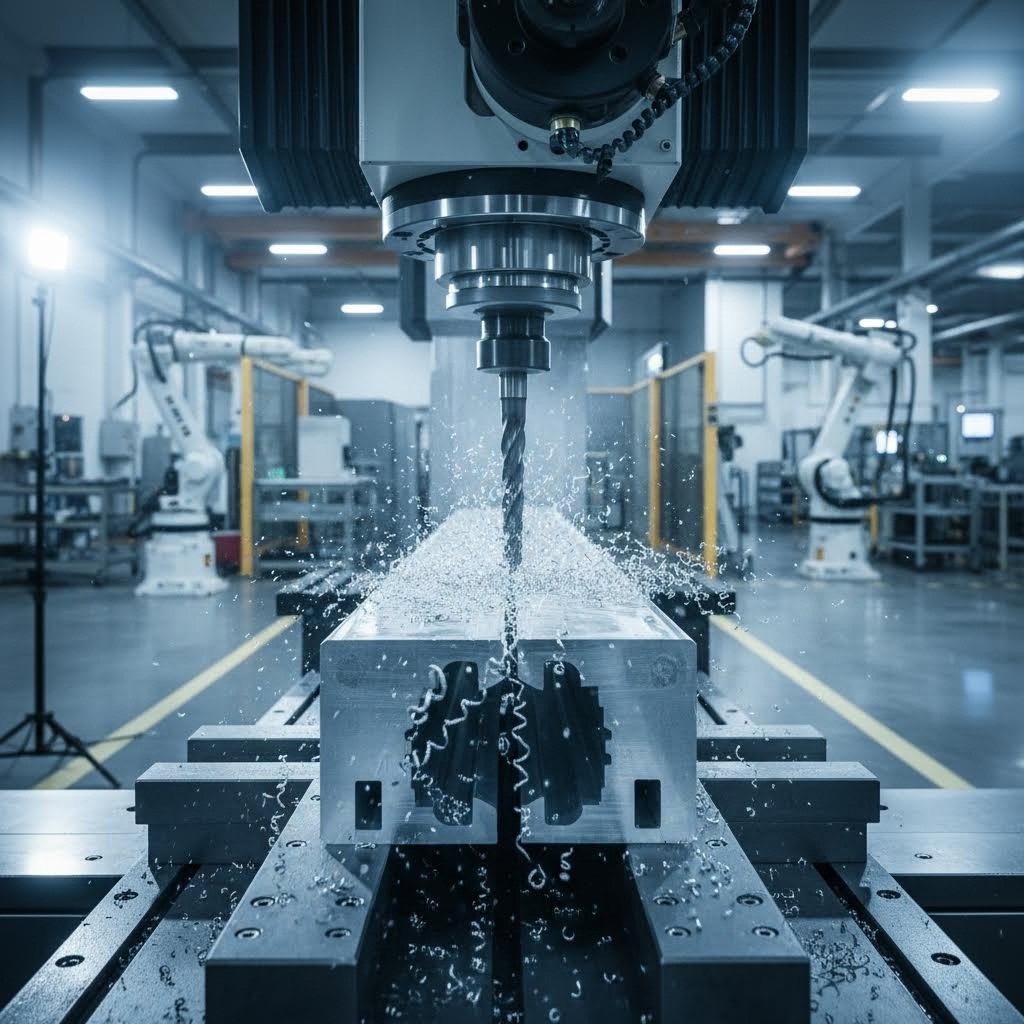
Raw extrusions emerging from the press represent only the starting point. Transforming extruded metal into installation-ready aluminum extrusion parts requires secondary operations that add precision features, protective finishes, and assembly-ready configurations. Understanding these processing options helps you specify complete solutions rather than components requiring additional vendor coordination.
Whether you need precisely machined mounting holes, corrosion-resistant coatings, or complex welded assemblies, secondary processing turns generic profiles into application-specific components. Let's explore the operations that bridge the gap between raw extrusion and finished product.
An aluminum extrusion machine creates consistent cross-sectional profiles - but most applications require features along the profile's length that extrusion alone cannot provide. That's where CNC machining enters the picture, adding holes, slots, threads, and complex geometries with repeatable precision.
According to Star Extruded Shapes, CNC stands for computer numerical control - technology that uses programmed instructions to guide cutting tools through precise movements. This automation enables consistent results across thousands of identical parts while accommodating design changes through simple program modifications rather than expensive tooling changes.
Common CNC operations for aluminum extrusion manufacturing include:
Why does aluminum excel in CNC applications? As machining specialists note, aluminum alloys are easier to form and machine than most other metals. The material cuts quickly and cleanly, chips easily during the process, and demands less power than harder materials. This excellent machinability translates directly into lower processing costs and faster turnaround times for your aluminum extrusion parts.
Modern CNC capabilities extend beyond basic 3-axis machining. Four-axis and five-axis machines can process small aluminum extrusions on multiple faces without repositioning - dramatically increasing productivity while maintaining tight tolerances. For extruded aluminum frame assemblies requiring precise hole patterns across multiple surfaces, multi-axis machining ensures perfect alignment without cumulative positioning errors.
Manufacturers equipped for comprehensive aluminum solutions operate multiple CNC machining centers alongside their extrusion presses. For example, facilities like Shengxin Aluminium integrate 35 extrusion presses ranging from 600T to 5500T capacity with dedicated CNC machining centers - enabling complete processing from billet to finished component under unified quality control.
A raw "mill finish" aluminum surface is vulnerable to scratches, stains, and oxidation over time. Surface treatments protect your investment while delivering the aesthetic your application demands - whether that's a mirror-bright architectural finish or a durable industrial coating.
According to SAF Southern Aluminum Finishing, the application and desired appearance dictate which finish to select. Each technology offers distinct advantages depending on your priorities: durability, color options, environmental conditions, or cost constraints.
Anodizing - Unlike paint or powder coating, anodizing isn't a coating applied to the surface. It's an electrochemical process that transforms the aluminum's outer layer into extremely hard aluminum oxide. This protective layer is integral to the metal itself - it cannot peel or flake because it literally grows from the base material.
The aluminium extrusion die creates the profile shape, but anodizing determines its long-term appearance and durability. Key anodizing considerations include:
Some manufacturers offer advanced anodizing options including micro-arc oxidation for superior hardness and wear resistance - particularly valuable for industrial components subject to abrasion.
PVDF Coatings - When architects specify colorful building facades expected to perform for decades, PVDF (Polyvinylidene Fluoride) coating represents the gold standard. Known by trade names like Kynar 500 and Hylar 5000, these high-performance liquid coatings deliver exceptional weather resistance and color stability.
According to finishing specialists, PVDF coatings dominate curtain wall and metal roofing markets because they maintain appearance through decades of UV exposure, temperature cycling, and environmental pollution. The AAMA 2605 specification establishes performance standards requiring actual 10-year Florida exposure testing - ensuring coatings meet real-world durability requirements.
Powder Coating - For projects requiring specific colors without PVDF's premium cost, powder coating offers an excellent balance of durability, color selection, and environmental friendliness. The process applies dry powder electrostatically, then cures it in an oven where the powder melts into a smooth, adherent finish.
Key powder coating advantages include:
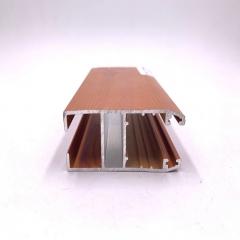
Specialty Finishes - Beyond these primary options, specialized treatments address specific application requirements. Wood grain finishes apply realistic wood patterns through sublimation processes - enabling aluminum to replicate wood aesthetics without wood's maintenance requirements. Electropolishing creates mirror-bright surfaces for decorative or sanitary applications.
| Treatment Type | Durability Rating | Color Options | Best Applications | Relative Cost |
|---|---|---|---|---|
| Anodizing (Class I) | Excellent (20+ years exterior) | Limited (metallics, earth tones) | Storefronts, high-traffic areas, architectural facades | Moderate |
| Anodizing (Class II) | Good (10-15 years exterior) | Limited (metallics, earth tones) | Interior applications, light-duty exterior | Low to Moderate |
| PVDF Liquid Coating | Excellent (20-30 years exterior) | Unlimited (any color) | Curtain walls, metal roofing, monumental architecture | High |
| Powder Coating (Polyester) | Good (5-10 years exterior) | Unlimited (any color) | Window frames, fencing, furniture, industrial | Low to Moderate |
| Powder Coating (PVDF-based) | Excellent (meets AAMA 2605) | Wide selection | Architectural exteriors requiring powder benefits | Moderate to High |
| Wood Grain Sublimation | Good to Excellent | Wood pattern replicas | Residential windows, fencing, pergolas | Moderate to High |
| Micro-arc Oxidation | Excellent (extreme hardness) | Limited | Industrial wear components, specialty applications | High |
Beyond machining and finishing, fabrication operations transform individual profiles into complete assemblies ready for installation. These value-added services reduce on-site labor and ensure consistent quality across production runs.
Bending and Forming: Curved architectural elements, circular frames, and complex geometries require controlled bending operations. Roll bending creates large-radius curves, while rotary draw bending produces tighter radii for components like handrail returns. The key challenge? Preventing distortion in hollow profiles while maintaining consistent curves across multiple parts.
Welding: When designs require permanent joints, welding creates strong connections between aluminum components. MIG and TIG welding processes work well with 6xxx series alloys, though proper technique and filler material selection are critical for joint strength. Welded extruded aluminum frame assemblies eliminate fasteners for cleaner aesthetics in architectural applications.
Mechanical Assembly: For applications requiring disassembly or field adjustment, mechanical fastening systems connect profiles without welding. T-slot hardware, corner brackets, and proprietary connection systems enable modular construction. Pre-assembled sub-components reduce installation complexity and minimize field labor requirements.
Quality Integration: Comprehensive aluminum extrusion manufacturing partners coordinate all these operations under unified quality systems. When extrusion, machining, finishing, and assembly happen within a single facility - as with manufacturers operating extensive processing capabilities - tolerance stackup remains controlled and communication errors between vendors disappear.
For projects requiring complete aluminum solutions, working with vertically integrated suppliers simplifies procurement while ensuring accountability. Facilities offering end-to-end processing capabilities - from die development through finished assemblies - provide single-source convenience with manufacturing expertise at every stage.
With secondary processing options clarified, the final step involves synthesizing all these considerations into a practical selection framework. How do you match your specific application requirements to the right combination of profile type, alloy, and processing? Let's build that decision roadmap.
You've explored extrusion methods, profile configurations, alloy options, and processing capabilities - now it's time to pull everything together. Selecting the right types of aluminum extrusion isn't about memorizing specifications. It's about asking the right questions in the right sequence until you arrive at a solution that performs exactly as your application demands.
Think of this as a decision tree rather than a checklist. Each choice narrows your options until the ideal aluminum extrusion profile emerges naturally from your requirements. Let's walk through that process step by step.
Before contacting suppliers or browsing catalogs, gather answers to these fundamental questions. The clarity you bring to initial conversations directly impacts how quickly you'll receive accurate quotes and technically sound recommendations.
According to aluminum selection specialists, prioritizing essential performance criteria is the critical first step - determining whether durability, efficiency, or aesthetic appeal represents your non-negotiable requirement helps focus all subsequent decisions.
With requirements documented, you can systematically narrow your options across each decision dimension. Here's how the decision tree flows:
Step 1: Application Category Selection
Your application category immediately suggests appropriate aluminium extrusion types:
Step 2: Profile Configuration Decision
Based on your structural and weight requirements:
Step 3: Alloy and Temper Selection
Match mechanical requirements to alloy capabilities:
Step 4: Standard Versus Custom Evaluation
Run the economics based on your volume projections. According to industry guidance, aluminum profiles can vary significantly in price based on material grade, profile size, and finish - making it essential to balance cost with quality while considering both initial investment and long-term value.
The definition of extruded aluminum encompasses both standard catalog profiles and fully customized cross-sections. Standard stock makes sense for lower volumes, urgent timelines, or when existing shapes meet your needs. Custom dies justify investment when production volumes amortize tooling costs, integrated features reduce secondary operations, or technical requirements demand unique geometries.
Step 5: Secondary Processing Specification
Finally, determine what processing transforms raw extrusion into finished components:
Here's what many engineers learn too late: early supplier engagement dramatically improves project outcomes. Experienced manufacturers don't just quote your specifications - they help refine them based on decades of production knowledge.
What does a capable extrusion partner bring to your project?
According to custom extrusion specialists, the expert relies on what's provided to make correct extruded aluminum shapes and sizes - meaning accurate specifications are critical, but knowledgeable suppliers can help ensure those specifications are both achievable and optimal.
Manufacturers with comprehensive capabilities streamline the entire specification process. For instance, Shengxin Aluminium provides end-to-end support spanning die development through mass production - with 35 extrusion presses ranging from 600T to 5500T capacity, CNC machining centers, and extensive surface treatment options including custom anodizing colors and micro-arc oxidation. Their 30+ years of experience with custom 6063 aluminum tubes, architectural profiles, and industrial extrusions demonstrates the value of partnering with established manufacturers who understand both the possibilities and limitations of different types of extruded aluminum.
Where you are in your project determines your most productive next action:
If you're still in concept development:
If you have preliminary designs:
If you're ready to specify and order:
The types of aluminum extrusions available today offer solutions for virtually any engineering challenge. From simple solid angles to complex hollow architectural profiles, from mill-finish industrial components to precision-anodized consumer products - the right combination of profile, alloy, and processing exists for your application.
Success comes from systematic decision-making: define requirements clearly, match those requirements to appropriate types of aluminum extrusions, and engage capable manufacturing partners early enough to benefit from their expertise. Whether you're specifying your first aluminum component or your thousandth, this framework guides you toward solutions that perform exactly as intended - on budget and on schedule.
Aluminum extrusions fall into three primary profile configurations: solid, hollow, and semi-hollow. Solid profiles have no enclosed voids and offer the lowest tooling costs. Hollow profiles completely enclose one or more voids, providing superior strength-to-weight ratios ideal for tubes and channels. Semi-hollow profiles partially enclose voids, enabling features like snap-fit connections. Additionally, extrusions are categorized by temperature method—hot extrusion (most common at 400-480°C), warm extrusion (intermediate temperatures), and cold extrusion (room temperature for precision applications).
The numbers 4040 and 8020 refer to T-slot profile dimensions in millimeters or fractional inches. 8020 profiles (typically 80mm x 20mm or 2" x 2") offer higher strength-to-weight ratios suitable for heavy-duty machine frames and high-load applications. 4040 profiles (40mm x 40mm) provide a balanced combination of strength and weight for medium-load applications like workstations and light industrial equipment. Your choice depends on load requirements—8020 for maximum structural capacity, 4040 for standard industrial framing needs.
T5 and T6 are temper designations indicating heat treatment processes. T5 means the alloy was cooled from extrusion temperature and artificially aged without separate solution heat treatment—the most economical approach. T6 involves separate solution heat treatment after extrusion, by quenching and artificial aging. Interestingly, research shows that when manufacturers properly control extrusion parameters, T5 properties can match or exceed T6 properties. The T6 temper typically delivers higher hardness and tensile strength but at additional processing cost.
The best alloy depends on your application. 6063 excels in architectural applications requiring superior surface finish and anodizing response—ideal for window frames and visible elements. 6061 delivers higher strength for structural load-bearing applications like machine frames and aerospace components. 6005 offers intermediate strength with better extrudability than 6082, making it suitable for rail profiles and structural tubing. Manufacturers like Shengxin Aluminium specialize in 6063 custom tubes and can guide alloy selection based on your specific requirements.
Custom extrusion makes financial sense when production volumes exceed several hundred linear meters, when integrated features eliminate secondary machining operations, or when technical requirements cannot be met with standard shapes. Standard profiles work best for lower volumes, urgent timelines, prototyping phases, or when existing dimensions meet your needs without compromise. Calculate the break-even point by comparing die investment plus per-piece costs against standard profile pricing and any modification expenses.



 un service en ligne
 0086 136 3563 2360
 sales@sxalu.com
 +86 136 3563 2360
 français
 English
 Deutsch
 русский
 español
 português
 العربية
 ไทย
ไทย Việt
Việt Українська