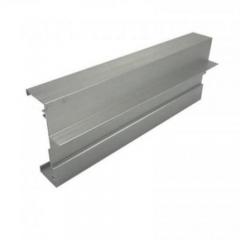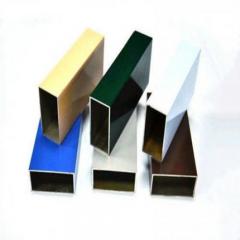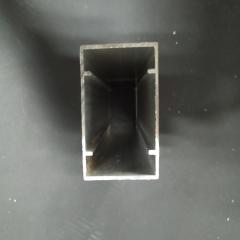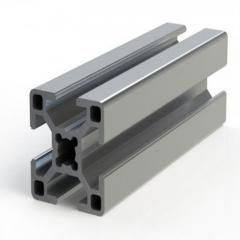
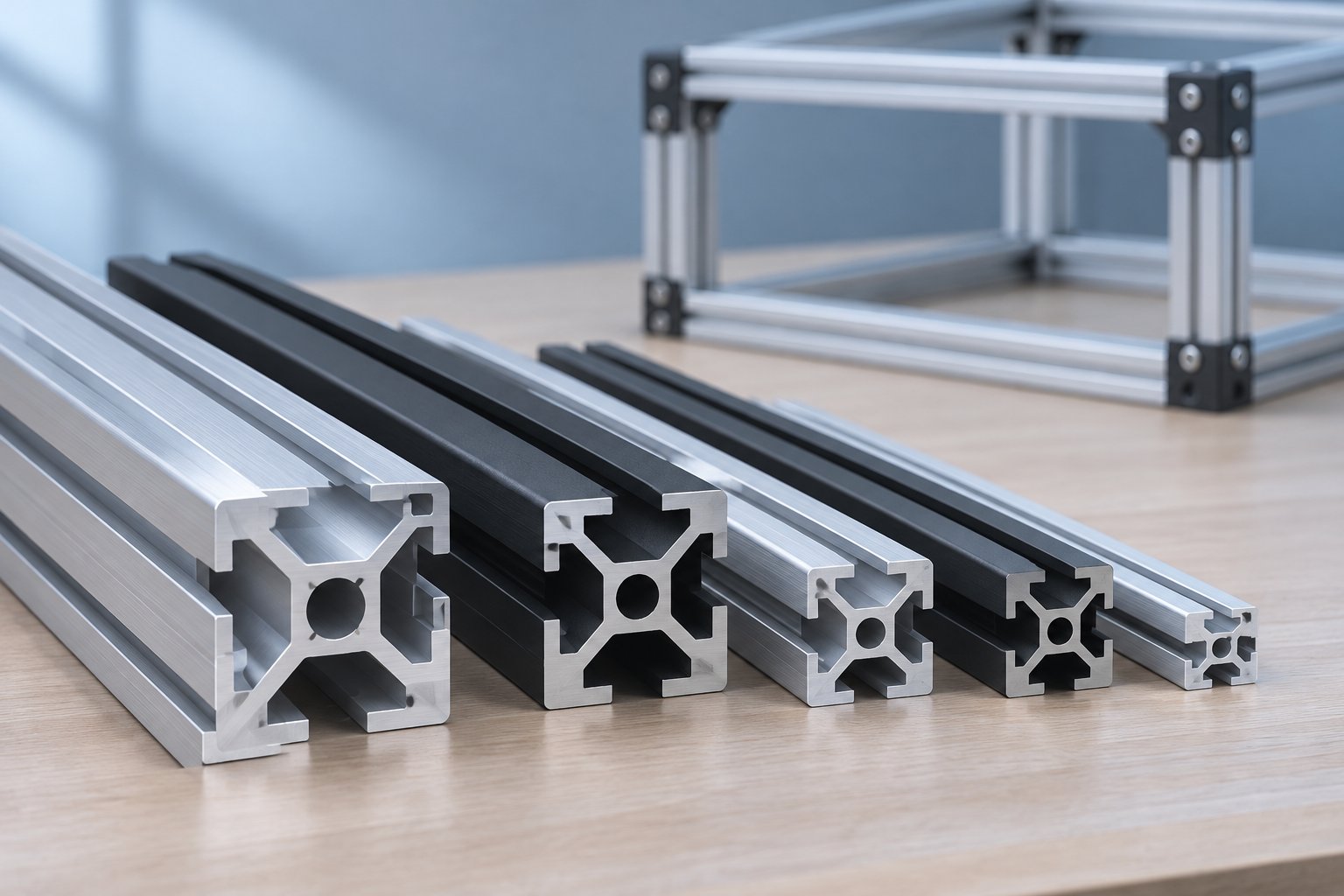
2020 aluminium extrusion is a 20 x 20 mm square aluminum profile in the metric 20 series, with a slot on each of its four faces so parts can be bolted together into modular frames without welding.
You have probably seen those silver or black rails holding up 3D printers, small CNC machines, and lab fixtures. That is 2020 extrusion. Manufacturers such as SinoExtrud describe it as a modular profile with T-slots on each face, built for lightweight frames, enclosures, and DIY builds. So why should a builder or buyer care about four digits? Because the name tells you the size, and the size decides which brackets, nuts, and neighboring profiles will actually work with your frame.
In metric profiles, the first pair of digits gives the width in millimeters and the second pair gives the height. So 20 20 extruded aluminum is 20 mm wide and 20 mm tall, with one slot per face. Sounds simple? There is a catch. The 80/20 naming guide points out that a 10 Series "2020" is 2.00 x 2.00 inches with two slots per side, while a 20 Series 20-2020 is 20 x 20 mm with a single slot per side. Same four digits, completely different part. The series number changes everything.
The naming logic scales neatly. Imagine placing 2020 sections side by side, and you get the larger members of the family:
| Profile Name | Nominal Cross-Section | Typical Role |
|---|---|---|
| 2020 | 20 x 20 mm | Light frames, 3D printer frames, enclosures, small fixtures |
| 2040 | 20 x 40 mm | Longer spans, gantries, and beams that need extra stiffness in one direction |
| 2060 | 20 x 60 mm | Wide beams, base rails, and mounting several components side by side |
| 4040 | 40 x 40 mm | Stiffer frames and heavier loads, often sold in a larger series with different hardware |
Keep in mind these are nominal sizes only. Slot openings, wall thickness, and internal geometry can differ from brand to brand.
In North America, you will often run into 1010, the inch-series counterpart at roughly 1 x 1 inch (about 25.4 mm). It looks close to a 2020 aluminum extrusion, but it is not a drop-in swap. The body size, slot opening, and fasteners are all built around inch dimensions. Metric T-nuts will not seat properly in inch slots, and the reverse is also true. Framing Tech, which offers both systems, notes that the choice usually comes down to project specifications and regional practice. The practical rule: pick one system early and stay in it.
Still, a name only gets you to the right family. It says nothing about the slot opening, the center bore, the alloy, or how much the bar weighs per meter, and those are exactly the details where two "identical" 2020 profiles start to part ways.
When you compare two listings for 2020 extruded aluminum, they often look identical: 20 x 20 mm, four slots, silver or black. Then the T-nuts arrive, and one batch slides in smoothly while the other jams halfway. The difference hides in the specifications. Here is what each property means and why it matters once you start building.
The outer 20 x 20 mm is only the starting point. Real 2020 extrusion dimensions also include the slot opening, the center bore, and the thickness of the outer walls and inner webs. One extrusion guide lists wall thickness anywhere from 1.0 to 3.0 mm, with a common weight of about 0.52 kg per meter. That range alone tells you two bars with the same name can behave quite differently.
| Property | What It Is | Why It Matters for a Build |
|---|---|---|
| Cross-section | Outer width and height, nominally 20 x 20 mm | Sets bracket fit and frame squareness; small deviations add up across a frame |
| Slot opening width | The gap at the face of each slot, commonly around 6 mm in the 20 series | Decides which T-nuts, panels and accessories will fit |
| Center bore | The hole running through the core of the profile | Used for end tapping and end fastening; its size decides the tap you need |
| Wall and web geometry | Thickness of outer walls and internal ribs | Affects stiffness, how well slots hold clamping force, and weight |
| Alloy | The aluminum grade, often 6063 or 6061 | Influences strength, finish quality and machinability |
| Temper | Heat-treatment state, such as T5 or T6 | Affects hardness and resistance to denting under brackets |
| Finish | Surface treatment, such as clear or black anodized | Affects corrosion resistance, wear and appearance |
| Weight per meter | Mass of one meter of profile | Helps estimate shipping, total frame weight and moving mass on gantries |
| Moment of inertia (Ix/Iy) | Geometric resistance to bending about each axis | Higher values mean less deflection under the same load |
| Section modulus | Links bending moment to stress in the material | Used to check that loads keep stress below safe limits |
The center bore deserves special attention. It is commonly cited as suitable for M5 tapping, at roughly 4.2 to 5 mm. Still, this varies by manufacturer, so verify it on the drawing before you buy a tap.
Most 2020 aluminium extrusion is made from 6063 or 6061. As Wellste explains, 6063 extrudes easily into detailed shapes and takes anodizing well, while 6061 carries more magnesium and silicon and is stronger. Temper describes heat treatment. T5 is typically cooled from the press and then artificially aged, while T6 is solution heat-treated before aging, which usually yields higher strength. Published figures put 6061-T6 at about 310 MPa tensile strength versus roughly 185 MPa for 6063-T5, according to Shengxin's strength guide. Here is the surprise: both alloys share a modulus of elasticity near 69 GPa. So the alloy changes how much load a bar takes before it bends permanently, not how much it flexes. There is no single universal combination, so always confirm which one you are getting.
Imagine bending a plastic ruler. Flat, it flexes easily. On edge, it barely moves. That is moment of inertia at work: shape, not just material, controls stiffness. On a square 2020 profile, Ix and Iy are usually close, so it bends about equally in both directions. Section modulus builds on that number to show how stressed the metal gets under a bending load. Weight per meter is your quick clue to how much metal sits in the section. Since these values depend on each brand's internal geometry, request the supplier's cross-section drawing and data sheet rather than borrowing numbers from another listing.
Treat the nominal 2020 name as a label and the supplier's cross-section drawing as the real specification.
Of all the lines on that drawing, the slot opening tends to cause the most headaches. Its width is only part of the story, because the shape of the slot walls quietly decides what kind of hardware, and even what kind of motion, the profile can support.
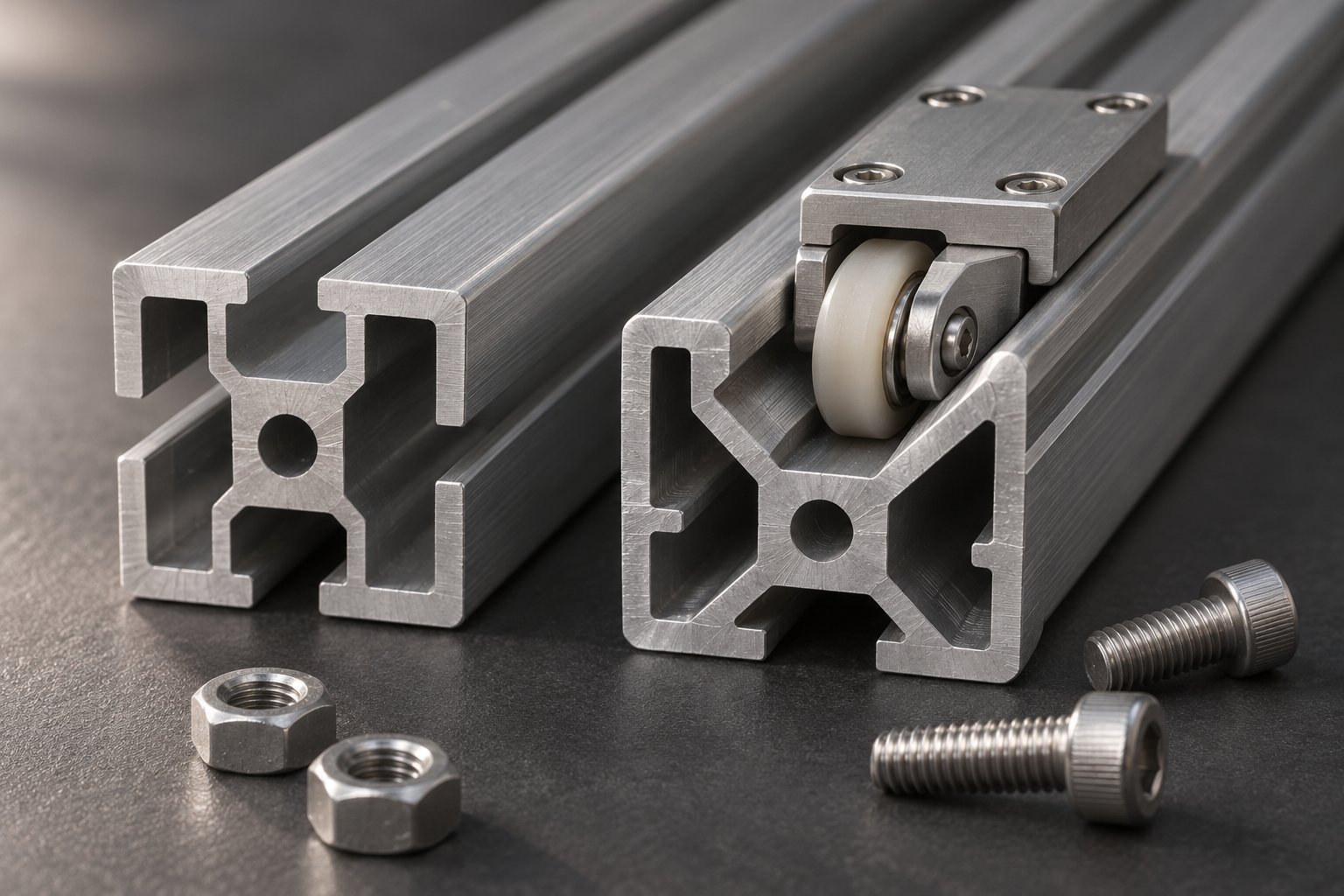
Picture this. You order a few lengths of 2020 extrusions, a box of T-nuts, and a bag of brackets from three different sellers. Every listing says "2020." Yet half the parts refuse to fit. This is one of the most common buyer mistakes, and it almost always comes down to three things: slot shape, slot width, or measurement system.
A T-slot has a flat-sided channel that captures T-nuts and bolts. That gives you adjustable mounting points for brackets, panels, and sensors anywhere along the bar. A V-slot adds angled running surfaces, so V-wheels can roll directly on the profile. The Clinalu comparison guide notes that V-slot suits light- to medium-duty linear motion, such as 3D printers and camera sliders. It should not automatically replace an industrial linear rail where high loads or tight positioning are required.
| Feature | T-Slot | V-Slot |
|---|---|---|
| Slot geometry | Flat-sided channel with straight inner walls | Angled V-groove with running surfaces in each slot |
| Primary use | Structural framing and modular mounting | Framing plus a built-in wheel track |
| Hardware type | T-nuts, drop-in nuts, brackets, bolts | V-wheels, eccentric spacers, gantry plates, plus compatible nuts |
| Motion capability | None on its own; needs a separate rail or shaft | Light- to medium-duty linear motion with correct wheel preload |
| Typical builds | Workstations, machine guards, enclosures, test rigs | 3D printers, laser engravers, light CNC machines, camera sliders |
Some V-slot profiles also accept common T-slot fasteners. Whether yours does depends on the actual slot dimensions, so check the drawing before mixing parts.
Most 2020 aluminum extrusions take 6 mm slot hardware. For example, ElectroPeak lists its 2020 series T-nuts for a 6 mm slot width, with M3, M4, or M5 threads. Hardware for 8 mm slots belongs to larger series and simply will not enter a 20 series slot.
Width is only half the story, though. "European standard" profiles and other brand-specific systems use slightly different slot shapes and chamfers. Motedis explains that its B-type and I-type systems differ in slot geometry, which changes which nuts and connectors fit. Their advice for beginners is to stick to one slot width and system combination. You'll notice the result quickly if you ignore it: a drop-in nut from one system may jam, spin, or fail to clamp firmly in another.
The inch-based 1010 series is a separate ecosystem. Its slot openings and fastener threads are sized in inches, so metric T-nuts and 2020 aluminum brackets will not seat correctly in it, and inch parts will not fit metric slots either. Treat them as two different shopping lists.
Before you click "order," run through this quick compatibility checklist:
Even a perfect fit has a lifespan, however. Every T-nut that clamps down and every V-wheel that rolls past bears directly on the profile's surface, and whether that surface is bare metal or an anodized layer shapes how well the frame holds up over years of use.
Most listings give you two choices: silver or black. It looks like a style decision. In practice, the finish on a 2020 extrusion profile affects how it resists corrosion, how it handles sliding hardware, and how it looks after a year on the shop floor.
Anodizing is an electrochemical process that thickens the natural oxide layer on aluminum. SinoExtrud explains that clear anodizing leaves the oxide transparent, while black anodizing adds a dyeing step before the layer is sealed. The color is the only real difference. Both finishes offer similar corrosion resistance, which depends on sealing quality and coating thickness, not on color.
Because the oxide grows from the metal itself, it is harder and more abrasion-resistant than bare aluminum. It is not scratch-proof, though. As Megawall points out, a scratch exposes bare aluminum, and you cannot touch it up with paint. On a black anodized 2020 extrusion, that silver line stands out. Cut ends and drilled or tapped holes also expose untreated metal.
| Finish | Appearance | Wear Behavior | Typical Environments | Considerations |
|---|---|---|---|---|
| Clear anodized | Metallic, matte silver | Hard surface; scratches blend in | Workshops, labs, general framing | Fingerprints are less visible |
| Black anodized | Uniform, low-gloss black | Hard surface; scratches show clearly | Enclosures, optical setups, visible equipment | Low reflectivity helps reduce glare inside enclosures |
| Mill finish | Matte silver with die lines and marks | Thin natural oxide; little abrasion resistance | Dry, indoor, cost-sensitive builds | Not suited to damp or salty conditions |
Mill finish is 2020 alu straight from the press, with no surface treatment. Wellste notes that it is the most economical option but shows visible marks and offers no real abrasion resistance. For a hidden indoor frame, that may be fine. For anything handled daily or exposed to moisture, anodized is usually the safer pick. Finish quality also varies between suppliers, so confirm the finish type and specification before ordering.
Anodizing protects the faces you buy, but every cut and every tapped hole creates fresh bare metal.
That is why the way you cut and prepare each end matters almost as much as the finish you choose.
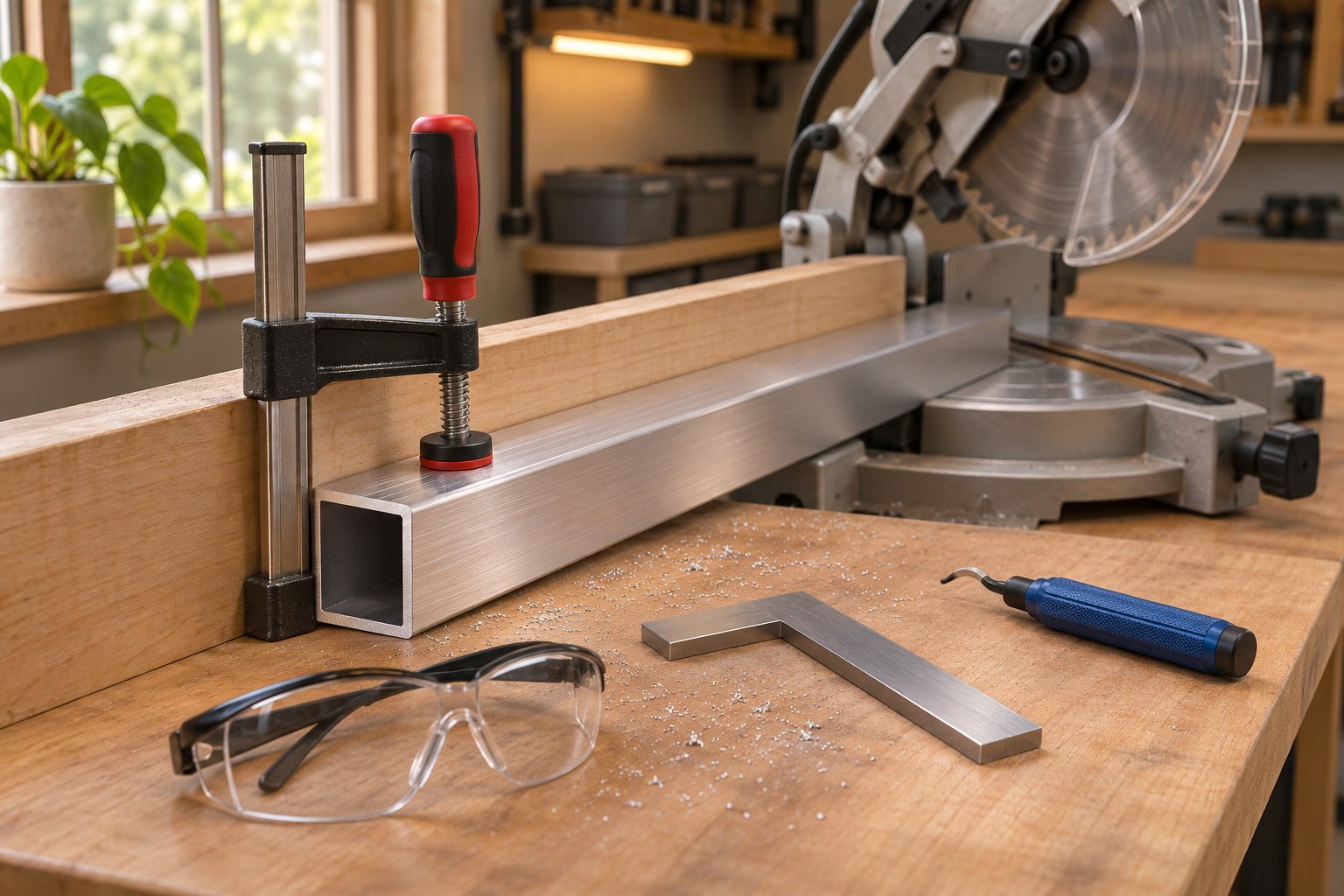
Full-length bars rarely match your design, so sooner or later you will need to cut them. A frame is only as square as its pieces. A sloppy cut shows up as wobble, gaps at brackets, and joints that never pull tight. The good news? Learning how to cut 2020 extrusion cleanly comes down to the right tool and a steady routine.
The Paramount cutting guide recommends a miter saw first, with a bandsaw or hacksaw as alternatives. Whichever you choose, follow this workflow:
Why fuss over a degree or two? An angled end leaves a gap when butted against another profile. The joint then bears on a thin edge instead of the full face, and small errors compound across the frame until the rectangle twists.
A file or deburring tool takes seconds per end. Skip it, and a burr inside a slot can stop a T-nut cold. Afterward, re-measure each piece and group matching lengths. Paired rails that differ even slightly will pull a frame out of square.
Safety matters at every step. Wear eye protection, since aluminum chips fly fast. Use hearing protection with power saws, keep the work clamped, and let the blade stop before lifting the piece.
Tapping 2020 extrusion lets you bolt straight into the end of a profile. On many profiles the center bore is tapped M5, but bore sizes vary, so confirm the bore and the correct tap on the supplier drawing first. Then follow the basics from Paramount's tapping guide:
Building many identical parts? Ordering 2020 extrusion cut to length, with ends pre-tapped by the supplier, can save hours and broken taps.
Square, clean, correctly tapped ends are the foundation every joint in your frame depends on.
A tapped end, though, is only one way to tie two bars together. Corners can also be locked with brackets, plates, or hidden connectors, and each choice trades strength, looks, and adjustability differently.
Have you ever built a frame that looked square on the bench, then racked sideways the moment you pushed on it? The profile is rarely the culprit. The joint usually is. 2020 extrusion joints come in several styles, and each one balances strength, appearance, cost, and how easily you can move parts later.
A 2020 extrusion corner bracket is the simplest right-angle join. It sits in the inside corner and bolts into both profiles through T-nuts. You do not need to machine anything, and you can loosen the bracket and slide the joint along the slot in minutes. GAP Engineering notes that die-cast brackets make a strong connection but can struggle with rotational loads when only one bracket is used, so fitting two per corner is common. Many brackets also carry small alignment tabs that key into the slot. These tabs stop the joint from twisting while you tighten it. Keep in mind that a bracket occupies the slot, so it can block a panel you planned to slide into that same slot.
Gusset plates are flat plates bolted across the outside faces of a joint. They spread the load over a wider area, which makes them a common way to reinforce corners that need extra strength.
Want a clean corner with nothing sticking out? Hidden methods use the center bore instead. In a blind joint, you drill an access hole in the slot of one profile. A hex key then reaches through that hole to tighten a button-head screw into the tapped end of the mating bar. The screw head sits inside the slot, out of sight.
A through-style end-tapped connection runs the screw through a hole drilled across one profile and into the tapped end of the other. GAP describes this method as a strong choice where shock and vibration are present. Anchor or internal connectors place a fastener body inside the profile, which also needs a drilled access hole. All three share one drawback: you cannot relocate members without drilling new holes. Thread sizes vary as well. GAP specifies M6 for its 20 series core, while many 2020 profiles are tapped M5, so check the drawing.
| Method | Strength and Rigidity | Appearance | Relative Cost | Tools Required | Adjustability |
|---|---|---|---|---|---|
| Corner brackets | Moderate; better in pairs | Visible, functional | Low | Hex key | High |
| Gusset plates | High; strong against racking | Visible on outer faces | Moderate | Hex key | High |
| Blind joints | Moderate to high | Clean, hidden | Low parts cost, more labor | Drill, tap, hex key | Low |
| Anchor or internal connectors | High | Clean, hidden | Moderate to higher | Drill, hex key | Low |
| End tapping with button-head screw | High | Screw head visible on one face | Low | Drill, tap, hex key | Low |
Every external bracket and plate depends on 2020 T-nuts, and the type you choose changes your assembly order. Slide-in nuts, including square nuts, can only enter from an open end of the profile. Framing Tech notes that these must be pre-installed or slid into an open-ended slot. Once you close a frame, those ends are blocked. Imagine finishing a printer frame and realizing you forgot the two nuts for a cable clip. You would have to take a corner apart. Drop-in nuts solve that by dropping straight into the slot opening. Versions with a set screw, leaf spring, or ball spring hold their position, which is handy in vertical slots where loose nuts would slide down.
Which mix is right? That depends less on the joint itself and more on what the frame must do. A printer gantry, a machine guard, and a test bench put very different demands on the same 20 x 20 mm bar.
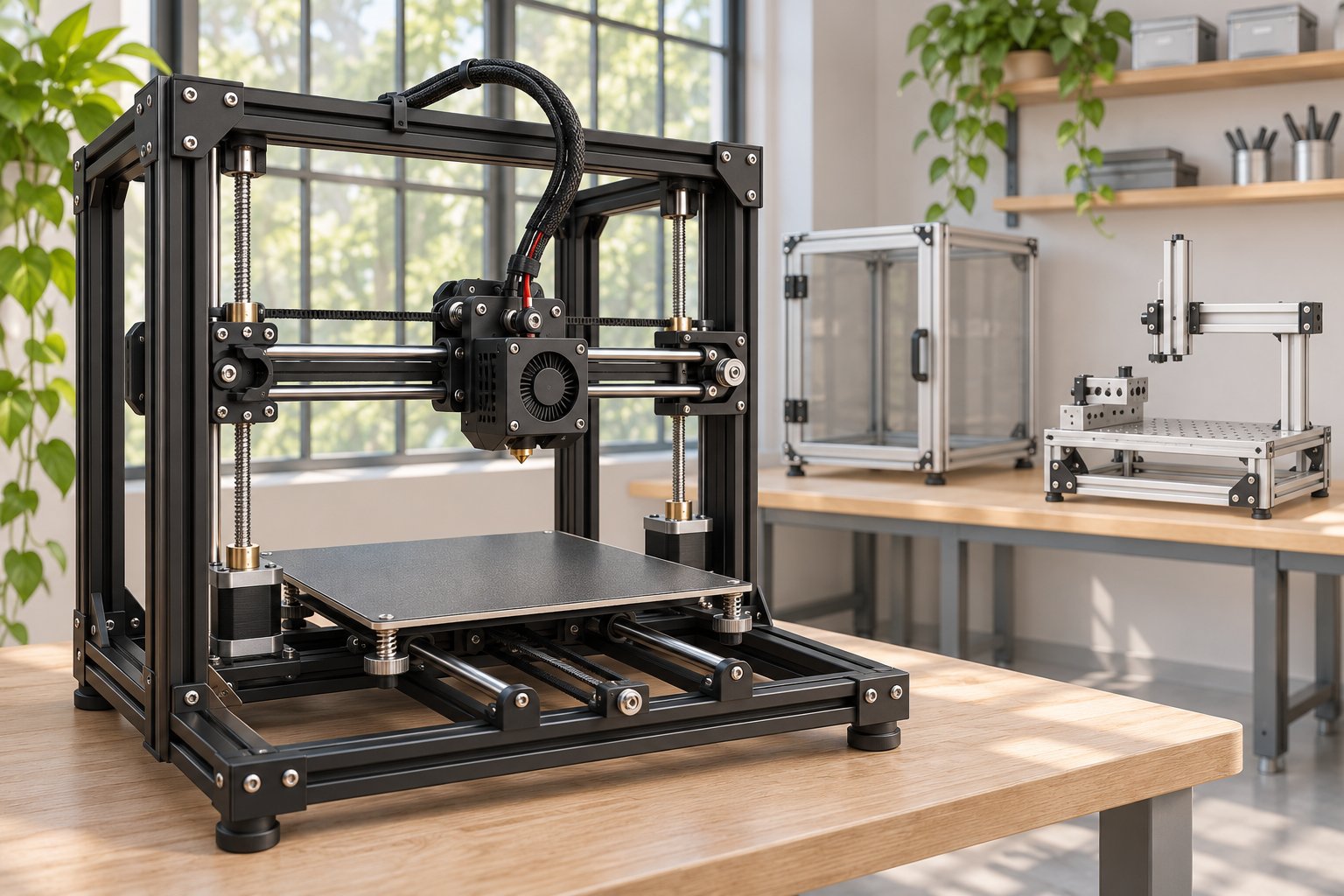
Lists of uses are easy to find. It is harder to find out why the same bar works well in one build and struggles in another. Here are the most common 2020 aluminum extrusion projects, along with the design details that decide whether each one succeeds.
A 2020 extrusion 3D printer frame often mixes both slot types. V-slot rails let Delrin or polycarbonate V-wheels roll directly on the profile. T-slot suits uprights and base members that only need mounting points. Shengxin's 3D printer frame guide notes that many builders combine the two and choose each profile by its role in the machine.
Squareness comes first. Measure the diagonals before final tightening, because a racked frame turns into skewed prints. Vibration comes next. The same guide explains that too little stiffness causes resonance during fast moves, which leads to ringing and layer shifting. It suggests 2020 is usually adequate for build volumes under about 220 mm, with larger machines moving to 2040 or 4040 members.
CNC machines are a different story. Cutting forces push back against the frame, and any flex shows up as chatter and inaccurate parts. That is why 2020 often appears on light engravers, while routers that cut harder materials tend to use larger profiles. If you stay with 2020, add diagonal bracing and gusset plates at key corners.
A 2020 extrusion enclosure carries far lighter loads, so the priorities shift. Thin panels can slide into the slots or be held with clips, so check panel thickness against the slot opening. Black anodized faces reduce glare inside the box, while clear anodized hides scratches better. Empty slots also make tidy cable channels for wiring.
Test benches need easy changes. Keep at least one face of each member open for future mounts, and pre-insert a few spare slide-in nuts before you close the frame.
Jigs, sensor mounts, and small workstations are where 2020 really shines. Hands-on prototyping is a common reason designers choose it. The system is modular and reusable. You can slide new brackets anywhere along a profile, swap a member for a longer one, and reuse the same bars in the next project. Imagine testing three fixture layouts in one afternoon without drilling a single hole.
| Application | Key Design Priority | Recommended Slot Type | When to Consider a Larger Profile |
|---|---|---|---|
| 3D printers | Squareness and vibration control | V-slot for wheel rails, T-slot for structure | Larger build volumes or faster print speeds |
| CNC frames | Rigidity under cutting forces | T-slot, or V-slot on light gantries | Harder materials, deeper cuts, longer gantries |
| Enclosures | Panel fit, finish, cable routing | T-slot | Large unsupported panels or heavy doors |
| Test benches and fixtures | Reconfigurability and slot access | T-slot | Heavy instruments or long open spans |
| Workstations and prototyping rigs | Modularity and reuse | T-slot | Shelves, tools, or people leaning on the frame |
Choose 2020 for what the frame must do, not just for what it must hold up today.
Notice that nearly every row in the last column points to the same warning signs: a longer span or a heavier, moving load. Knowing exactly where that line falls takes more than intuition, and it starts with understanding how a bar actually bends.
Can 2020 carry my load? Almost every builder asks this, and the honest answer depends on how far the bar spans and how the load is applied. Strength rarely runs out first. Stiffness does. Long before a profile breaks, it sags enough to spoil a cut, misalign a rail, or make a shelf feel flimsy. That is why 2020 extrusion load capacity is really a question about deflection.
2020 extrusion deflection grows sharply with span. In standard beam theory, sag under a center point load rises with the cube of the length. Double an unsupported span, and the same load bends the bar roughly eight times as much. Load type matters too. A motor bolted at mid-span bends a beam more than the same weight spread evenly along it. Moving gantries and cutting tools add vibration and shock on top of that. End support changes the result as well. The mk deflection calculator handles three common cases separately: supported at both ends, fixed at both ends, and cantilevered from one end.
Shape is the other half of the story. A 2040 keeps the 20 mm height of a 2020 but doubles the width. Set it so the 40 mm side runs in the direction of the load, and its moment of inertia about that axis rises sharply, so it resists bending much better. Lay it flat, and most of that advantage disappears. In other words, orientation gives you stiffness for free.
For real numbers, enter the supplier's Ix/Iy values, your span, and your load into a deflection calculator. For safety-critical frames, ask a qualified engineer to review the design.
| Span Length | Load Type | Rigidity Need | Suggested Profile Direction |
|---|---|---|---|
| Short | Static, light | Moderate | 2020 is usually enough |
| Short to medium | Dynamic, light (print heads, small carriages) | High | 2020 with bracing, or 2040 on moving axes |
| Long | Static, light (panels, shelves) | Moderate | 2040 oriented tall, or 2020 with intermediate supports |
| Long | Dynamic or cutting | High | 2040 at minimum, 4040 for base frames |
| Any | Heavy tools, people leaning on the frame | High | 4040 or a larger series |
The 2020 vs 2040 extrusion choice is less dramatic than it looks. ProLean notes that 2040 has six open slots instead of four. Its added width raises stiffness and torsional strength, while the slot width stays the same as 2020. That means most T-nuts carry over, although corner brackets are size-specific. The trade-off is more weight and a higher cost per meter. You'll notice many builds mix the two, using 2020 for uprights and light members and 2040 for long beams and gantries.
To review both formats side by side, Shengxin Aluminium's combined page for 2020 and 2040 T-slot and V-slot profiles lists anodized options in each size. Be aware that the listing does not publish load ratings or complete compatibility data. Request section properties, tolerances, and cross-section drawings before relying on it for structural decisions.
Deflection, not breaking strength, usually decides whether 2020 is enough for your frame.
Every calculation still rests on one quiet assumption: that the bar on your bench matches the numbers you used. Small slips, from a mismatched nut to an unchecked drawing, are where most frames actually go wrong.
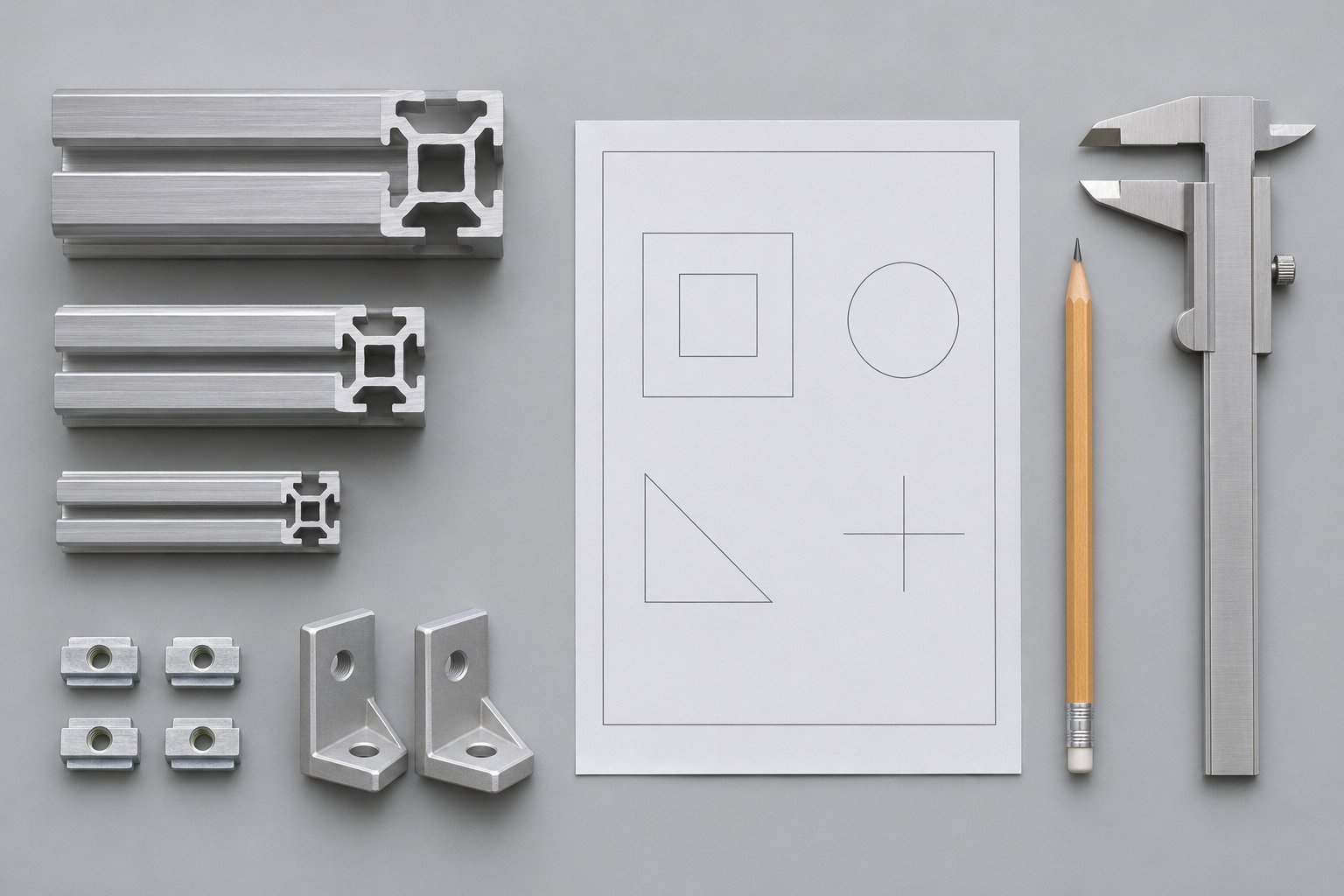
Most failed frames do not fail because of bad math. They fail because of a nut that would not fit, a cut that was one degree off, or a drawing nobody asked for. Keep this compact reference beside your bench and your order form.
Whether you buy from a distributor or directly from a factory, a reliable 2020 extrusion supplier should answer every point below in writing. CharMax suggests sending your drawing and seeing what comes back, since a quote with no questions at all is a warning sign.
If you are looking for anodized 2020 and 2040 profiles in both slot types, Shengxin Aluminium's T-slot and V-slot profile page is one focused place to start. The listing does not publish load ratings or full compatibility data, so use the checklist above to request drawings, tolerances and hardware details first. Planning to buy 2020 aluminium extrusion in volume? A small sample order lets you test fit and finish before committing to a full batch.
Verified specs beat nominal names: a 2020 t-slot aluminum profile is only as reliable as the drawing behind it.
Get the details right on paper, and the frame on your bench will behave exactly as you designed it to.
In the metric system, 2020 describes a square profile that measures 20 mm by 20 mm, with one slot on each face. The first two digits give the width and the last two give the height, so related profiles such as 2040 and 4040 follow the same logic. Be careful with inch-based catalogs, because some brands use the same four digits for a 2 x 2 inch profile, and the inch-series counterpart of metric 2020 is usually called 1010. The name only identifies the size family. Slot opening, center bore and wall thickness can still differ between brands, so the supplier's cross-section drawing is the real reference.
Choose based on whether the profile needs to guide motion. T-slot profiles are best for static framing such as workstations, enclosures, machine guards and test rigs, where you only need adjustable mounting points for brackets and panels. V-slot profiles add angled running surfaces so V-wheels can roll along the bar, which makes them popular for 3D printers, laser engravers, camera sliders and light CNC gantries. Many builds use both: V-slot for moving axes and T-slot for uprights and base members. For heavy loads or high positioning accuracy, a dedicated linear rail is usually a better choice than V-wheels.
Most 20 series profiles accept hardware made for a 6 mm slot, commonly with M3, M4 or M5 threads. Hardware for 8 mm slots belongs to larger series and will not fit. Slot shape matters as much as width, so European standard and other brand-specific systems may not share nuts and connectors even when the slot width matches. For end fastening, many 2020 center bores are tapped M5, but some systems use other sizes. Match your nuts, screws and brackets to the exact profile drawing, and keep metric and inch hardware in separate builds.
There is no single load figure, because capacity depends on the unsupported span, how the load is applied, how the ends are supported and the specific profile's section properties. In most frames, excessive sag becomes a problem well before the aluminum fails. Short spans with light, static loads are usually fine for 2020, while long spans, moving gantries and cutting forces quickly call for bracing, extra supports or a deeper profile. To get a reliable answer, enter the supplier's Ix and Iy values, your span and your load into a deflection calculator, and ask an engineer to review any safety-critical frame.
Consider 2040 when a member spans a long distance, carries a moving carriage or must stay very stiff, such as a printer gantry or a long shelf beam. Oriented with its taller side in the direction of the load, 2040 resists bending far better than 2020 while keeping the same slot width, so most T-nuts carry over, although corner brackets are size-specific. Shengxin Aluminium offers a combined page for anodized 2020 and 2040 T-slot and V-slot profiles, which makes it easy to review both formats together. Since the listing does not publish load ratings or full compatibility data, request cross-section drawings, section properties, tolerances and mating hardware details before ordering.



 un service en ligne
 0086 136 3563 2360
 sales@sxalu.com
 +86 136 3563 2360
 français
 English
 Deutsch
 русский
 español
 português
 العربية
 ไทย
 Việt
 Українська