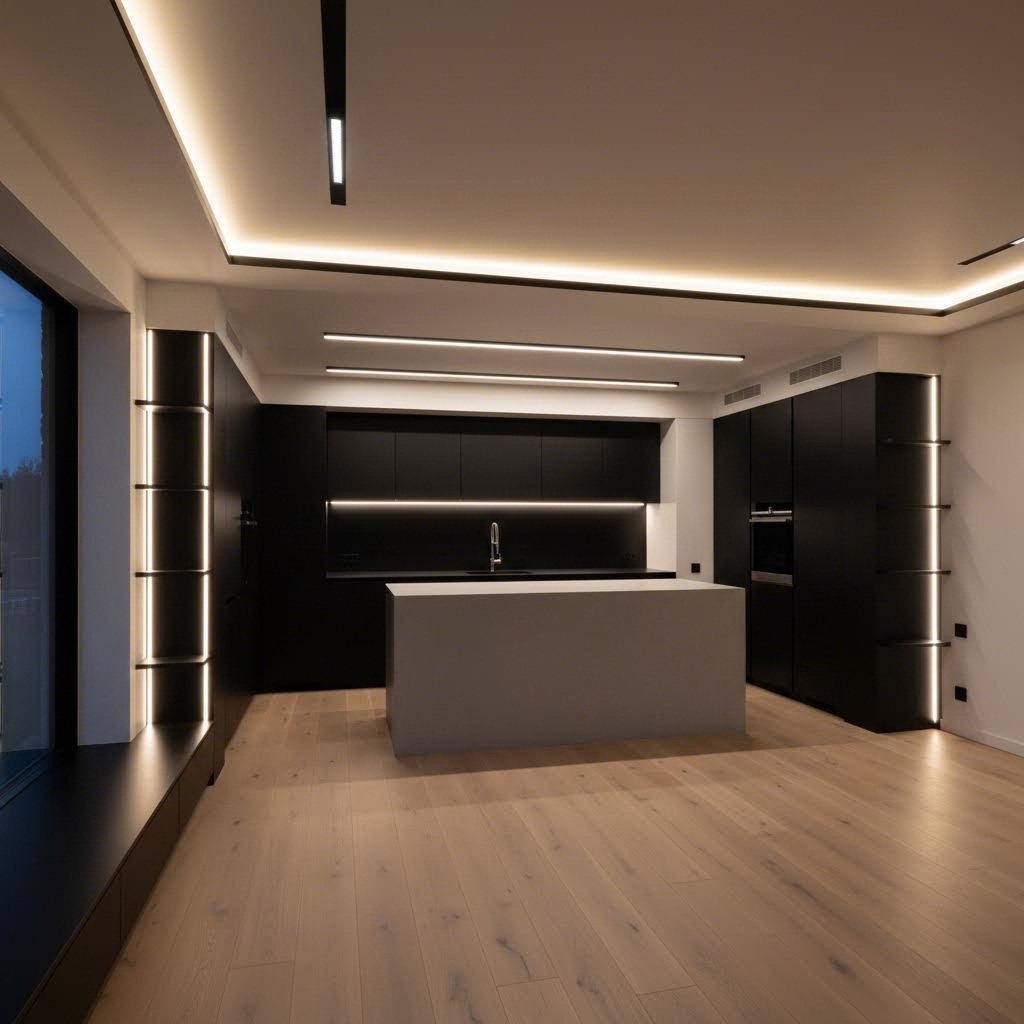
Have you ever installed LED strip lights only to find them looking unfinished or failing prematurely? You're not alone. LED lighting aluminum extrusions solve this common frustration by transforming raw LED strips into polished, long-lasting lighting systems.
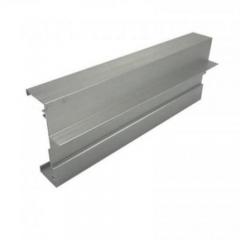
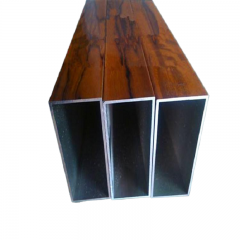
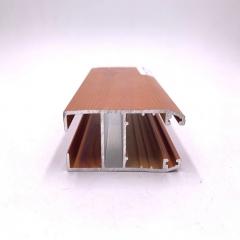
Simply put, these are specialized aluminum channels designed to house LED strip lights. Think of them as protective enclosures that give your LED strips a finished, professional appearance while dramatically improving performance. A complete led light aluminium profile system typically includes the aluminum channel itself, a polycarbonate diffuser cover, end caps, and mounting hardware.
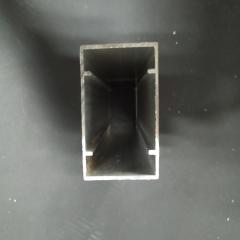
The channels are manufactured through an extrusion process where aluminum is melted and shaped into precise cross-sectional profiles. Most feature a U-shaped design with an approximately half-inch wide slot where your LED strip mounts securely. Standard lengths run 3.2 feet (1 meter), often sold in packs of five to match typical 16.4-foot LED strip reels.
These aluminum lighting solutions deliver three core benefits that make them essential for quality installations:
Why aluminum specifically? Among commonly manufactured materials, aluminum offers thermal conductivity values second only to copper—but at a fraction of the cost. This makes it ideal for led housing applications where heat management directly impacts LED lifespan.
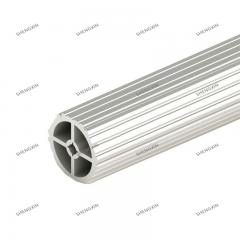
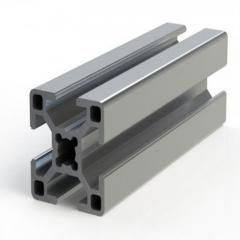
The profile lights created through extrusion can be shaped into various forms: surface-mounted channels, recessed profiles for flush installations, corner pieces for 45-degree applications, and suspended fixtures for commercial spaces. Each configuration serves specific design requirements while maintaining the fundamental benefits of the led strip channel system.
Installing LED strips without an aluminum channel is comparable to mounting a bare light bulb in a socket—it works, but lacks the finished appearance most spaces demand. The exposed circuit board with its bright yellow phosphor-coated emitters rarely complements interior design elements.
Beyond aesthetics, bare strips present practical challenges. Individual LED "dots" create direct glare when viewed straight-on, causing visual discomfort. These same dots reflect off glossy surfaces like hardwood floors or polished countertops, creating distracting light patterns. Over time, exposed strips accumulate dust that's difficult to clean and may contribute to premature failure.
A properly installed led light aluminium profile system addresses each concern. The diffuser transforms multiple point-source lights into a continuous, comfortable glow. The channel protects components from environmental factors. And the complete assembly delivers the clean, modern look that today's lighting designs require.
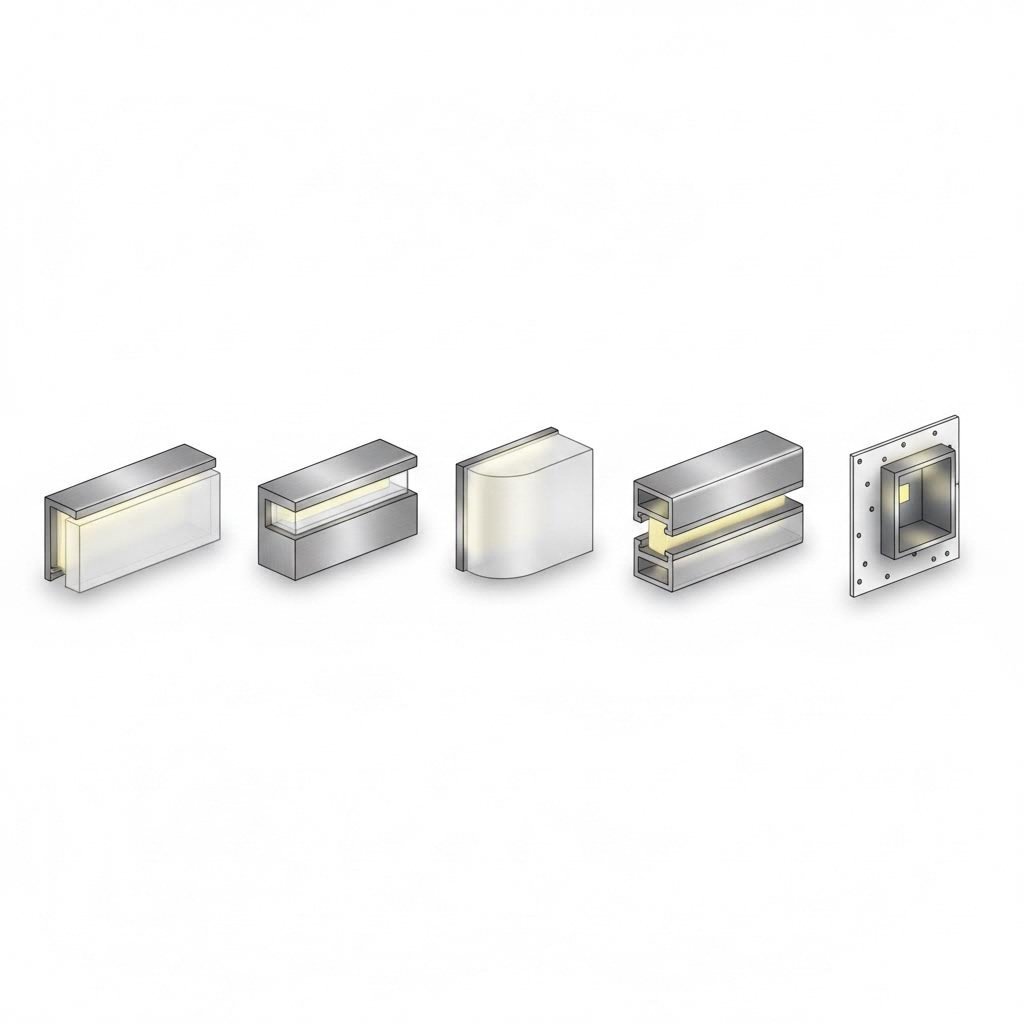
Choosing the right led profile for your project can feel overwhelming when you're staring at dozens of options. Which one fits under your kitchen cabinets? What about that cove lighting you've been planning? Let's break down the five main profile types so you can match each to your specific needs with confidence.
Each led aluminum profile type serves distinct purposes, from everyday installations to specialty architectural applications. Understanding these differences helps you avoid costly mistakes and achieve professional results on the first try.
Surface-mounted profiles are the workhorses of LED lighting installations. These U-shaped channels attach directly to flat surfaces using mounting clips or adhesive tape, making them the easiest option for DIY projects. You'll find them perfect for under-cabinet kitchen lighting, closet illumination, or anywhere you need quick, reliable installation without cutting into surfaces.
The beauty of surface mount led profiles lies in their simplicity. No special tools or construction work required—just secure the profile channel to your surface, insert the LED strip, snap on the diffuser, and you're done. They protrude slightly from the mounting surface, typically 7mm to 25mm depending on the model, creating a subtle dimensional element.
Recessed profiles take a different approach by sitting flush with surrounding surfaces. Installation requires cutting a precise slot into drywall, wood, or other materials before fitting the profile inside. Once complete, only the diffuser face remains visible, creating seamless integration that makes light appear to emerge directly from the surface itself.
This flush installation works beautifully for cove lighting, accent walls, and any application where you want the architecture—not the fixture—to take center stage. The trade-off? Recessed mounting typically costs 4 to 5 times more than surface mounting due to construction and electrical work requirements.
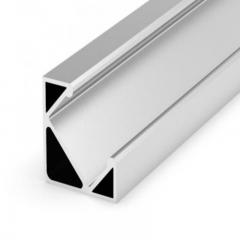
Corner profiles feature L-shaped or V-shaped designs that fit precisely where two surfaces meet at 45-degree angles. Think display case edges, stairway intersections, or the inside corners of cabinets. These led profiles direct light at an angle rather than straight down, creating indirect illumination that bounces off nearby surfaces for a soft, ambient glow.
Suspended profiles transform LED strips into pendant-style lighting fixtures. They hang from ceilings using cables, chains, or rods, bringing illumination closer to work surfaces in spaces with high ceilings. Offices, restaurants, and retail environments frequently use suspended profiling lights to combine functional workspace lighting with modern design statements.
Trimless profiles—sometimes called plaster-in or drywall profiles—represent the ultimate in seamless integration. Installed before plastering or finishing drywall, these channels disappear entirely once construction is complete. Only the light itself remains visible, creating that coveted "light from nowhere" effect popular in high-end residential and hospitality projects.
| Profile Type | Best Applications | Installation Complexity | Visual Effect |
|---|---|---|---|
| Surface Mount | Under-cabinet lighting, closets, workspaces, general accent lighting | Low - clips or adhesive mounting | Visible profile, clean lines, slight protrusion from surface |
| Recessed | Cove lighting, accent walls, bathrooms, architectural features | Medium - requires precise cutting into surfaces | Flush with surface, integrated appearance, minimal fixture visibility |
| Corner | Display cases, stair edges, cabinet corners, furniture accents | Low to Medium - angled positioning requires careful alignment | 45-degree light direction, soft indirect glow, highlights edges |
| Suspended | Offices, retail spaces, restaurants, high-ceiling commercial areas | Medium - requires ceiling anchoring and cable adjustment | Pendant-style, decorative element, adjustable height |
| Trimless | High-end residential, hotels, galleries, modern architectural spaces | High - must be installed during construction phase | Completely hidden profile, light appears to emerge from surface |
When selecting your profile for led installations, consider both the practical requirements and the final aesthetic you want to achieve. Surface mount works brilliantly when you need straightforward installation and don't mind seeing the fixture. Recessed and trimless options demand more planning but deliver that seamless, architectural look. Corner profiles solve the specific challenge of edge lighting, while suspended led profile channel systems bring dramatic presence to commercial environments.
Understanding thermal management becomes equally important once you've selected your profile type—and that's where aluminum's heat-dissipating properties truly shine.
Ever wondered why some LED installations last a decade while others fail within months? The answer often lies in technical specifications you might overlook when shopping for aluminum channel for led strips. Understanding these details before purchasing saves you from costly replacements and disappointing results.
Three key specification areas determine how well your led extrusion performs: aluminum alloy grade, material thickness, and channel dimensions. Let's explore each so you can make informed decisions that match your specific project requirements.
Not all aluminum is created equal. The alloy type dramatically affects how efficiently your aluminum extrusion channel transfers heat away from LED strips. For LED lighting applications, 6063-T5 aluminum has become the industry standard, offering thermal conductivity of approximately 201 W/(m·K)—more than 1,000 times higher than most plastics.
What does this mean practically? When your high-power LED strip generates 8-10 watts of heat per meter, 6063-T5 aluminum rapidly transfers that thermal energy across the entire profile surface. This prevents dangerous heat concentration at the LED junction points where damage occurs first.
The "T5" designation indicates the tempering process—specifically, an artificial aging treatment that enhances both strength and thermal properties. You might encounter other aluminum grades in budget-priced options, but low-grade recycled aluminum (typically below 150 W/(m·K) thermal conductivity) significantly impairs heat conduction. When evaluating led extruded aluminum products, always verify the alloy specification before purchasing.
Beyond thermal performance, 6063-T5 offers excellent extrudability, meaning manufacturers can create complex cross-sectional shapes with precise tolerances. This matters for accessories like diffuser covers and end caps that need to fit snugly without gaps or rattling.
Imagine buying shoes without knowing your size—that's essentially what happens when you select an aluminium channel for led strip lighting without checking dimensional compatibility. Three measurements matter most: internal width, channel depth, and wall thickness.
Internal Width: Standard LED strip widths include 5mm, 8mm, 10mm, 12mm, and 20mm options. Your aluminum channel extrusion must accommodate your specific strip width with slight clearance for easy insertion. Too tight, and you risk damaging the strip during installation or reducing thermal contact. Too loose, and the strip may shift, rattle, or fail to transfer heat effectively to the aluminum.
| LED Strip Width | Recommended Channel Internal Width | Typical Applications | Profile Examples |
|---|---|---|---|
| 5mm - 8mm | 8mm - 10mm (standard channels) | Accent lighting, furniture, display cases | Compact U-channels like 9x17mm profiles |
| 10mm | 12mm (wider profiles) | Under-cabinet, closet, general task lighting | Standard U-channels like 9x23mm or 10x23mm profiles |
| 12mm+ | 15mm - 20mm (specialty wide channels) | High-output commercial, dual-row strips | Deep channels like 10x30mm or oversized recessed profiles |
| 20mm (dual-row) | 22mm - 25mm (extra-wide channels) | Bright commercial spaces, signage, architectural features | Wide-body profiles designed for high-power applications |
Channel Depth: Deeper profiles serve two critical functions. First, they provide greater thermal mass for dissipating heat from high-power strips (15W/m or higher). Second, they create more distance between the LED emitters and the diffuser cover, allowing light to spread and blend before exiting. This produces smoother, more uniform illumination without visible LED hotspots.
Shallow channels (17mm depth or less) work fine for low-power accent lighting but may leave LED dots visible through frosted diffusers. Deep channels (24mm to 36mm) eliminate dot visibility entirely, even with lower-density strips, making them ideal for living spaces and commercial environments where visual comfort matters.
Wall Thickness: This often-overlooked specification directly impacts heat dissipation capacity. Upgrading from 1mm thin-wall to 2mm thick-wall profiles can reduce LED PCB temperature by 6-8°C under continuous operation at 15W/m loads. That temperature reduction translates to 30-40% longer LED lifespan.
For strips running at 10W/m or below, standard 1mm wall thickness typically provides adequate thermal management. Once you exceed 15W/m, consider 2mm or thicker profiles to maintain PCB temperatures below the critical 70°C threshold. High-density installations in enclosed spaces—like showcase displays or recessed ceiling coves—benefit from finned profile designs that increase surface area for convective cooling by 20-30% compared to flat-wall alternatives.
With the right specifications matched to your LED strips, your aluminum profiles become effective thermal management systems—which leads us directly to understanding exactly how heat affects LED performance and longevity.
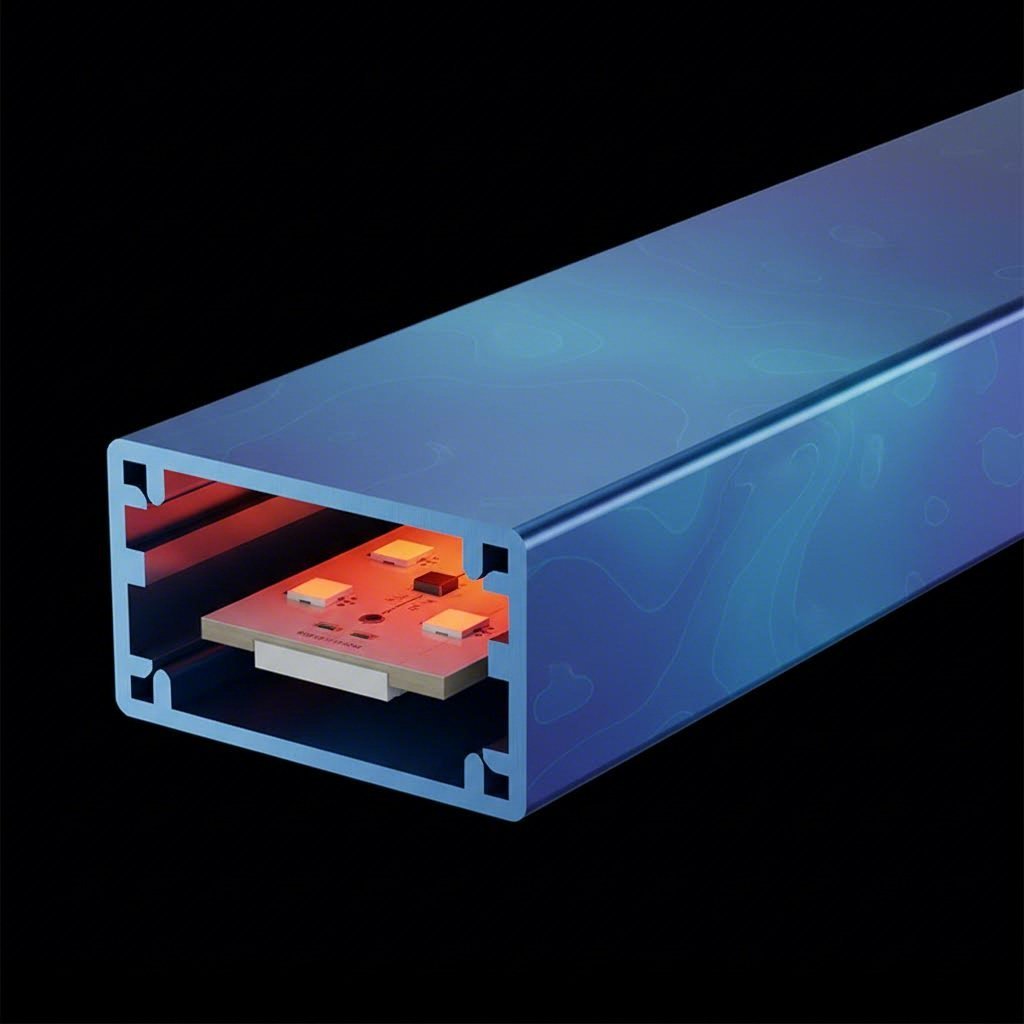
You've probably heard that LEDs run cooler than incandescent bulbs—and that's true. But here's what many people don't realize: LEDs still generate significant heat, and that heat is their greatest enemy. Understanding how thermal management works reveals why led light extrusion systems aren't just accessories—they're essential components that determine whether your lighting investment lasts 3 years or 15.
The relationship between heat and LED performance follows predictable physics. When you grasp these principles, you'll understand exactly why light aluminum channels transform ordinary LED strips into professional-grade lighting systems.
LEDs generate heat differently than traditional light sources. While incandescent bulbs radiate heat outward through infrared energy, LEDs concentrate thermal energy at a tiny point called the semiconductor junction. This junction—where electrical current converts to light—operates at temperatures between 60°C and 120°C during normal use.
Here's the problem: that heat has nowhere to go on a bare LED strip. The thin copper traces and flexible PCB material can only conduct so much thermal energy away from the junction. Without adequate heat dissipation, temperatures climb steadily during operation.
What happens when junction temperatures rise too high? Several destructive processes begin simultaneously:
These processes accelerate exponentially with temperature. A 10°C increase in operating temperature can reduce LED lifespan by 50% or more. Running at 85°C instead of 75°C doesn't just shorten life slightly—it can cut your expected service years in half.
For every 10°C increase in LED junction temperature above the optimal operating range, expected lifespan decreases by approximately 50%. This exponential relationship makes thermal management the single most important factor in determining how long your LED installation will last.
This is where aluminum light channels transform the equation. When you mount an LED strip inside an aluminum extrusion, you're essentially giving that concentrated junction heat a massive escape route.
Aluminum conducts heat approximately 1,000 times more efficiently than the plastic or fiberglass materials in LED strip PCBs. The moment thermal energy reaches the aluminum channel through direct contact, it spreads rapidly across the entire profile surface. What was once a dangerous hotspot at the LED junction becomes gentle warmth distributed over inches or feet of aluminum surface area.
The physics of extrusion lighting systems work through three heat transfer mechanisms:
Together, these mechanisms can reduce LED junction temperatures by 15-25°C compared to bare strip installations. That temperature reduction translates directly to extended lifespan—often doubling or tripling the years of reliable service you'll receive.
For standard LED strips running at 5-10 watts per meter, even basic led extrusions provide adequate cooling. But high-power applications demand more aggressive thermal management. Strips rated at 15W/m or higher generate substantial heat that overwhelms thin-wall profiles.
In these demanding scenarios, you'll want profiles with thicker walls (2mm or more), finned exterior surfaces that increase cooling area, or larger cross-sections that provide greater thermal mass. Some extrusion lighting installations in commercial environments use actively cooled profiles with small fans for strips exceeding 25W/m.
The investment in proper thermal management pays dividends throughout your installation's service life. Lower operating temperatures mean brighter light output maintained longer, consistent color quality without yellowing or blue shift, and dramatically extended years before replacement becomes necessary. Understanding diffuser options helps you balance these thermal benefits with the light quality your specific application demands.
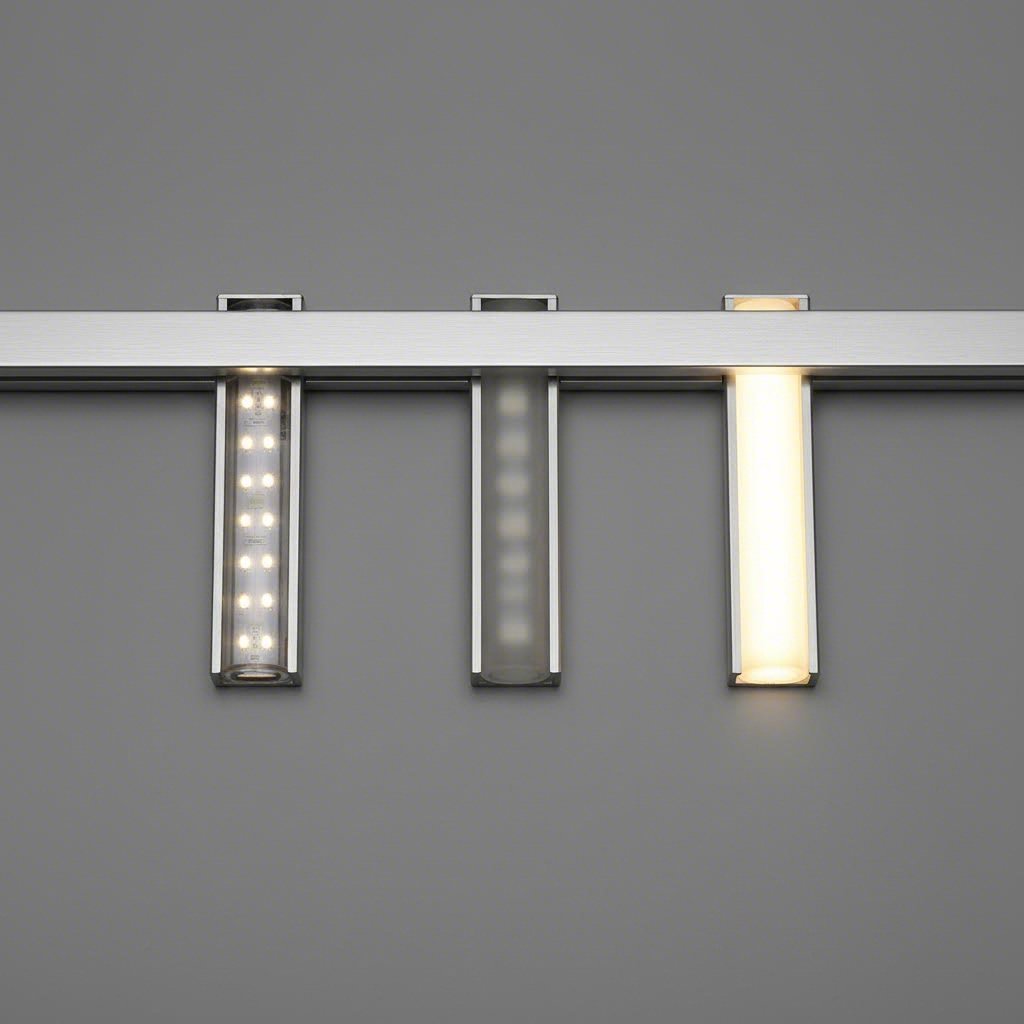
You've selected the perfect aluminum profile and matched it to your LED strip—but there's one more decision that dramatically shapes your final lighting result. The diffuser cover you choose determines whether your installation delivers maximum brightness, soft ambient glow, or something in between. Let's explore how each diffuser type transforms raw LED output into the profile lighting effect you're actually looking for.
Think of led lighting diffusers as the finishing touch that separates amateur installations from professional-grade results. These polycarbonate or acrylic covers snap into your aluminum channel, controlling how light exits the led strip housing and interacts with your space.
Each diffuser type offers distinct trade-offs between light transmission and visual comfort. Understanding these differences helps you match the right cover to your specific application.
Clear (Transparent) Diffusers: With approximately 95% light transmittance, clear covers deliver maximum brightness with virtually no light loss. The catch? Individual LED emitters remain completely visible through the cover. You'll see distinct dots rather than continuous illumination. This works perfectly for hidden installations—under cabinets, inside closets, or behind furniture—where you never view the fixture directly. When brightness matters more than aesthetics, clear diffusers let your LED strips perform at full capacity.
Frosted (Semi-Transparent) Diffusers: These offer an excellent middle ground with 85-90% light transmittance. The light-scattering surface treatment significantly reduces LED dot visibility while preserving most of your lumens. Hotspots diminish substantially, creating more uniform illumination across the profile light surface. Frosted covers work well for visible installations where some fixture visibility is acceptable—think retail shelving, workshop task lighting, or garage illumination.
Opal Diffusers: With roughly 75% light transmittance, opal covers use a milky white coating to scatter light evenly across the entire surface. LED dots disappear completely, replaced by smooth, continuous illumination. The profile lighting appearance improves dramatically—even when switched off, the clean white surface looks intentional and finished. Opal diffusers excel in living spaces, hospitality settings, and anywhere visual comfort matters.
Milky Diffusers: Taking diffusion further, milky covers achieve 65-70% light transmittance with complete hotspot elimination. The more opaque material creates the softest, most uniform glow possible. To compensate for light loss, you may need higher-output LED strips. Milky diffusers suit bedroom cove lighting, bathroom vanities, and meditation spaces where gentle illumination creates the desired atmosphere.
Beyond the standard options, specialty diffusers address unique requirements. Black diffusers transmit approximately 60% of light output while completely concealing the light source when switched off. The result? Your led tape housing appears as a sleek black line until activated, then glows dramatically. This creates striking accent effects in modern architectural applications.
Lens diffusers incorporate optical designs that reshape light distribution. Rather than scattering light broadly, these precision covers narrow the beam angle from the typical 120 degrees down to 10, 30, or 60 degrees. Concentrated light reaches further with greater intensity—ideal for wall washing, artwork illumination, or task lighting requiring focused output.
Silicone diffusers offer flexibility for curved aluminum diffuser applications. With 70-75% transmittance, they bend around circular or waved profiles where rigid covers won't work. The soft material installs easily on ring-shaped fixtures and organic architectural forms.
When evaluating diffuser options for your project, consider these key factors:
The conscious selection of diffuser type often determines project success more than profile choice alone. A perfectly installed led strip housing with the wrong diffuser creates either harsh glare or insufficient brightness—neither delivers satisfaction. Match your cover to your specific visual goals, and your LED extrusions will perform exactly as intended.
Of course, achieving professional results requires more than profiles and diffusers—the complete accessory ecosystem and proper installation techniques bring everything together.
You've selected the perfect aluminum led channel and matched it with an ideal diffuser—but how do you actually turn these components into a finished installation? The accessories and techniques you use determine whether your project looks professionally executed or hastily assembled. Let's walk through everything you need, from end caps to cutting methods, so your led strip channels deliver flawless results.
Think of aluminium profiles for led tape as a complete system rather than standalone products. Each accessory serves a specific purpose, and understanding how they work together transforms challenging installations into straightforward projects.
End Caps: These small plastic or metal pieces close off your led extrusion channel openings, providing both a finished appearance and dust protection. You'll encounter two types—closed end caps seal the channel completely for clean terminations, while open (or drilled) end caps include holes for wire routing. Most installations require at least one open cap where power wires enter the channel. Quality end caps snap firmly into place without rattling or gaps.
Mounting Clips and Brackets: These secure your profiles to surfaces and come in several configurations:
Joining Connectors: When your installation spans longer than a single profile length, joining connectors create seamless connections between sections. Internal splice brackets slide inside adjacent channels, aligning them perfectly while maintaining structural integrity. For led strip trunking applications spanning entire rooms, these connectors enable continuous runs without visible breaks.
Corner Connectors: L-shaped and T-shaped connectors allow led strip light trunking systems to turn corners or branch in multiple directions. These maintain the clean appearance of your installation while routing light around obstacles or into different areas.
Rarely will standard profile lengths match your exact requirements. Cutting aluminum extrusions to size requires the right tools and techniques to achieve clean, professional results.
Recommended Cutting Tools: A miter saw equipped with a fine-tooth metal cutting blade delivers the cleanest cuts. Choose a blade with higher tooth count for smoother results—more teeth create finer cuts with less material tearing. For occasional cuts, a hacksaw with a metal-cutting blade works adequately, though edges require more finishing work.
Safety Precautions: Always wear safety glasses to protect against aluminum chips and debris. Work gloves prevent cuts from sharp edges. Secure the profile firmly before cutting—loose material can shift during cutting, causing dangerous kickback or inaccurate cuts.
Cutting Process: Measure twice, mark clearly, and cut once. Use a square or straight edge to mark your cut line perpendicular to the profile length. When using a miter saw, let the blade reach full speed before contacting the aluminum, and feed the material slowly through the cut. Rushing creates rough edges and generates excessive heat.
Finishing Cut Edges: Raw cut edges contain burrs and sharp points that can damage LED strips or cause injuries during handling. Use a fine metal file or deburring tool to smooth all cut surfaces. Pay particular attention to the interior channel where your LED strip will mount—any burrs here can scratch or puncture the strip's backing.
Joining Multiple Sections: For seamless connections between cut pieces, slide internal joining brackets halfway into one profile, then push the adjacent section onto the exposed portion. The bracket should fit snugly without forcing. Apply a small amount of clear silicone adhesive inside the joint for permanent installations to prevent sections from separating over time.
Mounting Hardware by Surface Type:
| Surface Material | Recommended Hardware | Key Considerations |
|---|---|---|
| Drywall | Toggle bolts or drywall anchors rated for fixture weight | Find studs for heavy profiles; anchors work for lightweight channels |
| Wood | #6 or #8 wood screws, 3/4" to 1" length | Pre-drill pilot holes to prevent splitting; countersink for flush mounting |
| Concrete/Masonry | Concrete anchors or masonry screws | Use hammer drill for pilot holes; match anchor size to screw diameter |
| Metal | Self-tapping sheet metal screws or machine screws with nuts | Pre-drill holes slightly smaller than screw diameter |
| Glass/Tile | High-bond adhesive mounting tape or specialized glass anchors | Clean surface thoroughly; allow adhesive to cure fully before loading |
Following a systematic workflow ensures professional results regardless of project complexity. Here's the complete installation process from start to finish:
With the right accessories and proper technique, your aluminum led channel installation will look and perform like professional work. The time invested in proper preparation and careful execution pays dividends throughout years of reliable service—which brings us to understanding where these systems work best across residential and commercial applications.
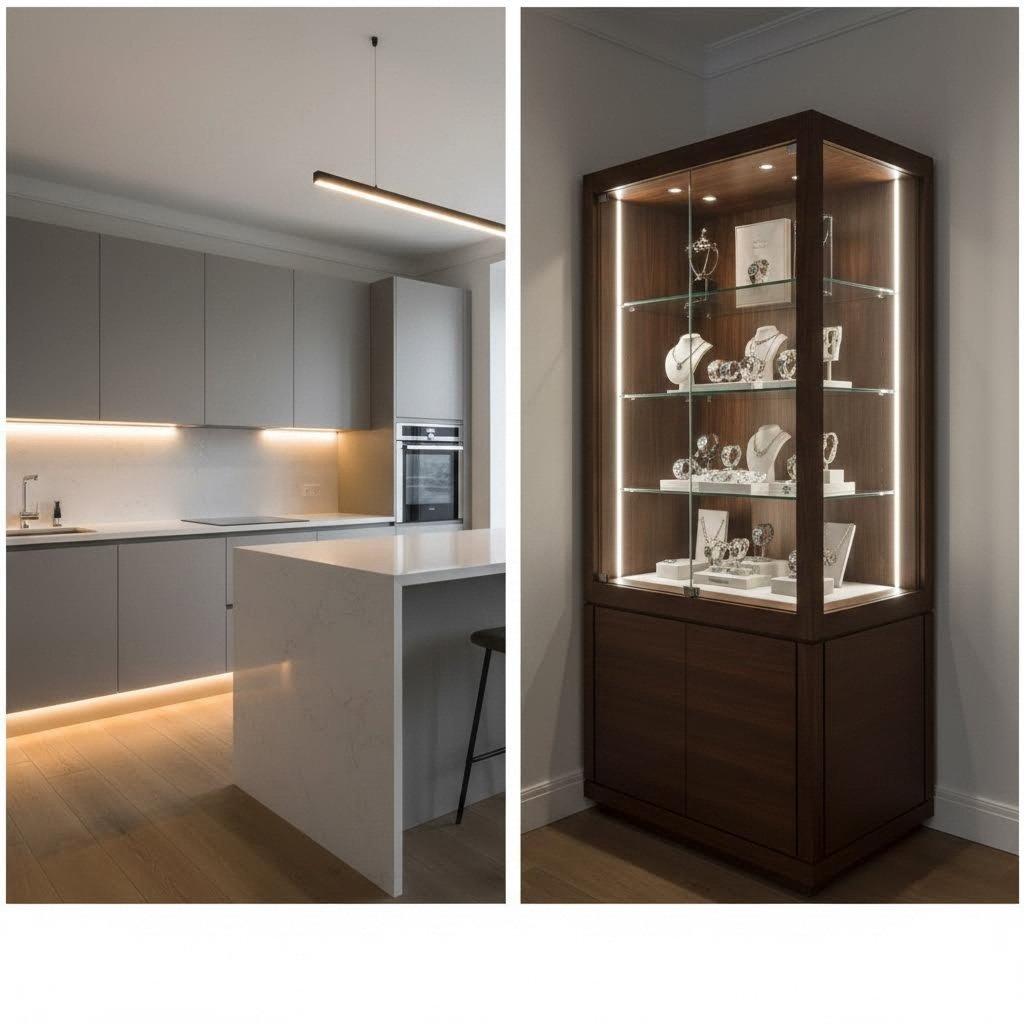
Now that you understand profiles, thermal management, and installation techniques—where exactly should you use these systems? The answer depends entirely on your specific project goals. Whether you're upgrading your kitchen, designing a retail space, or illuminating an outdoor deck, the right led strip profile transforms ordinary spaces into professionally lit environments.
Let's explore the most popular applications across residential, commercial, and outdoor settings. You'll discover which aluminum profile for led strip lighting works best for each scenario and why certain combinations deliver superior results.
Your home offers countless opportunities for led aluminium profile installations. The key is matching profile types to each room's specific demands.
Under-Cabinet Kitchen Lighting: This remains the most popular residential application—and for good reason. Surface-mounted profiles attach directly beneath upper cabinets, casting even illumination across countertops without harsh shadows. Choose shallow profiles (17-20mm height) that won't interfere with cabinet clearance. Opal diffusers eliminate LED dots that would otherwise reflect off polished countertops and stainless appliances. The angled light from corner profiles works beautifully where cabinets meet walls, filling shadows that standard strips miss.
Closet Illumination: Walk-in closets benefit enormously from led strip light profile systems. Mount surface profiles along shelf edges to illuminate clothing and accessories. Recessed profiles integrated into closet rod housings provide functional task lighting without visible fixtures. Motion-activated systems paired with aluminum channels offer hands-free convenience—the lights activate when you enter and shut off automatically after you leave.
Stairway Accent Lighting: Safety meets aesthetics when you install LED extrusions along stair treads or risers. Recessed profiles create elegant lines of light that guide foot traffic while adding architectural interest. Corner profiles tucked beneath stair nosings direct light downward without glare, making each step clearly visible. For dramatic effect, install profiles in stair risers to create a floating staircase appearance.
Bathroom Vanity Lighting: Mirror-adjacent installations require careful planning. Vertical surface-mounted profiles flanking bathroom mirrors provide even, shadow-free illumination ideal for grooming tasks. Horizontal recessed profiles above mirrors deliver similar results with a more integrated appearance. Choose IP65-rated extrusions near shower areas where moisture exposure occurs. Frosted or opal diffusers prevent harsh reflections in mirror surfaces.
Commercial environments demand lighting that performs flawlessly while enhancing brand identity and customer experience. LED aluminum extrusions deliver both.
Retail Display Cases: Nothing showcases merchandise like properly lit display cases. Corner profiles installed at case edges create angled light that highlights products without creating hotspots on glass surfaces. Shallow surface-mounted profiles above shelves illuminate products from above. High-CRI LED strips paired with clear or frosted diffusers ensure accurate color rendering—critical for jewelry, cosmetics, and fashion retail.
Office Indirect Lighting: Modern office design increasingly favors indirect illumination that reduces eye strain and creates comfortable work environments. Suspended profiles hanging from high ceilings direct light upward, bouncing it off ceiling surfaces for soft, diffused illumination. Recessed cove profiles around room perimeters achieve similar effects. These approaches eliminate the harsh overhead glare associated with traditional fluorescent fixtures.
Hospitality Accent Features: Hotels, restaurants, and bars use LED extrusions to create atmosphere and guide guest flow. Trimless profiles disappear into walls and ceilings, producing dramatic "light from nowhere" effects that impress visitors. Bar fronts wrapped with surface-mounted profiles create inviting focal points. Stairways and corridors benefit from recessed profiles that provide wayfinding illumination while reinforcing design themes.
Architectural Cove Lighting: Perhaps no application showcases led strip profile systems better than architectural cove lighting. Recessed profiles installed in ceiling coves or wall reveals create continuous lines of light that define architectural geometry. Deep profiles with opal diffusers ensure complete dot elimination—critical when fixtures remain visible from seating areas. The even illumination these systems produce makes spaces feel larger while highlighting architectural details.
| Application | Recommended Profile Type | Ideal Diffuser | Key Considerations |
|---|---|---|---|
| Under-Cabinet Kitchen | Surface Mount (shallow) | Opal or Frosted | Low profile height; easy installation; minimize glare on countertops |
| Closet Illumination | Surface Mount or Recessed | Frosted | Motion sensor compatibility; adequate brightness for garment color accuracy |
| Stairway Accent | Recessed or Corner | Opal | Safety-rated brightness; durable mounting; consistent step visibility |
| Bathroom Vanity | Surface Mount or Recessed | Opal or Milky | IP65 rating near water; high CRI for grooming tasks; glare-free |
| Retail Display Cases | Corner or Surface Mount | Clear or Frosted | High CRI strips; low-heat operation; adjustable brightness |
| Office Indirect Lighting | Suspended or Recessed Cove | Opal | Uniform distribution; reduced eye strain; high lumen output |
| Hospitality Accent | Trimless or Recessed | Opal or Milky | Seamless appearance; dimming capability; atmosphere creation |
| Architectural Cove | Recessed (deep) | Opal | Complete dot elimination; long continuous runs; clean terminations |
| Landscape Lighting | Exterior LED Channel (IP67+) | Frosted or Opal | Weather resistance; UV stability; secure ground mounting |
| Deck Illumination | Recessed Outdoor or Surface Mount | Frosted | Non-slip considerations; moisture protection; durable finish |
| Facade Accents | Exterior LED Channel (IP65+) | Clear or Frosted | Building code compliance; weather sealing; accessibility for maintenance |
Outdoor Applications: Extending LED lighting beyond interior spaces requires specialized exterior led channel solutions rated for weather exposure. Standard indoor profiles lack the sealing necessary to survive rain, humidity, and temperature extremes.
An outdoor led channel rated IP65 or higher protects LED strips from water spray and dust infiltration. IP67 extrusions withstand temporary submersion—suitable for ground-level installations where puddles may form. For permanently submerged applications like pool lighting, IP68-rated profiles provide complete waterproof protection.
Landscape Lighting: Garden pathways, planting beds, and tree uplighting benefit from ground-mounted exterior profiles. Choose channels with UV-stable finishes that won't yellow or degrade under sun exposure. Stake-mounted or buried installation methods keep fixtures secure against foot traffic and lawn equipment.
Deck Illumination: Recessed profiles integrated into deck boards or mounted beneath railings create inviting outdoor living spaces. Frosted diffusers prevent slipping hazards by eliminating smooth surfaces. Powder-coated finishes resist the moisture and temperature cycling common in deck environments.
Facade Accents: Building exteriors transform dramatically with properly installed LED extrusions. Surface-mounted profiles outline architectural features, while recessed channels create subtle accent lines. Ensure all outdoor installations comply with local building codes regarding exterior electrical fixtures and accessibility for maintenance.
Whether your project involves a single kitchen cabinet or an entire commercial building, matching the right profile type to your specific application ensures professional results. The next step? Determining whether your project truly requires aluminum extrusions—or whether simpler solutions might suffice.
Here's the honest question you need to ask: does your project actually require aluminum extrusions, or would bare LED strips work just fine? The answer isn't always obvious—and spending money on unnecessary components makes no more sense than skipping essential ones. Let's cut through the confusion so you can make the right call for your specific situation.
Understanding when led strip light housing adds genuine value versus when it's overkill helps you budget wisely and achieve results that match your expectations. Some projects absolutely demand the protection and performance that aluminum channels provide. Others work perfectly well with nothing more than adhesive-backed LED strips mounted directly to surfaces.
Visible Installations Requiring Professional Appearance: If anyone will see your LED fixture directly—not just the light it produces—aluminum extrusions become essential. Bare LED strips expose yellow phosphor-coated emitters, visible circuit boards, and inconsistent solder points. A led light profile transforms this industrial appearance into clean, finished lines that complement modern interiors. Living rooms, kitchens, retail spaces, and hospitality environments all demand this polished look.
High-Power LEDs Needing Heat Management: Once your LED strips exceed 10 watts per meter, thermal management becomes critical rather than optional. Without adequate heat dissipation, high-power strips degrade rapidly—losing brightness, shifting color, and failing years before their rated lifespan. The led alu profile acts as a heat sink, drawing thermal energy away from LED junctions and extending service life dramatically. Commercial installations, task lighting, and any application using high-density strips fall into this category.
Applications Requiring Physical Protection: LED strips are surprisingly fragile. The thin copper traces and surface-mounted components damage easily from impact, abrasion, or even aggressive cleaning. A led tape light extrusion shields these vulnerable components behind sturdy aluminum walls. Consider protection essential for high-traffic areas, children's spaces, commercial environments, outdoor installations, and anywhere accidental contact might occur.
Projects Demanding Precise Light Control: Diffuser covers only work when mounted in aluminum channels. If your application requires eliminating LED dot visibility, controlling beam angles, or creating smooth, uniform illumination, you need the complete led strip light extrusion system. Architectural cove lighting, display case illumination, and any space where visual comfort matters all benefit from proper diffusion.
Conversely, some situations genuinely don't require aluminum channels:
Hidden Installations: LED strips mounted inside cabinet interiors, behind furniture, or in other concealed locations never get seen directly. The light reaches your space, but the fixture itself remains invisible. Bare strips work perfectly here—no one judges the appearance of something they can't see.
Temporary Setups: Holiday displays, event lighting, or seasonal decorations rarely justify permanent infrastructure. Adhesive-backed strips attach quickly, perform adequately for short-term use, and remove easily when the occasion ends. Save your aluminum extrusions for permanent installations.
Budget-Constrained Projects with Low-Power LEDs: Sometimes budget limitations force compromises. If you're using low-power strips (under 5W/m) in hidden or semi-hidden locations, bare strips may provide acceptable results while you save for a proper led strip lighting housing upgrade later.
Your skill level and project complexity determine whether you can handle installation yourself or should hire professional help.
Confident DIYers Can Succeed When: Surface-mounted installations on accessible surfaces require minimal specialized skills. If you're comfortable using basic hand tools, can follow instructions carefully, and have access to appropriate safety equipment, most surface-mount led strip light housing projects fall within DIY capability. Under-cabinet kitchen lighting, closet illumination, and simple accent applications make excellent first projects.
Professional Expertise Becomes Essential When: Recessed and trimless installations require cutting into walls, ceilings, or cabinetry—work that demands precision and often involves electrical modifications requiring permits. Suspended commercial installations present safety considerations that exceed typical DIY experience. Complex multi-zone systems with sophisticated controls benefit from professional programming and commissioning. When in doubt, consult a licensed electrician or lighting professional.
Use this decision checklist to evaluate your specific needs:
If you answered "yes" to visibility, power level, protection needs, or light quality questions, aluminum extrusions deliver value that justifies their cost. If your installation is hidden, temporary, low-power, and budget-limited, bare strips may serve adequately until circumstances allow upgrading.
Once you've determined that aluminum extrusions make sense for your project, the final challenge becomes finding quality products from reliable suppliers—a decision that affects everything from installation ease to long-term performance.
You've made the decision—aluminum extrusions are right for your project. But now comes a question that trips up many buyers: how do you distinguish quality led aluminum extrusions from cheap alternatives that look similar in photos but fail in real-world applications? The difference between a successful installation and a frustrating experience often comes down to supplier selection and product quality.
Not all aluminum extrusion for led strip lights delivers equal performance. Manufacturing quality varies dramatically across the market, and those variations directly impact thermal conductivity, accessory compatibility, installation ease, and long-term durability. Let's explore what separates professional-grade aluminium extrusions for led lighting from products destined to disappoint.
Consistent Wall Thickness: This specification affects both structural integrity and thermal performance. Quality aluminum profiles for led strips maintain uniform wall thickness throughout their length—typically within ±0.1mm tolerance. Inconsistent walls create weak points prone to bending, reduce heat dissipation efficiency, and cause diffuser covers to fit poorly. When evaluating samples, measure wall thickness at multiple points along the profile. Variations exceeding 0.2mm suggest manufacturing shortcuts.
Clean Anodizing or Powder Coating Finish: Surface treatments should appear uniform without visible streaks, bubbles, pinholes, or color variations. Run your fingers along anodized surfaces—they should feel smooth and consistent, not rough or gritty. Quality led extruded channel products display even color saturation from end to end. Poor finishing indicates inadequate surface preparation or rushed processing, both of which compromise corrosion resistance and aesthetic appeal.
Precise Dimensional Tolerances: Professional-grade extruded light fixtures maintain tight tolerances that ensure accessories fit correctly. Diffuser covers should snap into channels with firm, consistent engagement—not too tight (risking cover damage) and not too loose (allowing rattling or gaps). End caps should seat fully without forcing. When tolerances drift, you'll spend extra time filing, shimming, or forcing components together. Request tolerance specifications from suppliers and test-fit accessories before committing to large orders.
Complete Accessory Availability: Quality suppliers stock matching end caps, mounting clips, joining connectors, and diffuser options for every profile they sell. Orphaned profiles without compatible accessories create installation headaches. Before purchasing, verify that all required accessories are available and actually fit the profiles you're considering. A white aluminum u channel loses value quickly if you can't source matching white end caps.
The surface treatment you select affects both appearance and performance. Understanding your options helps you specify the right finish for your application:
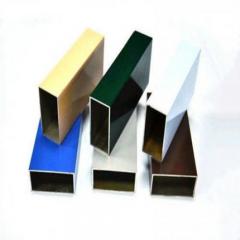
Anodizing: This electrochemical process creates a durable aluminum oxide layer that resists scratching, corrosion, and wear. Standard anodizing produces natural silver finishes, while specialized processes enable black, champagne, rose gold, and other custom colors. Anodized surfaces maintain their appearance for years in indoor applications. For aluminium profile led light installations where aesthetics matter, anodizing delivers excellent results at reasonable cost.
Powder Coating: When you need precise color matching—perhaps to coordinate with cabinetry, furniture, or brand identity—powder coating offers unlimited color options. The electrostatically applied powder fuses into a tough, uniform finish during curing. Powder-coated profiles resist chipping and scratching better than paint while offering thicker protection than anodizing. This treatment works particularly well for commercial installations requiring specific RAL or Pantone color matches.
PVDF Coating: For outdoor durability, polyvinylidene fluoride coatings provide exceptional weather resistance. PVDF finishes withstand UV exposure, temperature extremes, salt spray, and atmospheric pollutants without degrading. While more expensive than standard treatments, PVDF-coated profiles maintain appearance and protection for decades in challenging exterior environments.
When your project requires custom profiles, specialized dimensions, or large-volume orders, working directly with an established manufacturer offers advantages over resellers. Look for partners with substantial production capacity, proven technical expertise, and comprehensive service offerings.
Consider Shengxin Aluminium's deep processing and custom extrusion services as an example of what established manufacturers offer. With over 30 years of industry experience and 35 extrusion presses ranging from 600T to 5500T capacity, they provide end-to-end support from die development through mass production. Their custom 6063 aluminum capabilities include precise cutting, drilling, and bending via advanced CNC machining centers. Surface treatment options span anodizing in custom colors like champagne and rose gold, powder coating for color matching, and PVDF finishes for outdoor durability.
Whether you need standard aluminum profiles for led strips or complex custom geometries, working with manufacturers offering comprehensive services streamlines procurement and ensures consistent quality across your entire order.
When evaluating potential suppliers, use this quality checkpoint list:
Taking time to evaluate suppliers thoroughly prevents costly mistakes. Quality aluminium extrusions for led lighting cost slightly more upfront but deliver years of reliable performance. Cheap alternatives often arrive with dimensional inconsistencies, poor finishes, and missing accessories that multiply your total project cost through rework, returns, and replacement orders.
Your LED lighting investment deserves protection from a quality aluminum extrusion system matched to your specific requirements. By understanding what distinguishes professional-grade products from budget alternatives—and partnering with reliable suppliers capable of meeting your specifications—you ensure every installation delivers the thermal management, light quality, and visual appeal that makes LED lighting aluminum extrusions worth the investment.
Aluminum profiles for LED lighting are specialized extruded channels designed to house LED strip lights. These U-shaped or custom-shaped housings provide three essential functions: thermal management through heat dissipation (aluminum conducts heat 1,000 times better than plastic), light diffusion via polycarbonate covers that eliminate visible LED dots, and physical protection against dust, moisture, and impact damage. Complete systems include the aluminum channel, diffuser cover, end caps, and mounting hardware. The most common alloy used is 6063-T5, chosen for its excellent thermal conductivity of approximately 201 W/(m·K) and superior extrudability for precise manufacturing.
Selecting the right LED extrusion channel depends on four key factors. First, match the internal channel width to your LED strip—8mm strips fit standard channels, while 12mm+ strips require specialty wide profiles. Second, consider installation type: surface-mounted for easy DIY projects, recessed for flush integration, corner profiles for 45-degree applications, or suspended for commercial pendant lighting. Third, evaluate thermal requirements—high-power strips exceeding 10W/m need thicker walls (2mm+) or finned profiles. Finally, choose your diffuser based on visibility: clear for hidden installations maximizing brightness, opal for complete dot elimination in living spaces. Manufacturers like Shengxin Aluminium offer custom dimensions and finishes when standard options don't meet your needs.
The aluminum LED channel is the structural housing that mounts LED strips and manages heat, while diffusers are the polycarbonate or acrylic covers that control light output. Clear diffusers offer 95% light transmission but leave LED dots visible—ideal for hidden installations. Frosted diffusers provide 85-90% transmission with reduced dot visibility, suitable for semi-visible applications. Opal diffusers deliver 75% transmission with complete dot elimination, perfect for living spaces. Milky diffusers offer the softest glow at 65-70% transmission. Specialty options include black diffusers for dramatic accent effects and lens diffusers that narrow beam angles from 120 degrees down to 10-60 degrees for focused task lighting.
LED lighting aluminum extrusions typically range from $2-15 per linear foot depending on profile type, quality, and finish. Basic surface-mounted channels start around $2-5 per foot, while recessed and specialty profiles range from $5-10 per foot. Premium finishes like custom anodizing colors, powder coating, or PVDF for outdoor durability add 20-40% to base costs. Complete systems including diffusers, end caps, and mounting clips may cost 30-50% more than channels alone. Professional installation adds $4-5 per foot for surface-mounted and significantly more for recessed installations requiring construction work. Bulk purchasing directly from manufacturers often reduces per-unit costs by 15-25% compared to retail pricing.
DIY installation works well for surface-mounted profiles on accessible surfaces using basic tools like miter saws, files, and screwdrivers. Under-cabinet lighting, closet illumination, and simple accent applications make excellent first projects for confident DIYers. However, professional installation becomes essential for recessed and trimless profiles requiring precise cutting into walls or ceilings, suspended commercial installations with safety considerations, multi-zone systems needing sophisticated controls, and any project requiring electrical permits. When cutting profiles, use fine-tooth metal blades, wear safety glasses, and deburr all edges before inserting LED strips. Space mounting clips every 12-18 inches for secure installation.



 un service en ligne
 0086 136 3563 2360
 sales@sxalu.com
 +86 136 3563 2360
 français
 English
 Deutsch
 русский
 español
 português
 العربية
 ไทย
 Việt
 Українська