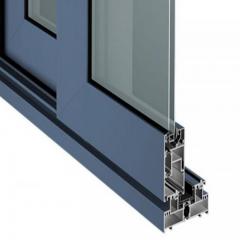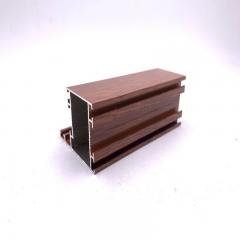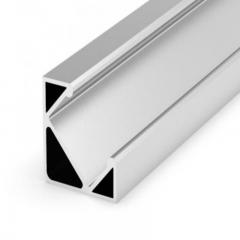

When you import aluminum products into the United States, how those goods are classified makes all the difference in what you pay at the border. Sounds straightforward? Here's where it gets tricky: the term "aluminum extrusion" carries a very specific meaning under U.S. tariff law, and getting it wrong can cost your business thousands in unexpected duties or compliance penalties.
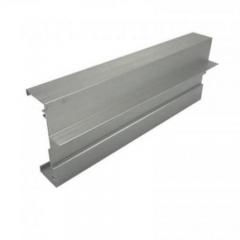
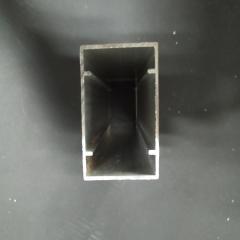
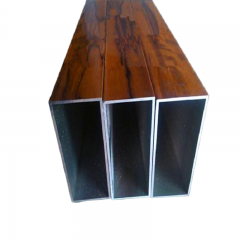
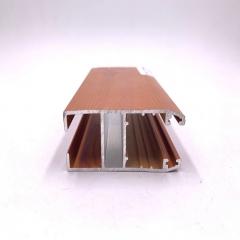
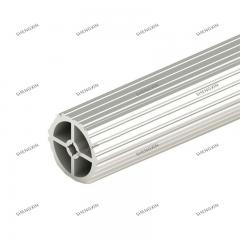
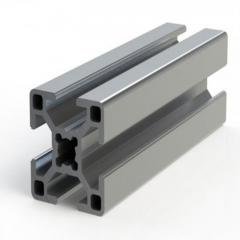
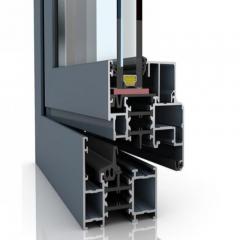
Under U.S. customs regulations, an aluminum extrusion refers to products created by forcing heated aluminum alloy through a die to produce shapes with a uniform cross-section along their entire length. According to the Harmonized Tariff Schedule of the United States, these products fall into two primary categories: profiles and bars/rods.
The aluminum extrusions definition matters because these products face distinct duty structures compared to other aluminum goods. Profiles, for instance, are described as "rolled, extruded, drawn, forged or formed products, coiled or not, of a uniform cross section along their whole length, which do not conform to any of the definitions of bars, rods, wire, plates, sheets, strip, foil, tubes or pipes."
This technical distinction separates extrusions from other aluminum products that undergo different manufacturing processes and carry different duty rates.
The Harmonized Tariff Schedule assigns specific codes to aluminum extrusions that directly impact your landed costs. Two critical HTS codes define the aluminum extrusion case for most importers:
These codes represent just the starting point. When importing from China, additional duties layer on top of these base rates, which later sections of this article will explore in detail.
Products that qualify as aluminum extrusions include:
Products that do NOT qualify as aluminum extrusions:
Why does this classification matter so much? Misclassifying your imports can trigger audits, penalties, and retroactive duty assessments. Staying current with aluminum news and trade developments helps importers anticipate changes that could affect their classification strategy. As you'll discover in the following sections, the tariff on aluminum extrusions from China involves multiple overlapping duty mechanisms that make accurate classification essential for cost management and compliance.

Understanding today's complex tariff landscape requires looking back at how these trade measures evolved over time. The current duty structure on Chinese aluminum extrusions didn't appear overnight. Instead, it developed through a series of trade actions spanning more than a decade, with each new measure adding another layer to what importers must navigate today.
The aluminum extrusion anti dumping story begins on May 26, 2011, when the U.S. Department of Commerce published both antidumping duty (AD) and countervailing duty (CVD) orders on aluminum extrusions from China. These orders, referenced under case number A-570-967, marked the first significant trade barrier specifically targeting Chinese extruded aluminum products.
Why were these orders issued? U.S. manufacturers argued that Chinese producers were selling aluminum extrusions at prices below fair market value (dumping) while also receiving unfair government subsidies. The International Trade Commission (ITC) investigated these claims and determined that the domestic industry was being materially injured by these practices.
The original orders established duty rates that varied by manufacturer, with most Chinese exporters facing significant additional costs on their shipments to the United States. Companies that cooperated with Commerce investigations received individually calculated rates, while those that didn't participate faced the highest "China-wide" rates.
These aluminum extrusions antidumping measures have been reviewed and renewed multiple times since their original implementation. According to the Federal Register, the second sunset review concluded in October 2022, with the ITC determining that revoking the orders would likely lead to a continuation or recurrence of material injury to the U.S. industry.
Just when importers thought they understood the duty structure, everything changed in 2018. The Trump administration invoked Section 232 of the Trade Expansion Act of 1962, imposing a 10% tariff on aluminum imports based on national security concerns. This action applied broadly to aluminum products from most countries, including China.
What made Section 232 different? Unlike antidumping duties that target unfair trade practices, these tariffs were justified on grounds that excessive aluminum imports threatened America's defense industrial base. This legal distinction matters because Section 232 tariffs operate independently from AD/CVD duties, meaning importers now faced multiple duty types stacking on the same shipment.
The Section 232 tariff rate has fluctuated over time, with certain countries receiving exemptions or negotiated quota arrangements. However, China has consistently faced the full weight of these national security tariffs, which have since increased significantly from the original 10% rate.
| Date | Trade Action | Authority | Impact on Duty Rates |
|---|---|---|---|
| May 26, 2011 | Original AD/CVD Orders Issued | Tariff Act of 1930 | Established initial dumping and subsidy duties on Chinese extrusions |
| March 2018 | Section 232 Tariffs Announced | Trade Expansion Act of 1962 | Added 10% national security tariff on aluminum imports |
| 2018-2019 | Section 301 Tariffs Implemented | Trade Act of 1974 | Additional tariffs targeting Chinese goods over IP concerns |
| October 2022 | Second Sunset Review Completed | ITC Determination | AD/CVD orders continued; cash deposits maintained at existing rates |
| 2024-Present | Section 232 Rate Increases | Presidential Proclamation | Tariff rate elevated to 50% for certain aluminum products |
The timeline above illustrates how each trade action built upon previous measures. An importer who faced only AD/CVD duties in 2011 now potentially deals with three or more separate tariff mechanisms on a single shipment. The Federal Register continues to publish updates on these orders, with Commerce regularly issuing administrative reviews that can adjust individual company rates.
This layered approach to trade enforcement means that understanding the historical context is essential for calculating your true landed costs. As you'll see in the next section, distinguishing between these different tariff mechanisms helps importers develop more effective compliance and sourcing strategies.
You've seen how multiple tariff layers stack on Chinese aluminum imports, but here's a question many importers struggle to answer: what's the actual difference between IEEPA tariffs and Section 232 tariffs? Both can apply to China aluminum products, yet they operate under completely different legal frameworks and carry distinct implications for your compliance strategy.
Understanding these mechanisms isn't just academic. The legal authority behind each tariff type affects everything from how rates change over time to whether your products might qualify for exemptions. Let's break down what separates these two approaches to trade enforcement.
Section 232 of the Trade Expansion Act of 1962 authorizes the President to adjust imports when the Secretary of Commerce finds that imports of a particular article "threaten to impair the national security." This legal foundation requires a specific, documented justification tied to America's defense capabilities and industrial base.
What does this mean for chinese aluminum imports? Unlike other tariff mechanisms, Section 232 demands that Commerce conduct a formal investigation before tariffs can be imposed. According to the Davis Wright Tremaine analysis, Commerce must complete its investigation within 270 days upon request from an interested party or on its own motion. This investigation includes opportunities for public input on issues like domestic supply capacity, risks from concentrated foreign suppliers, and potential for exploitation of imports.
The Secretary of Commerce must issue a public report, and within 90 days the President must decide whether and what action to take to alleviate any national security threat.
For aluminum products, the current Section 232 tariff rate stands at 50 percent, with the United Kingdom facing a reduced rate of 25 percent under a negotiated trade arrangement. Russian aluminum carries an even higher 200 percent rate. These rates apply to aluminum articles themselves and to the aluminum content value of certain derivative products.
The procedural requirements of Section 232 create more predictability for importers compared to other mechanisms. You know that tariffs result from a documented investigation process, and changes typically follow established procedures rather than appearing without warning.
The International Emergency Economic Powers Act of 1977 (IEEPA) operates very differently. This statute authorizes the President to "regulate importation" to deal with a foreign threat, but it imposes far fewer procedural requirements than Section 232. Under IEEPA, tariffs on China aluminium imports can be imposed largely without the formal consultation or notice that Section 232 demands.
What makes IEEPA controversial? The statute's broad language has allowed presidents to impose tariffs quickly and for various reasons, creating uncertainty for businesses trying to plan import costs. As the Avalara compliance team notes, IEEPA tariffs have been applied to trafficking concerns involving Canada, Mexico, and China, as well as "reciprocal" tariffs on nearly all countries.
However, IEEPA tariffs face legal challenges that Section 232 tariffs have largely avoided. A federal appeals court found some IEEPA-based tariffs unlawful, and this case has moved to the U.S. Supreme Court. This legal uncertainty has prompted a strategic shift toward greater reliance on Section 232 authority, which courts have upheld.
Key differences between the two mechanisms:
For importers of Chinese aluminum extrusions, understanding this distinction helps you anticipate which tariffs apply to your products and how stable those rates might be. Section 232 duties on aluminum remain firmly in place with strong legal backing, while IEEPA tariffs carry more uncertainty pending Supreme Court review. This knowledge becomes essential when calculating total landed costs and evaluating the complete layered tariff structure that affects every shipment from China.

Imagine receiving a shipment of aluminum extrusions from China and discovering your total duty bill exceeds 100 percent of the product's value. Sounds extreme? For many importers, this scenario has become reality. Unlike imports from other countries that might face a single tariff rate, Chinese aluminum extrusions encounter a unique situation where multiple duty mechanisms apply simultaneously, each adding to your final cost.
This stacking effect creates one of the most complex duty calculations in international trade. Understanding exactly which tariffs apply and how they combine is essential for accurate cost projections and competitive pricing decisions. Let's break down each layer and show you precisely how to calculate your total landed cost.
When aluminum extrusions arrive at a U.S. port from China, customs doesn't apply just one tariff. Instead, your shipment faces a cascade of duties, each authorized under different trade statutes and targeting different policy concerns. According to the Aluminum Extruders Council, the formula for Chinese aluminum extrusions is: FVA + AD/CVD% + 232% + 301% + IEEPA/Reciprocal Rate.
What does each component represent?
The critical point many importers miss is that these duties apply to the Full Value of Aluminum (FVA), not just the raw metal cost. As the Aluminum Extruders Council warns, "FVA = Metal + Extrusion Conversion + Value-add." Some importers incorrectly declare only the aluminum content value, which triggers compliance problems and potential penalties during audits.
Here's where the math gets serious. Unlike Mexico or Canada where USMCA-qualifying goods may avoid certain tariffs, Chinese aluminum extrusions face the full weight of every applicable duty. The table below consolidates current rates and legal authorities in one view:
| Duty Type | Current Rate | Legal Authority | Applies to China? | Notes |
|---|---|---|---|---|
| Base Duty (HTS 7604) | 1.5% - 5% | Harmonized Tariff Schedule | Yes | Varies by specific product classification |
| Antidumping Duty | Varies (0% - 376%+) | Tariff Act of 1930 | Yes | Company-specific rates; China-wide rate applies to non-cooperating exporters |
| Countervailing Duty | Varies (0% - 374%+) | Tariff Act of 1930 | Yes | Calculated based on subsidy levels per exporter |
| Section 232 Tariff | 50% | Trade Expansion Act of 1962 | Yes | Increased from 10% to 50% effective June 4, 2025 |
| Section 301 Tariff | 7.5% - 25% | Trade Act of 1974 | Yes | Rate depends on product list classification |
| IEEPA/Reciprocal Tariff | 10% (125% paused) | IEEPA of 1977 | Yes | Agreement with China holds rate until negotiations conclude |
According to International Trade Insights, "The tariffs and duties summarized above are cumulative (i.e. stacked) and are not mutually exclusive." This means you add each applicable rate together rather than paying whichever is highest.
Sample Calculation for Chinese Aluminum Extrusions:
Imagine you're importing aluminum profiles valued at $10,000 (Full Value of Aluminum):
Total duties: $14,000 on a $10,000 shipment (140% effective rate)
This example illustrates why accurate forecasting matters. Your actual rates will differ based on your specific exporter's AD/CVD rates and which Section 301 list applies to your products. Some importers with favorable individual rates face lower combined duties, while those subject to the China-wide rate encounter even higher costs.
The 2024 alum market has seen significant shifts as these layered duties reshape supply chains. While international extrusion corp operations have adapted to these conditions, the complexity underscores why many businesses are reevaluating their sourcing strategies. Some have explored aluminum mexico suppliers as an alternative, though USMCA qualification requirements add their own compliance considerations.
With these stacking duties creating such significant cost impacts, understanding which specific product categories face the highest rates becomes crucial for strategic planning. The next section examines how recent ITC decisions have affected different aluminum extrusion products and why China continues to face the steepest duty rates among all trading partners.
Here's something that catches many importers off guard: aluminum extrusion trade enforcement doesn't target China alone. The U.S. government has investigated imports from 14 different countries for potential dumping and subsidy violations. Yet despite this broad scope, China consistently faces the most severe duty rates. Why? The answer lies in how trade authorities determine whether foreign producers are selling at "less than fair value" and the magnitude of government support they receive.
Understanding this multi-country landscape helps you appreciate why Chinese aluminum extrusions carry such heavy duty burdens compared to products from other origins. It also explains a rare October 2024 decision that surprised the trade community and created new opportunities for certain product categories.
When the Department of Commerce investigates aluminum extrusion imports, it calculates whether foreign producers are "dumping" products into the U.S. market. But what does selling at less than fair value actually mean in practice?
Imagine you manufacture extruded aluminum systems in your home country and sell them domestically for $100 per unit. If you then export those same products to the United States for $75, Commerce would calculate a dumping margin based on this price difference. The resulting antidumping duty aims to eliminate the unfair price advantage and level the playing field for domestic producers.
For China, several factors drive higher calculated rates:
The ITC South Korea, Taiwan, and other trading partners face their own antidumping investigations, but their calculated margins typically fall well below Chinese rates. Republic extrusions and similar products from market economy countries benefit from calculation methodologies that more directly reflect their actual production costs.
On October 30, 2024, something unusual happened. According to the National Association of Home Builders (NAHB), the U.S. International Trade Commission issued a rare negative determination on countervailing and antidumping duties covering aluminum extrusions from 14 countries: China, Colombia, Ecuador, India, Indonesia, Italy, Malaysia, Mexico, South Korea, Taiwan, Thailand, Turkey, United Arab Emirates, and Vietnam.
Once a tariff is imposed, the ITC rarely reaches a final negative determination that completely rescinds the tariffs.
This decision represented a significant victory for the residential construction industry. NAHB participated in a coalition opposing what they characterized as an "overly broad scope" investigation. The ITC's negative determination means the domestic industry producing aluminum extrusions was not materially injured by imported merchandise in those specific product categories.
Product categories where duties were rescinded or excluded:
Product categories that remain subject to existing AD/CVD orders:
What does this mean for importers? The ITC decision triggers termination of the investigated countervailing and antidumping cases against these 14 nations for the affected product categories. Even more significantly, the NAHB reports that all duties collected by U.S. Customs and Border Protection will be refunded to importers who paid them during the investigation period.
However, this rescission applies specifically to the newly investigated product scope. The original 2011 antidumping and countervailing duty orders on Chinese aluminum extrusions remain firmly in place. Importers dealing with products outside the residential construction categories covered by the October 2024 decision still face the full layered duty structure discussed earlier.
This nuanced outcome illustrates why precise product classification matters so much. Two seemingly similar aluminum extrusion products might face completely different duty treatment based on their end-use applications and whether they fall within rescinded categories or remain subject to active orders. Getting this classification right requires understanding exactly how customs evaluates your products, which brings us to the practical compliance steps every importer needs to follow.

You've calculated your potential duty rates and understand which tariffs apply. Now comes the critical question: how do you actually get your aluminum extrusions through customs without triggering penalties, delays, or unexpected costs? The difference between a smooth clearance and a detained shipment often comes down to documentation accuracy and proper HTS code aluminum extrusion classification.
Aluminum import compliance involves more than filing the right forms. U.S. Customs and Border Protection (CBP) actively monitors aluminum imports for everything from misclassification to forced labor violations. According to CBP announcements, the agency has detained shipments of aluminum extrusions classified under codes including 7604.21.0010, 7604.29.1010, and related subheadings when violations are identified. Getting your compliance process right from the start protects your supply chain and your bottom line.
When your aluminum extrusions arrive at a U.S. port, CBP requires specific documentation to process your entry. Missing or incomplete paperwork doesn't just delay your shipment; it can trigger examinations that add storage costs and raise red flags for future imports.
Required documents for aluminum extrusion entries include:
Working with experienced extruded aluminium suppliers who understand U.S. documentation requirements can streamline this process. Suppliers familiar with export procedures typically provide properly formatted invoices and certificates that meet CBP standards without requiring revisions that delay clearance.
Classification mistakes represent one of the most costly compliance failures. Choosing the wrong HTS code can result in underpaid duties, which CBP recovers through penalty assessments that often exceed the original duty shortfall. Even worse, repeated classification errors suggest negligence or willful non-compliance, escalating enforcement actions.
According to the 2025 HS Codes and Aluminum Tariffs Guide, Chapter 76 of the Harmonized Tariff Schedule covers aluminum and articles thereof, with specific subheadings for different product forms. The guide notes that 2025 updates include expanded alloy subheadings and new classifications for aerospace specifications and renewable energy applications.
Common classification pitfalls to avoid:
Follow this compliance checklist for every aluminum extrusion import:
Your customs broker aluminum relationship matters significantly in this process. A broker experienced with aluminum extrusion imports understands the nuances of product scope, can identify potential classification issues before they become problems, and stays current with regulatory changes. They also know how to properly document entries to minimize audit risk.
Record retention deserves special attention. CBP audits can examine entries from years past, and importers bear the burden of proving they paid correct duties. Maintain complete files including classification rationale, supplier documentation, and correspondence with your customs broker. Digital record systems that organize documents by entry number and date make audit responses faster and more accurate.
With proper compliance processes in place, you're positioned to manage import costs effectively. However, many businesses find that even with flawless compliance, the layered duty structure makes Chinese aluminum extrusions economically challenging. This reality has driven growing interest in alternative sourcing strategies that maintain product quality while navigating the current trade environment.
When combined duties exceed 100% of product value, continuing business as usual simply isn't viable. You've seen the numbers. You understand the compliance requirements. Now the question becomes: what are your realistic options for maintaining competitive aluminum sourcing while navigating these trade barriers?
The good news? Businesses have more pathways forward than many realize. Your aluminum sourcing strategy doesn't have to be all-or-nothing. Smart procurement teams are building diversified supply networks that balance cost, quality, lead time, and risk across multiple sourcing channels.
The decision between domestic aluminum extrusion suppliers and international partners has fundamentally changed since tariff escalations began. According to Monarch Metal's 2025 sourcing analysis, the calculus now hinges on lead time, compliance risk, quality control, and total landed cost rather than simple per-pound pricing.
When does domestic sourcing make the most sense?
However, domestic sourcing carries its own considerations. U.S. extruders face capacity constraints, and certain specialized alloys or complex profiles may have limited availability. Production costs remain higher than many international alternatives even when tariffs are factored in for some product categories.
What about shifting to alternative aluminum suppliers outside China? Countries like Mexico, Thailand, and UAE have expanded their extrusion capacity as buyers seek tariff-advantaged origins. But here's the catch: the October 2024 ITC decision notwithstanding, many of these countries face their own antidumping investigations or existing duty orders.
The Marsh risk assessment emphasizes that steel and aluminum tariffs require organizations to diversify supplier bases across multiple regions. Their analysis of major clients' supply chains revealed significant reliance on imports that are now subject to various trade measures.
Key factors when evaluating alternative origins:
Many procurement teams now calculate total landed cost (TLC) rather than focusing on quoted prices. The formula TLC = Ex-works price + Freight + Duties + Tariffs + Compliance + Carrying Cost + Risk Buffer reveals that an eight-week ocean cycle forcing two extra months of inventory can erase a 5 to 8 percent price advantage overnight.
Perhaps the most overlooked strategy involves working with established international suppliers who offer factory direct aluminum pricing combined with comprehensive technical support. The right partner can help you navigate tariff complexities while maintaining quality standards and competitive costs.
What should you look for in an aluminum extrusion partner?
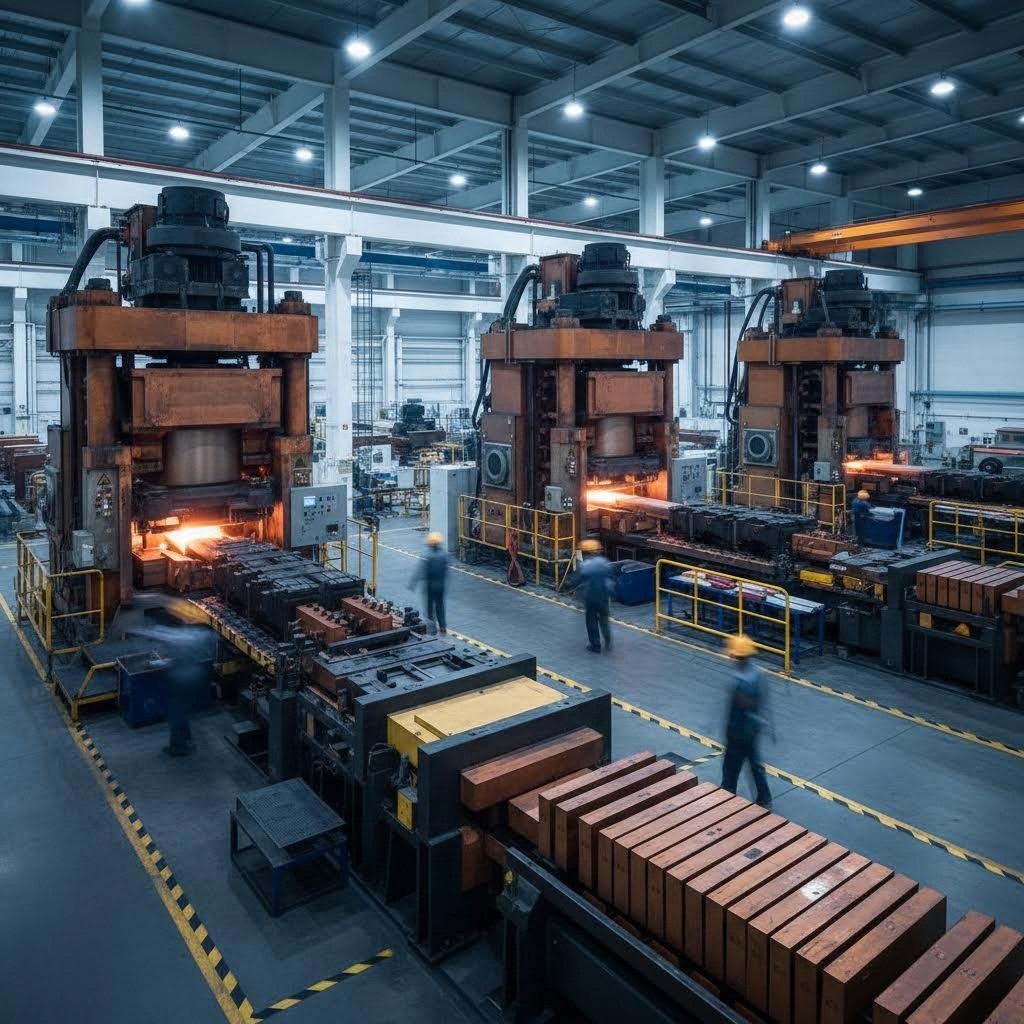
Consider Shengxin Aluminium as an example of this approach. With over 30 years of industry experience, 35 extrusion presses ranging from 600T to 5500T capacity, and comprehensive processing capabilities, they represent the type of established supplier that can deliver quality-assured aluminum solutions despite trade environment challenges. Their integrated operations handle everything from custom 6063 aluminum tubes to complex industrial profiles with surface treatments including anodizing in custom colors, powder coating, and micro-arc oxidation.
The smartest sourcing teams aren't choosing between domestic and international suppliers. They're building hybrid approaches that capture the advantages of each:
This dual-source model provides cost control during normal operations while maintaining resilience against supply chain disruptions, tariff changes, or capacity constraints at any single supplier.
Your sourcing decisions today will shape your competitive position for years ahead. The layered tariff structure isn't going away soon, but neither are the opportunities to build more resilient, cost-effective aluminum supply chains. What matters now is developing a clear strategy and the right partnerships to execute it effectively.
You've now navigated the full landscape of duties, classifications, and compliance requirements affecting Chinese aluminum extrusions. The layered tariff structure isn't simply a temporary hurdle. It represents a fundamental shift in how businesses must approach aluminum sourcing decisions. What separates companies that thrive from those that struggle? A clear strategy built on accurate information, reliable partnerships, and adaptable supply chains.
The Aluminum Extruders Council continues updating its resources as trade policy evolves, releasing revised fact sheets like their February 2025 aluminum tariffs document that reflects the latest administration announcements. Industry stakeholders from home builders to logistics providers are all adjusting their approaches based on the same reality: these tariffs demand proactive planning rather than reactive scrambling.
After examining the complete aluminum tariff strategy landscape, certain principles emerge as essential for any importer or manufacturer working with aluminum extrusions:
Calculate your total landed cost using the full stacking formula: FVA + AD/CVD% + 232% + 301% + IEEPA Rate. Never base sourcing decisions on quoted prices alone.
The Aluminum Association's trade agenda emphasizes that smart trade policy requires understanding the differences between aluminum and steel industries. Their position supports continued Section 301 tariffs on Chinese imports given "continued excessive subsidies from the government" while advocating for targeted rather than blanket approaches.
Critical compliance points to remember:
Aluminum trade policy updates arrive with increasing frequency. What worked last quarter may not apply today. The Aluminum Extruders Council regularly publishes guidance on new developments, and monitoring their resources helps you anticipate changes before they impact your operations.
Your actionable next steps:
The tariff on aluminum extrusions from China creates real challenges, but it also rewards businesses that invest in understanding the complete picture. Companies that treat compliance as a strategic function rather than an administrative burden consistently outperform those scrambling to react to each new development.
Your aluminum sourcing decisions made today will echo through years of production runs, customer commitments, and competitive positioning. Whether you're evaluating domestic suppliers, exploring alternative international partners, or optimizing your current Chinese supply relationships, the framework you've gained from this analysis provides the foundation for informed choices. Stay current with aluminum trade policy updates, maintain strong compliance practices, and build the partnerships that deliver quality, reliability, and value regardless of how the trade landscape continues to evolve.
US tariffs on aluminum extrusions involve multiple stacked duties. As of 2025, Section 232 tariffs stand at 50% ad valorem. When importing from China, this combines with antidumping duties (0%-376%+), countervailing duties (0%-374%+), Section 301 tariffs (7.5%-25%), and potential IEEPA tariffs. The total effective rate can exceed 100% of product value depending on your exporter's specific AD/CVD rates.
The base import duty on aluminum extrusions ranges from 1.5% to 5% under HTS codes 7604.21 and 7604.29. However, effective June 4, 2025, Section 232 national security tariffs increased to 50% for aluminum articles. Chinese imports face additional antidumping, countervailing, and Section 301 duties that stack on top of these rates, calculated on the Full Value of Aluminum including metal cost, extrusion conversion, and value-added processing.
Yes, China raised tariffs on US goods to 125% in April 2025 as a retaliatory measure against increased US duties. This represents China's response to Section 232 and other trade actions. However, a subsequent US-China agreement paused higher reciprocal tariffs, with the IEEPA rate currently held at 10% while negotiations continue. These developments affect bilateral trade dynamics for aluminum and other products.
Calculate total duties using this formula: Base Duty + AD Rate + CVD Rate + Section 232 (50%) + Section 301 Rate + IEEPA Rate. Apply these percentages to the Full Value of Aluminum (FVA), which includes metal cost, extrusion conversion, and value-added processing. Your exporter's specific AD/CVD rates vary based on Commerce Department administrative reviews, so verify current rates before calculating landed costs.
The October 2024 ITC negative determination rescinded duties on specific residential construction categories including HVAC components, refrigeration parts, lighting fixtures, railings, window and door components, and furniture products containing aluminum extrusions. However, the original 2011 AD/CVD orders on Chinese aluminum extrusions remain in effect for standard profiles and industrial extrusions not covered by this rescission. Importers should verify their specific product classifications.



 un service en ligne
 0086 136 3563 2360
 sales@sxalu.com
 +86 136 3563 2360
 français
 English
 Deutsch
 русский
 español
 português
 العربية
 ไทย
ไทย Việt
Việt Українська